 Save
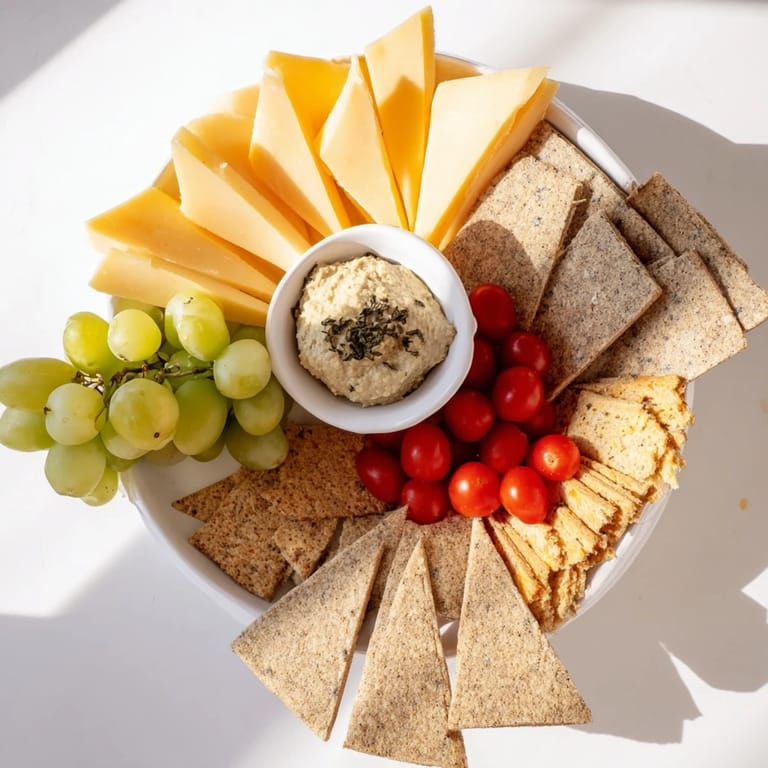
Save I'll never forget the first time I arranged a charcuterie board that actually told a story. It was at my sister's engagement party, and I wanted to create something that would make guests pause and smile before diving in. That's when the arrowhead board idea struck me—every element pointing toward a central dip like they were all drawn to the same magnetic pull. It transformed a simple spread into a moment of visual delight, and honestly, it's been my go-to party move ever since.
I remember my neighbor watching me arrange one of these boards for a dinner party and saying, 'You made this look like it's pointing somewhere important.' That's exactly what I love about it—it transforms a casual appetizer into something that feels intentional and almost architectural. People genuinely spend more time admiring the arrangement before they eat, which is half the fun.
Ingredients
- Aged cheddar (100 g, cut into triangles): Sharp and slightly crumbly, aged cheddar adds depth and those natural angles work perfectly for pointing. Cut them uniformly so they line up like arrows.
- Brie (100 g, sliced into wedges): The creamy luxury of the board—slice thick enough that the wedges hold their shape but thin enough to still feel delicate and elegant.
- Gouda (100 g, cut into strips): Nutty and smooth, gouda strips create clean lines that enhance the directional flow. Cut them lengthwise for maximum impact.
- Prosciutto (100 g, folded): Fold each slice loosely—you want texture and dimension, not tight little rolls. These folds create beautiful shadows that emphasize direction.
- Salami (100 g, sliced and folded): Similar to prosciutto, fold these to create visual interest. The slight overlap guides the eye toward the center.
- Seedless grapes (1 cup, cut into small clusters): Keep clusters small enough to fit naturally between other elements. They add color and break up the composition.
- Cherry tomatoes (1 cup, halved): Halving them creates a flat edge that can angle toward your dip. The red is your brightest color—use it strategically.
- Cucumber (1 small, sliced diagonally): The diagonal cut is non-negotiable here—it's your visual direction tool. Thinner slices look more refined.
- Red bell pepper (1 small, sliced into strips): These strips are natural arrows. Arrange them in converging lines for maximum effect.
- Artisan crackers (1 cup): Choose varieties with interesting shapes—they'll naturally follow your directional pattern better than uniform squares.
- Baguette (1 small, sliced on the bias): The bias cut is essential—it gives you built-in angles. Slice at least ¼ inch thick so they don't break easily.
- Marcona almonds (½ cup): These are softer and richer than regular almonds, worth the splurge. They fill gaps beautifully while adding sophistication.
- Dried apricots (¼ cup): Their golden color bridges cheese and produce. Arrange them in groups of two or three along your directional lines.
- Olives (¼ cup): Mixed varieties add visual interest. They're small enough to fill the tiniest gaps while reinforcing your pattern.
- Herbed hummus or whipped feta dip (100 ml): This is your focal point—keep it in a small, pretty bowl that's slightly elevated. Fresh herbs on top help it feel intentional.
Tired of Takeout? 🥡
Get 10 meals you can make faster than delivery arrives. Seriously.
One email. No spam. Unsubscribe anytime.
Instructions
- Establish your focal point:
- Place your dip bowl at one end or corner of the board, elevated slightly if possible. This isn't just decoration—it's the destination everything points toward. Step back and imagine invisible lines running from the far edges toward this bowl.
- Create the cheese foundation:
- Arrange your cheese wedges and triangles with their points angling toward the dip, fanning outward like a compass opening up. Think of it like you're creating sections of a pie, but the point of each wedge directs inward toward your center. Vary the angles slightly so nothing looks too rigid.
- Layer in the meats:
- If using prosciutto and salami, fold them loosely and position them in curved lines that also lead toward your dip. These softer elements should complement your cheese sections without competing for space. Let them drape naturally—that organic quality matters.
- Angle your vegetables strategically:
- Lay cucumber slices, pepper strips, and tomato halves on the diagonal, ensuring each piece has a clear direction toward the dip. Work in sweeping arcs rather than straight rows—it feels more natural and less like a geometry lesson. Grape clusters can fill the spaces between these lines.
- Position crackers and bread as guides:
- Arrange bias-cut baguette slices and artisan crackers in radiating lines, like you're drawing spokes on a wheel that all connect to the center hub. This is where your pattern becomes unmistakably clear to guests.
- Fill the spaces with intention:
- Scatter marcona almonds, dried apricots, and olives along the lines between your main components. These smaller elements shouldn't be random—they should reinforce your directional flow and add visual rhythm. Think of them as punctuation marks in your edible composition.
- Fine-tune and balance:
- Step back and look at your board from above. Are there any gaps that break your flow? Any section that looks too dense? Adjust pieces until the entire board feels like it's gently guiding eyes and hands toward that central dip. Trust your eye—if it feels balanced and directional to you, it will to your guests.
 Save
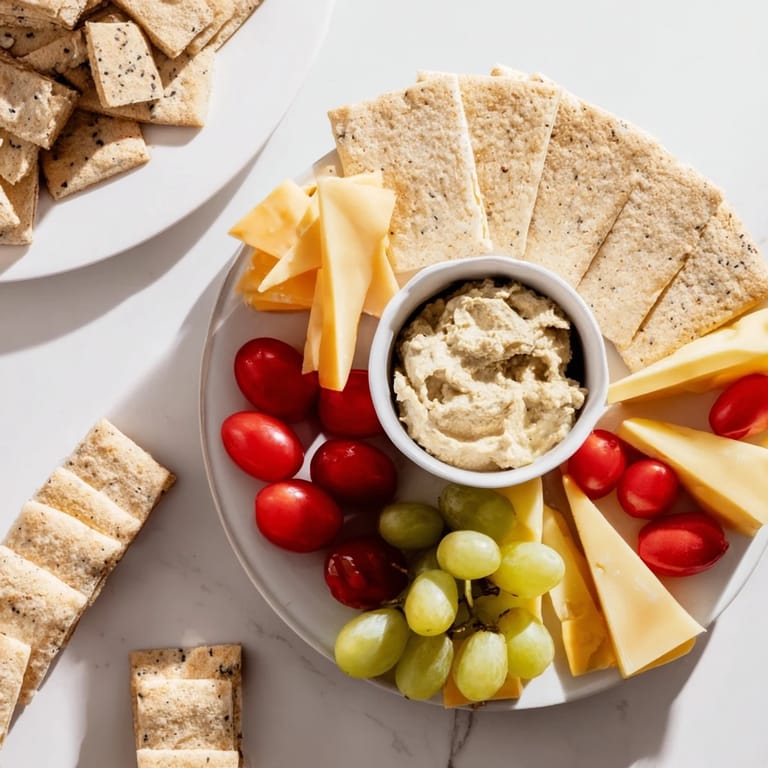
Save Last summer, I made one of these boards for my book club, and something unexpected happened. As people arrived, instead of immediately grabbing food, they all paused to photograph it. Then they started pointing out details to each other—'Look how the olives line up,' 'I see now, everything's pointing at the dip!' It became this little moment of connection before the food even hit anyone's plate. That's when I realized this board does more than look beautiful; it creates an invitation to slow down and notice.
Building Visual Harmony on Your Board
The magic of an arrowhead board lives in its balance between precision and spontaneity. You're creating an intentional pattern, but it shouldn't feel stiff or overly measured. Think of it like conducting an orchestra where every cheese wedge, vegetable slice, and cracker is an instrument playing in the same direction. Color placement matters here—distribute your reds (tomatoes, pepperoni), golds (almonds, dried apricots), and whites (cheeses, crackers) so no one section feels monochromatic. If you start with your largest elements first and gradually fill with smaller pieces, you'll find the pattern emerges naturally rather than feeling forced.
Personalizing Your Board for Your Crowd
The beauty of this format is its flexibility. Making it for a vegetarian group? Skip the meats entirely and add extra cheeses, roasted vegetables, or marinated artichoke hearts. Want to lean into a specific flavor profile? Try pairing with beet hummus for an earthy vibe, tzatziki if you're going Mediterranean, or whipped ricotta for something lighter. Your dip becomes the personality of the board, so choose something that reflects your guests or the occasion. I've also played with substituting marcona almonds for pistachios, adding fresh figs when they're in season, or mixing in candied nuts for extra texture. The directional arrangement works regardless of what you fill it with.
Serving Suggestions and Pairings
An arrowhead board doesn't exist in isolation—it's the opening chapter of a meal or gathering. Pair it with a crisp Sauvignon Blanc for something light and refreshing, or a Pinot Noir if you want something with a bit more body that won't overpower the delicate flavors. I've also had great success with a dry rosé, especially in summer. Beyond wine, serve this with sparkling water or a citrusy mocktail so your guests have options. The beauty of charcuterie is that it works as a pre-dinner appetizer, a casual grazing board for a gathering, or even a light lunch option. I've made versions for everything from bridal showers to game day hangouts. The arrangement elevates whatever occasion you're creating.
- For a dinner party, assemble the board 30 minutes before serving and keep it cool
- Set out small napkins and plates nearby so guests don't feel awkward grabbing with their hands
- If you're making this ahead, cover it with plastic wrap and store in a cool spot—just not in the fridge, which can dull colors
 Save
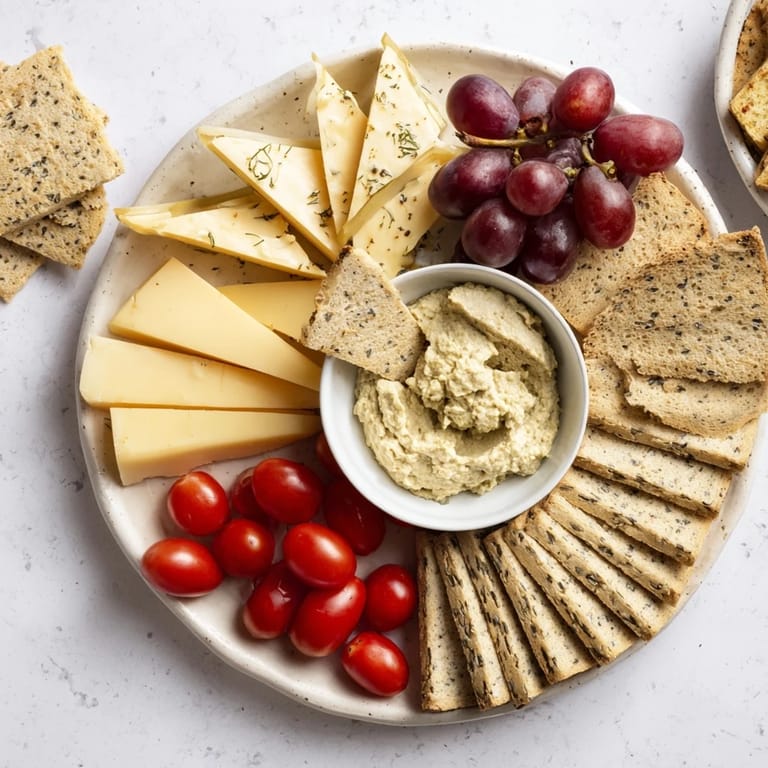
Save This board has taught me that food can be art without being pretentious. Every time I make one, I'm reminded that the simplest gatherings are often the most memorable—and a thoughtfully arranged board says 'I'm glad you're here' in a way that feels genuine.
Recipe FAQs
- → How do I arrange the components to achieve the arrowhead effect?
Place the dip bowl as the arrowhead point, then angle cheeses, meats, produce, and crackers so their shapes point toward the dip, creating a converging flow.
- → What are good vegetarian alternatives for the meats?
Simply omit the meats and add extra cheeses, vegetables, or fruit varieties to maintain balance and variety on the board.
- → Which dips work best with this board layout?
Herbed hummus, whipped feta, beet hummus, tzatziki, or whipped ricotta enhance the visual appeal and complement the ingredients well.
- → Can I prepare this board ahead of time?
Yes, you can prep individual components in advance and assemble shortly before serving to keep everything fresh and visually appealing.
- → What wine pairs nicely with this appetizer board?
A crisp Sauvignon Blanc or a light Pinot Noir complements the diverse flavors and textures without overpowering them.