 Save
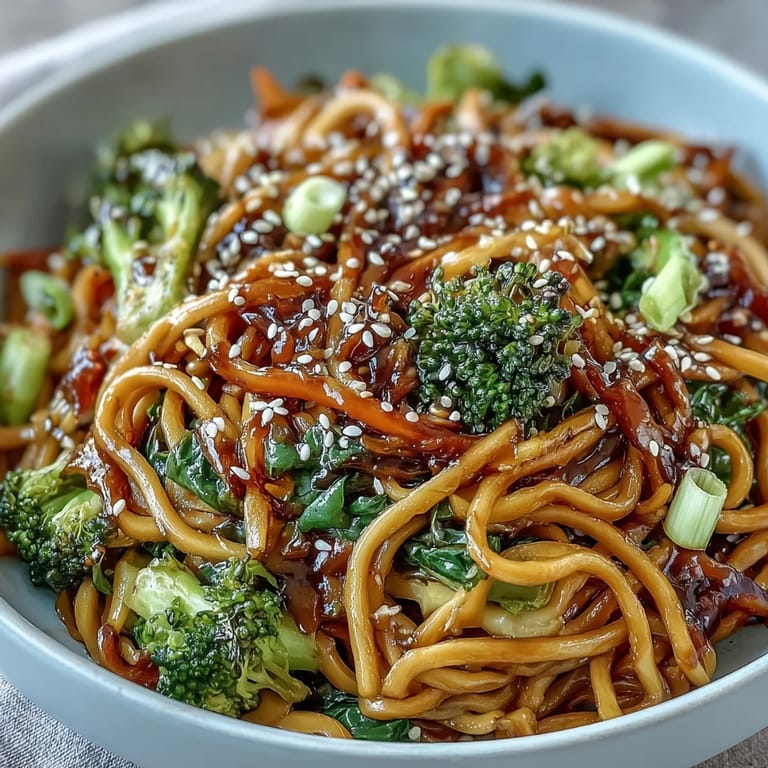
Save There's something magical about the sizzle of noodles hitting a hot wok, especially when you're cooking for people who show up hungry and leave satisfied. I discovered this teriyaki noodle bowl on a Tuesday evening when my pantry was practically empty, but somehow I had soy sauce, mirin, and a bag of egg noodles staring back at me. Twenty minutes later, I had four bowls of something so good that my roommate asked for the recipe before even sitting down. That's when I knew this dish had staying power.
I made this for my friend's dinner party once, and she watched me cook it like I was performing some kind of alchemy, especially when the sauce suddenly went from thin and loose to glossy and coating every strand of noodle. The way everyone dug in without waiting told me everything—this wasn't just food, it was the kind of meal that makes you forget to talk because you're too busy eating.
Ingredients
- Egg noodles, 300 g: These cook quickly and have a tender texture that absorbs the sauce like a dream; if you can't find them, ramen noodles work beautifully too.
- Broccoli florets, 2 cups: The slight crunch they hold after a quick steam is crucial—overcook them and you lose that textural contrast that makes each bite interesting.
- Carrots, 2 medium, julienned: Cut them thin and uniform so they cook evenly and add a hint of natural sweetness that plays against the savory sauce.
- Green onions, 2, sliced: Save some for the top; the fresh onion flavor right at the end brightens everything up.
- Soy sauce, 1/4 cup: This is your umami backbone, so use something you like tasting on its own—cheap soy sauce makes cheap sauce.
- Mirin, 2 tbsp: This sweet rice wine is what separates a good teriyaki from a sad one; dry sherry works if you're in a pinch, but mirin has a subtle depth.
- Honey or maple syrup, 2 tbsp: Either works, though maple syrup gives a slightly earthier note that I've grown to prefer.
- Rice vinegar, 1 tbsp: Just enough to cut through the richness and keep the sauce from being one-note sweet.
- Brown sugar, 1 tbsp: This adds body and a subtle molasses flavor that rounds out the sauce.
- Sesame oil, 2 tsp: A little goes a long way; this is about aroma and nuttiness, not volume.
- Garlic, 2 cloves, minced: Fresh is non-negotiable here; garlic powder tastes like an apology in this dish.
- Fresh ginger, 1 tsp, grated: The brightness it brings is what makes people say this tastes restaurant-quality without understanding why.
- Cornstarch slurry, 1 tbsp cornstarch mixed with 2 tbsp water: This is what transforms your sauce from thin broth to glossy coating, and it's the moment you'll feel like you actually know what you're doing.
- Toasted sesame seeds, 2 tbsp: Toast them yourself if you can; the difference between store-bought and fresh-toasted is the difference between good and crave-again.
Tired of Takeout? 🥡
Get 10 meals you can make faster than delivery arrives. Seriously.
One email. No spam. Unsubscribe anytime.
Instructions
- Bring water to a boil and cook the noodles:
- Follow your package timing—these cook fast, usually around 4-5 minutes. The moment they're tender, drain them into a strainer, then rinse with cold water to stop the cooking and keep them from clumping together.
- Steam the vegetables until just tender:
- Bring a pot of water to steam or use a steamer basket with your broccoli and carrots for about 2-3 minutes; you want them with a slight snap still when you bite them. This is not the time to make them soft.
- Build your sauce in a small saucepan:
- Combine soy sauce, mirin, honey, rice vinegar, brown sugar, sesame oil, garlic, and ginger over medium heat. Let it come to a gentle simmer, where little bubbles break the surface but nothing's aggressively boiling.
- Thicken the sauce with the cornstarch slurry:
- Pour in your cornstarch mixture while stirring constantly for about 1-2 minutes. You'll see it transform from thin to glossy, clinging to a spoon instead of running off—that's your cue it's ready.
- Toss everything together in a large wok or skillet:
- Add the drained noodles, steamed vegetables, sliced green onions, and pour in that gorgeous sauce. Toss and stir for a minute or two until everything is coated and heated through; the wok's heat will bring the whole thing together.
- Divide into bowls and garnish:
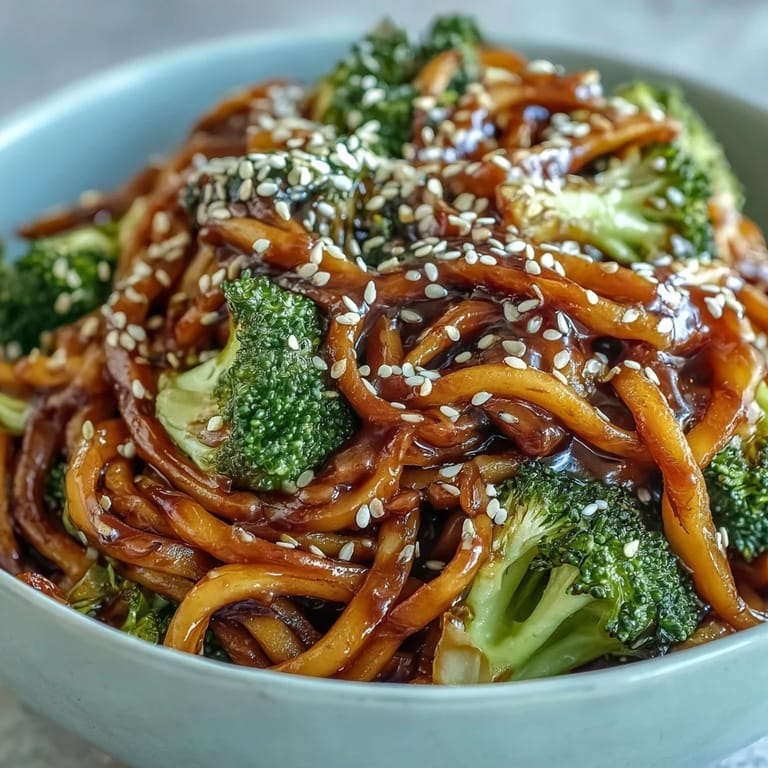
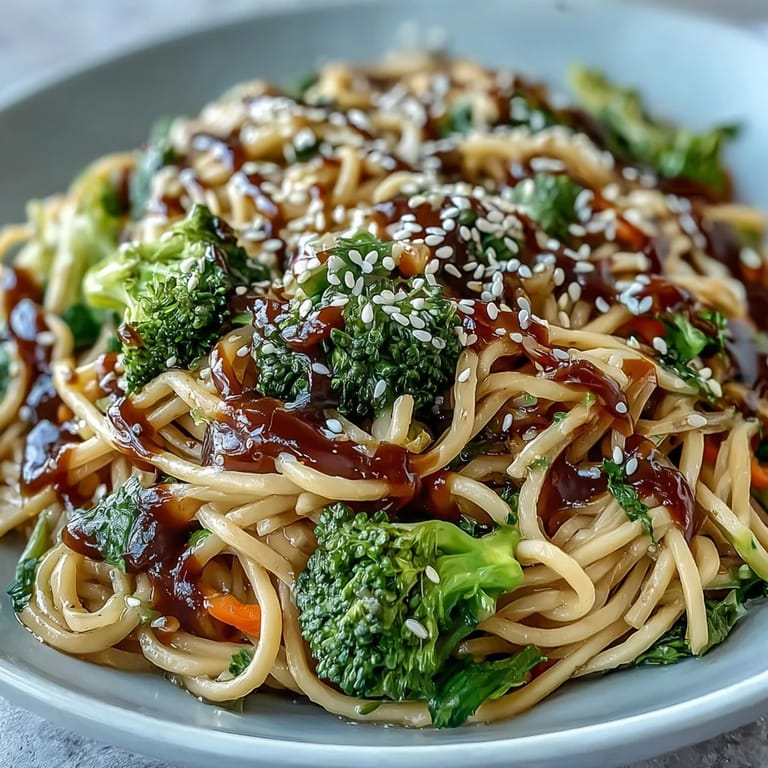
- Spoon the noodle mixture into four bowls, then sprinkle sesame seeds and extra green onion over the top. Serve immediately while the heat is still there.
 Save
Save One afternoon, my nephew watched me make this and asked why I was making everything separately instead of throwing it all in one pot at once. When I explained it was about keeping textures right and flavors bright, he actually got it—and then ate three bowls. That's when I realized this dish teaches something without being preachy about it.
Why This Sauce Matters
The teriyaki sauce is honestly where the magic lives, and it's not complicated once you understand what each ingredient does. Soy sauce brings salt and umami, mirin adds subtle sweetness and silkiness, the vinegar keeps everything from being cloying, and ginger and garlic give you that moment where someone says "wait, what is this?" The cornstarch slurry is the final move—it takes a loose sauce and turns it into something that clings to every noodle and vegetable like it was meant to be there.
Building Flavor Without Complication
I've learned that Asian cooking doesn't have to mean a long ingredient list or complicated techniques. This bowl proves you can create something layered and interesting with just a few thoughtful components. The key is patience—letting your sauce develop gently, not rushing the vegetables, and understanding that sometimes the best meals are the ones where everything happens in the right order at the right speed.
Making It Your Own
Once you make this once, you'll start seeing ways to adapt it that feel natural rather than like you're following instructions. Some nights I'll add crumbled tofu for protein, other times grilled chicken if I'm feeding people who want more substance. The base is forgiving that way—strong enough to carry additions but not so rigid that it breaks under experiment.
- If you're vegan, use rice noodles instead of egg and swap the honey for maple syrup without second-guessing yourself.
- Cold leftovers the next day are genuinely good; they won't win a texture competition with fresh, but the flavors have settled in even better.
- Keep your sauce components on hand, and you can pull this together on a Wednesday when you need dinner and don't want takeout.
 Save
Save This bowl has become my answer to the question "what should we make?" when time is short and appetites are big. It's the kind of meal that tastes thoughtful without being complicated, which is honestly the best kind of cooking.
Recipe FAQs
- → Can I make this dish vegan?
Yes, simply substitute egg noodles with wheat or rice noodles and replace honey with maple syrup. The rest of the ingredients are naturally plant-based.
- → What protein can I add to this bowl?
Crispy tofu, tempeh, or grilled chicken work wonderfully. For added protein, consider edamame, shrimp, or sliced beef strips seared before adding to the noodles.
- → How do I store leftovers?
Store in an airtight container in the refrigerator for up to 3 days. Reheat gently in a skillet with a splash of water to refresh the sauce, adding fresh vegetables if desired.
- → Can I use other vegetables?
Absolutely. Snow peas, bell peppers, bok choy, snap peas, or mushrooms all complement the teriyaki flavors beautifully. Adjust cooking times accordingly.
- → What if I don't have mirin?
Dry sherry makes an excellent substitute. Alternatively, use additional rice vinegar with a pinch of sugar to mimic mirin's sweet, acidic profile.
- → How do I prevent the sauce from becoming too thick?
The sauce continues thickening off-heat. If too thick, thin with warm water or vegetable broth one tablespoon at a time until desired consistency is reached.