 Save
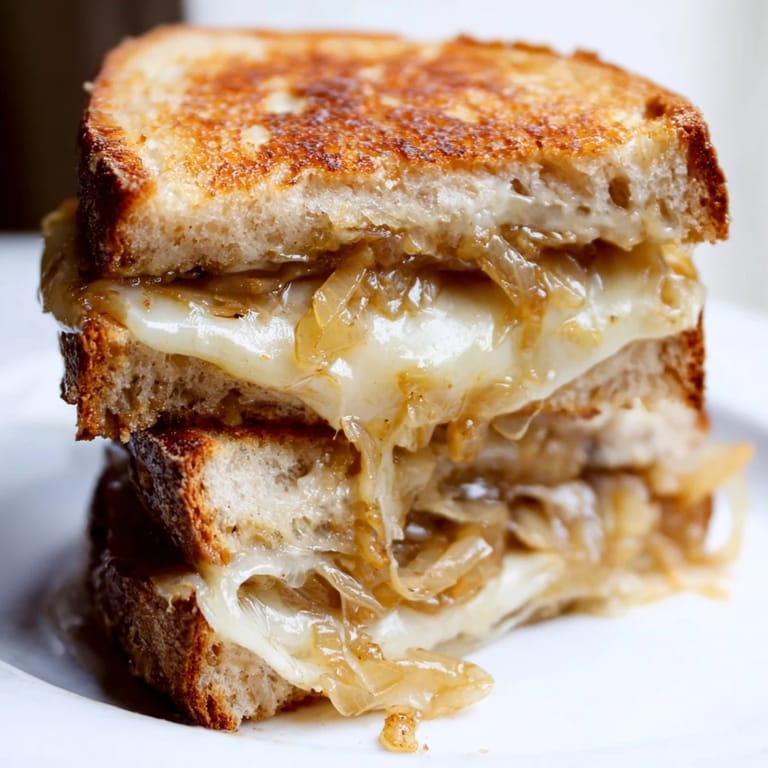
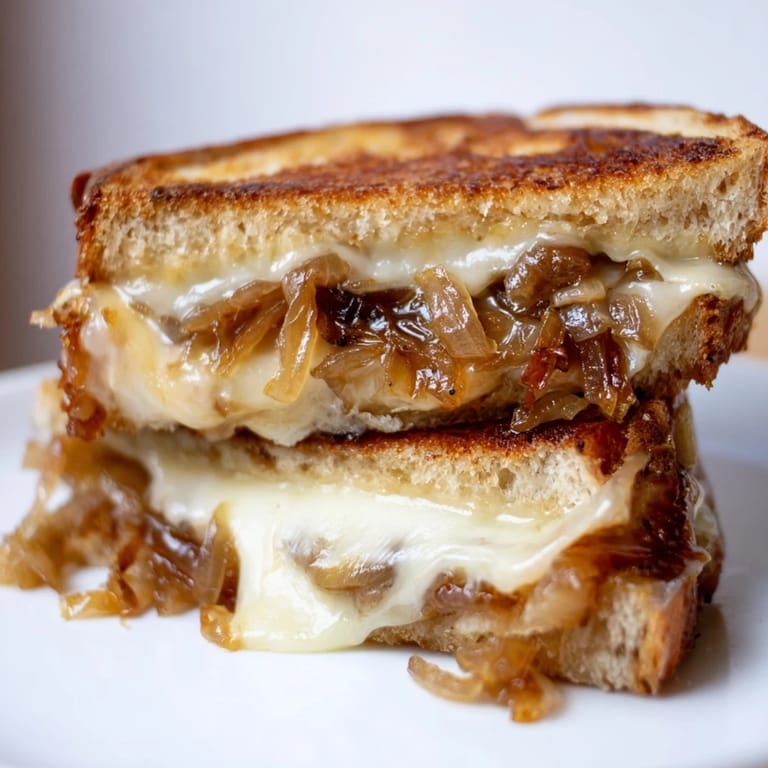
Save The smell hit me first: onions turning gold in a puddle of olive oil, the kitchen windows fogging up from the slow, patient heat. I was making lunch on a gray Saturday with no plans and a craving I couldn't name. By the time those onions had gone from sharp to sweet, I knew exactly what I needed. I built two sandwiches, pressed them into the pan, and felt the whole day shift into focus.
I started making this sandwich on weekends when I wanted something more than plain cheese but didn't want to leave the house. My partner would wander in halfway through, drawn by the smell, and we'd end up eating them standing at the counter with mugs of soup. It became our lazy day ritual. Now every time I caramelize onions, I feel that same cozy, unhurried happiness.
Ingredients
- Sourdough or country bread: You want something sturdy with a bit of chew, thick enough to hold up to the onions and butter without getting soggy.
- Unsalted butter, softened: Softened butter spreads easily and crisps the bread evenly, use it at room temperature so it doesn't tear the slices.
- Sharp white cheddar cheese, grated: Sharp cheddar has the tang to stand up to sweet onions, and grating it helps it melt faster and more evenly than slices.
- Yellow onions, thinly sliced: Yellow onions have the right balance of sweetness and structure, slice them thin so they break down into soft, jammy layers.
- Olive oil: A little oil keeps the onions from sticking and helps them caramelize without burning, don't skip this step.
- Salt: Salt draws out moisture and helps the onions collapse and sweeten as they cook, it's essential for deep flavor.
- Sugar (optional): A pinch of sugar halfway through speeds up the browning and adds a touch more sweetness, but the onions will caramelize fine without it.
- Freshly ground black pepper: Just a few grinds add a little heat and complexity, balancing the richness of the cheese and butter.
Tired of Takeout? 🥡
Get 10 meals you can make faster than delivery arrives. Seriously.
One email. No spam. Unsubscribe anytime.
Instructions
- Caramelize the onions:
- Heat olive oil in a large skillet over medium heat, then add the sliced onions and salt, stirring to coat. Cook for 20 to 25 minutes, stirring occasionally, until they turn deeply golden and soft, adding sugar halfway through if you want extra sweetness and color.
- Set onions aside:
- Remove the onions from the heat and transfer them to a plate. Wipe out the skillet if there are any dark bits stuck to the bottom.
- Butter the bread:
- Spread softened butter on one side of each slice of bread. Lay two slices buttered side down on a clean surface.
- Assemble the sandwiches:
- Top each slice with half the grated cheddar, then pile the caramelized onions evenly over the cheese and sprinkle with black pepper. Cover with the remaining bread slices, buttered side up.
- Grill the sandwiches:
- Heat the skillet over medium-low heat and place the sandwiches in the pan. Cook for 3 to 4 minutes per side, pressing gently with a spatula, until the bread is crisp and golden and the cheese is fully melted, adjusting the heat if the bread browns too fast.
- Rest and serve:
- Remove the sandwiches from the pan and let them rest for 2 minutes before slicing. Serve hot while the cheese is still gooey.
 Save
Save The first time I served this to a friend, she took one bite and said it tasted like the best diner sandwich she'd never had. We sat at the table with tomato soup and talked for two hours, and the sandwiches disappeared before we even realized. That's when I knew this recipe wasn't just about cheese and onions, it was about slowing down enough to enjoy them.
How to Store and Reheat
Wrap leftover sandwiches tightly in foil and keep them in the fridge for up to two days. When you're ready to eat, reheat them in a dry skillet over medium-low heat, pressing gently until both sides are crisp again and the cheese softens. The microwave will make the bread soggy, so skip it if you can. You can also make extra caramelized onions and store them in an airtight container in the fridge for up to a week, then use them whenever the craving hits.
Swaps and Variations
If sharp cheddar isn't your thing, try Gruyere for a nutty, melty richness or fontina for something creamier and milder. A smear of Dijon mustard on the inside adds a tangy kick that cuts through the sweetness, and a few fresh thyme leaves scattered over the onions bring an earthy, herbal note. Some people like to add a handful of arugula or spinach for a peppery bite, and if you're feeling indulgent, a drizzle of balsamic glaze over the onions before assembling takes it to another level.
Serving Suggestions
This sandwich begs to be dunked into a bowl of creamy tomato soup, the acidity cuts through the richness and makes every bite feel complete. A simple green salad with lemon vinaigrette on the side keeps things light and fresh. If you're making it for a crowd, slice the sandwiches into smaller pieces and serve them as appetizers with pickles and chips.
- Serve with a cup of hot tomato soup for dipping.
- Pair with a crisp green salad dressed in lemon and olive oil.
- Cut into quarters and serve as a party snack with pickles on the side.
 Save
Save This sandwich has become my answer to cold days, lazy weekends, and moments when I need something simple but satisfying. I hope it does the same for you.
Recipe FAQs
- → How long does it take to properly caramelize onions?
Properly caramelized onions require 20-25 minutes of patient cooking over medium heat, stirring occasionally. This slow process develops their natural sweetness and deep golden color. Optional sugar halfway through can enhance browning and sweetness if desired.
- → What type of bread works best?
Sourdough and country bread are ideal choices for this sandwich due to their sturdy structure and tangy flavor that complements the sweet onions. Their substance prevents sogginess and creates excellent crispy edges when toasted.
- → Can I use a different cheese?
Absolutely. Gruyère and fontina are excellent alternatives that provide different flavor profiles while maintaining the creamy texture. Experiment with cheeses that melt smoothly and offer complexity to balance the sweet onions.
- → Why is medium-low heat important for cooking the sandwich?
Medium-low heat ensures the bread toasts to golden-brown perfection while giving the cheese adequate time to melt completely. Higher heat risks burning the exterior before the interior melts, creating an unbalanced result.
- → What are recommended pairings for this sandwich?
Tomato soup is the classic pairing that complements the rich, savory sandwich beautifully. A simple green salad offers a lighter, refreshing contrast. Both options balance the sandwich's richness perfectly.