 Save
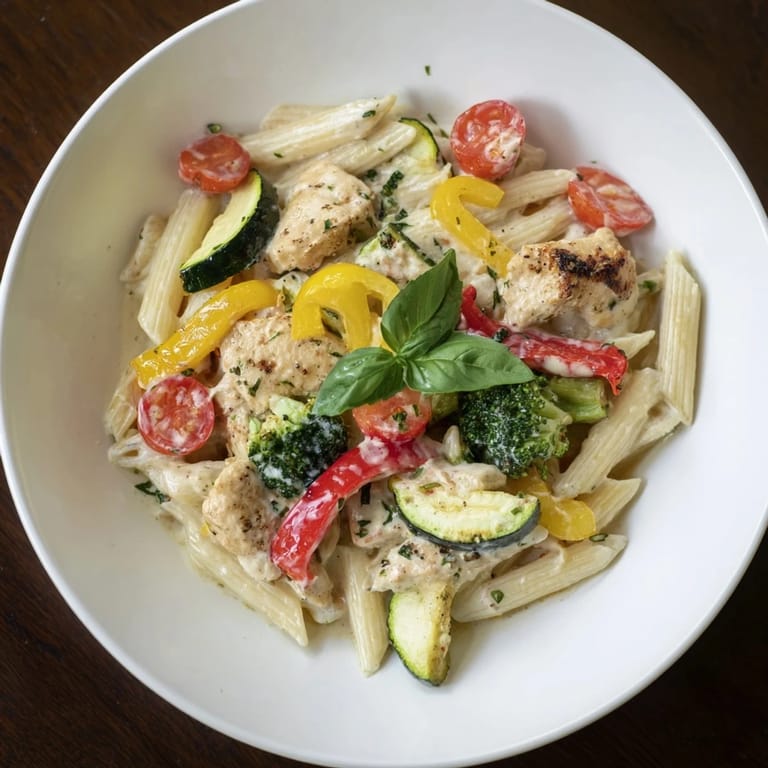
Save I stumbled onto this pasta one Tuesday evening when my fridge was overflowing with vegetables from the farmer's market and I had exactly one chicken breast left. Rather than waste the bounty, I grabbed five different veggies, tossed them into a pan with some cream, and somehow landed on something my family still asks for. The 5-4-3-2-1 approach isn't a rigid formula—it's just a cheerful reminder that a colorful plate starts with variety, and that sometimes the best meals come from happy accidents.
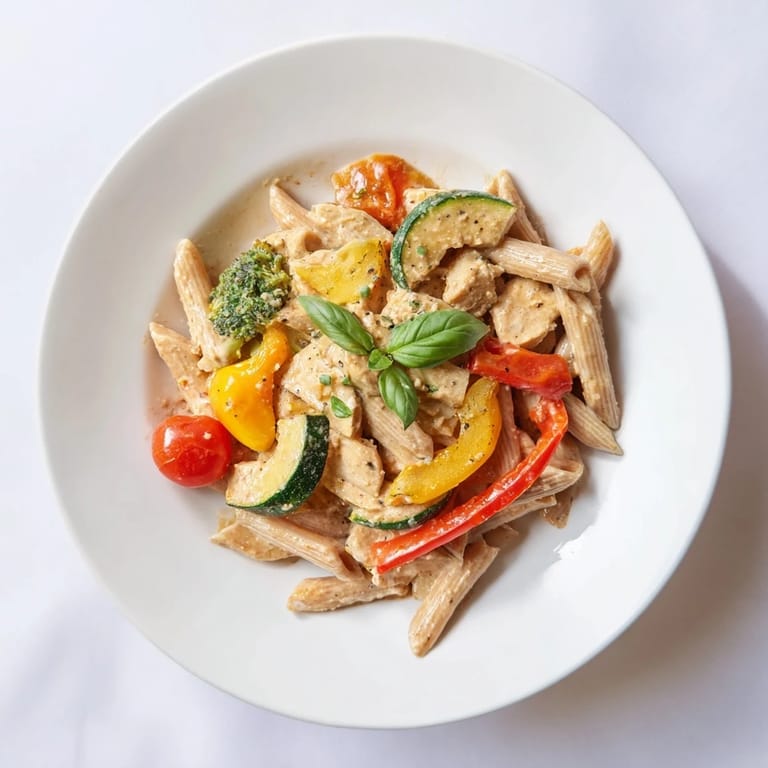
My partner walked in as I was plating this one night and asked if I'd ordered takeout, genuinely surprised I'd made it at home. That simple moment—the kitchen smelling like roasted garlic and fresh basil, the vibrant colors tumbling across the plate—reminded me that weeknight cooking doesn't have to look complicated to taste genuine and feel celebratory.
Ingredients
- Chicken breasts: Cut into bite-sized pieces so they cook evenly and stay tender; don't skip the seasoning step, as salt drawn into the meat early makes all the difference.
- Red bell pepper: Adds sweetness and crunch; slice it thick enough that pieces hold their shape but thin enough to cook through in minutes.
- Zucchini: The mild flavor lets other ingredients shine while the half-moon shape looks intentional without any fuss.
- Yellow squash: Similar to zucchini but slightly sweeter; together they create visual harmony and balanced flavor.
- Cherry tomatoes: Halved so they release their juice into the sauce at just the right moment, adding brightness without overwhelming.
- Broccoli florets: They stay crisp-tender if added early and tossed frequently; break them into smaller pieces so they cook evenly.
- Penne or farfalle pasta: Either shape traps sauce beautifully; cook to al dente so it doesn't turn mushy when tossed.
- Heavy cream: The binding ingredient that transforms scattered pan ingredients into something cohesive and silky.
- Parmesan cheese: Freshly grated matters here because pre-shredded cheese won't melt as smoothly into the warm sauce.
- Garlic: Minced and bloomed in hot oil for 30 seconds, it fills the kitchen with that unmistakable signal that something delicious is happening.
- Olive oil: Use enough to prevent sticking but not so much that the finished dish feels slick; taste as you go.
- Italian herbs: Dried oregano and basil work, though fresh basil at the end brings a different kind of brightness.
Tired of Takeout? 🥡
Get 10 meals you can make faster than delivery arrives. Seriously.
One email. No spam. Unsubscribe anytime.
Instructions
- Start the pasta with intention:
- Bring salted water to a rolling boil—this is where seasoning begins. Add pasta and stir once so it doesn't clump together, then let it cook undisturbed until it's just tender with a slight resistance when you bite it.
- Sear the chicken until golden:
- Heat olive oil until it shimmers, then add chicken pieces in a single layer. Let them sit undisturbed for a minute or two so they develop a golden crust before stirring; this is where the flavor comes from.
- Build the aromatics:
- Once chicken is out, add a touch more oil if the pan looks dry, then add minced garlic and let it toast for just 30 seconds. You'll smell it immediately—that's your cue to keep moving before it browns.
- Gather the vegetables:
- Add harder vegetables first (peppers, zucchini, squash) and let them soften for a few minutes while stirring, then toss in broccoli so it stays bright and crisp.
- Bring everything together:
- Return the chicken to the pan along with cherry tomatoes, cook briefly, then add the drained pasta, cream, cheese, and herbs. Toss gently and watch as everything becomes a unified, creamy dish.
- Adjust with pasta water:
- The reserved starchy water is your secret weapon—add it splash by splash until the sauce coats the pasta without drowning it. Taste and season generously with salt and pepper.
 Save
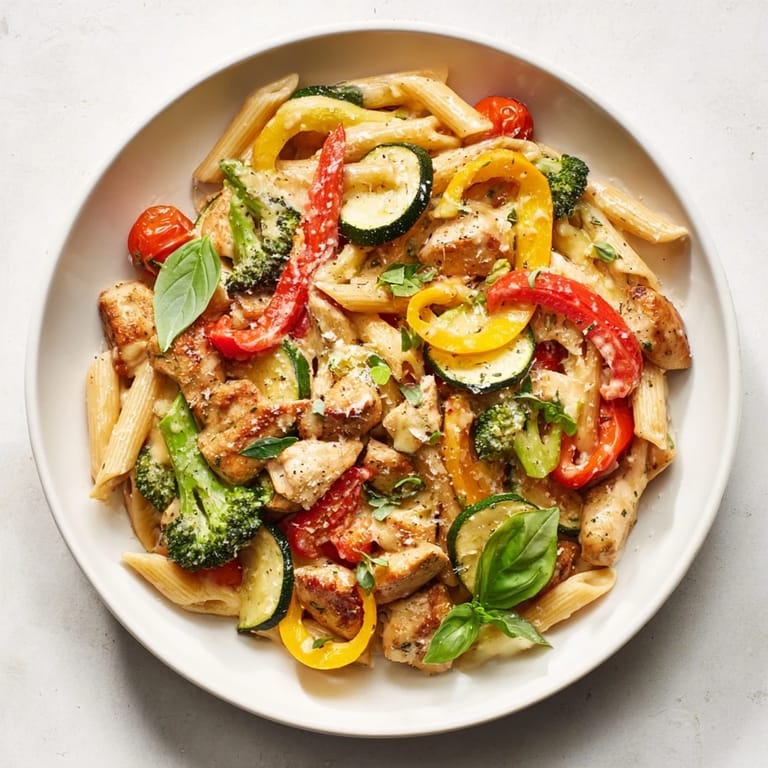
Save There's a quiet satisfaction in bringing a bowl of colorful, steaming pasta to the table knowing you made it from ingredients that were separate and ordinary just 35 minutes before. It's the kind of simple dish that reminds you cooking doesn't require fancy techniques—just attention, fresh ingredients, and the willingness to trust your instincts.
Why the Five-Vegetable Approach Works
The beauty of this dish lives in its variety. Each vegetable brings its own flavor and texture—peppers offer sweetness, zucchini adds mild earthiness, squash contributes subtle depth, cherry tomatoes burst with brightness, and broccoli provides a satisfying bite. When you cook them together, they don't compete; instead, they support each other and make the whole plate feel abundant. I've found that mixing different colors and shapes also means the dish photographs beautifully, which sounds silly until you realize a gorgeous-looking meal tastes better just by being lovely to look at.
Swapping and Customizing Without Losing Your Way
The magic of this recipe is that it handles substitutions gracefully. Out of zucchini? Add asparagus or snap peas instead. No cherry tomatoes? Sun-dried tomatoes or even fresh spinach work beautifully. Want to lean vegetarian? Crispy chickpeas or cubed tofu soak up the sauce just as well as chicken. The formula isn't rigid—it's flexible enough to match what's in your market, your pantry, or your mood that evening. I've made versions with shrimp, with different pasta shapes, even with a splash of white wine added to the pan before the cream.
Making It Your Own at the Table
The finishing touches are where people truly make this dish their own. Fresh basil scattered on top adds an herbaceous lift that can't be replicated by dried Italian herbs. An extra shower of Parmesan, a crack of pepper, even a squeeze of fresh lemon juice right before eating—these small gestures transform a recipe into something personal. I've had friends add a handful of spinach, a dollop of pesto, or a sprinkle of red pepper flakes.
- Fresh basil torn by hand (not cut, which bruises it) scatters across the top like a final blessing.
- A wedge of lemon on the side lets people brighten their bite without you having to guess how much acid to add.
- Extra Parmesan and a pepper grinder at the table invites everyone to make the dish taste exactly right for them.
 Save
Save This pasta teaches a quiet lesson: that good food comes from paying attention to simple ingredients and giving them space to shine together. Serve it hot, eat it slowly, and let yourself enjoy something made with your own hands.
Recipe FAQs
- → How do I keep the vegetables crisp-tender?
Sauté the vegetables over medium heat, stirring often for 4-5 minutes, just until they are tender but still have a slight bite.
- → Can I substitute the chicken with a vegetarian option?
Yes; tofu or chickpeas can be used instead of chicken to maintain protein and texture.
- → What pasta types work best in this dish?
Penne or farfalle hold the sauce well and complement the mixed vegetables nicely, but other short pasta shapes can also be used.
- → How do I create the creamy sauce without it becoming too thick?
Add reserved pasta cooking water gradually while tossing to achieve a smooth, light sauce consistency without heaviness.
- → What herbs enhance the overall flavor?
Dried Italian herbs are used in the sauce, and fresh basil leaves added at the end brighten the dish with aromatic notes.
- → Can this dish be prepared ahead of time?
You can cook the components separately and combine just before serving to keep textures fresh and vibrant.