 Save
Save My neighbor Maria handed me a steaming bowl of this soup one chilly October evening, and I watched steam curl up from the lime-bright broth while she insisted it was nothing fancy, just something her abuela made when the weather turned. One spoonful and I understood why she'd thought to bring it over—the way the fire-roasted tomatoes caught against fresh cilantro, how that squeeze of lime made everything taste alive. I've made it dozens of times since, and it's become my go-to when I need to feed people something that feels both comforting and a little bit special.
I made this for a book club meeting last year, and what I remember most isn't the compliments on the soup itself—it was watching everyone take that moment before eating, closing their eyes while they inhaled the aroma. Someone called it meditative, which made me laugh, but they weren't wrong. There's something about this soup that makes people slow down.
Ingredients
- Boneless, skinless chicken breasts (2, about 400 g): Choose breasts that are roughly the same thickness so they cook evenly; thinner ends cook faster than thick centers, which is why shredding at the end works perfectly.
- Yellow onion (1 medium, diced): The foundation of flavor here—don't skip the step of letting it soften completely, as it becomes sweet and almost melts into the broth.
- Garlic (2 cloves, minced): Fresh garlic makes all the difference; jarred or powdered just doesn't have that sharp, living quality you need.
- Red bell pepper (1, diced): Adds sweetness and a subtle fruity note that balances the spice and acidity from the tomatoes.
- Frozen or canned corn (1 cup, drained): Frozen corn is actually preferable here because it's picked at peak ripeness; if using canned, drain it well to avoid excess liquid.
- Jalapeño (1, seeded and finely chopped, optional): This is where you control the heat—keeping seeds in doubles the spice, but removing them gives you the flavor without overwhelming fire.
- Lime (1, juiced): Squeeze it fresh right before serving; bottled lime juice loses its brightness and can taste thin or metallic by comparison.
- Fresh cilantro (1/4 cup chopped, plus extra for garnish): Some people say cilantro tastes like soap, and that's valid, but if you love it, this herb brings a peppery, fresh finish that's irreplaceable.
- Fire-roasted diced tomatoes (1 can, 400 g): The char from fire-roasting gives this soup its signature smoky depth—regular canned tomatoes will make it taste completely different.
- Low-sodium chicken broth (1 liter or 4 cups): Low-sodium lets you control the salt and taste the other flavors; high-sodium broth can overpower the delicate spice balance.
- Bay leaf (1): This small leaf quietly infuses the broth with an herbal note that ties everything together; remember to fish it out before serving or you'll get an unpleasant surprise.
- Chili powder (1½ teaspoons): Quality matters here—a good chili powder has complexity, while cheap stuff can taste harsh and one-dimensional.
- Dried oregano (1 teaspoon): Mexican oregano is slightly different from Mediterranean oregano if you can find it, with a more citrusy, floral quality.
- Ground cumin (½ teaspoon): Cumin is warm and earthy; too much makes the soup taste like a spice market, so measure carefully.
- Smoked paprika (½ teaspoon): This is the secret that makes people ask what you've done to make it taste so restaurant-quality.
- Salt and black pepper (to taste): Taste as you go near the end—the fire-roasted tomatoes already have a salty edge, and you don't want to overdo it.
- Corn tortillas (4, cut into strips): Cut them thin for maximum crispness; thick strips won't crisp properly and will get chewy instead.
- Olive oil (1 tablespoon for tortillas, 1 tablespoon for cooking): Use regular olive oil here, not extra virgin, which can burn and taste bitter at higher temperatures.
Tired of Takeout? 🥡
Get 10 meals you can make faster than delivery arrives. Seriously.
One email. No spam. Unsubscribe anytime.
Instructions
- Make the tortilla strips:
- Preheat your oven to 180°C (350°F) and toss those thin tortilla strips with a tablespoon of olive oil, making sure every piece gets a light coating. Spread them on a baking sheet in a single layer and bake for 10 to 12 minutes, stirring once halfway through, until they're golden and crisp—they should sound crunchy when you break one.
- Build your flavor base:
- Heat a tablespoon of olive oil in your large pot over medium heat and add the diced onion, red bell pepper, and jalapeño if you're using it. Let these soften for 4 to 5 minutes, stirring occasionally, until the onion turns translucent and the peppers start to release their sweetness.
- Wake up the spices:
- Add your minced garlic and cook for just about a minute—you want to smell that garlicky aroma but not let it brown, which would make it bitter. Then stir in your chili powder, oregano, cumin, smoked paprika, and a pinch of salt and pepper, cooking everything together for 30 seconds so the spices toast slightly and become more fragrant.
- Add the main ingredients:
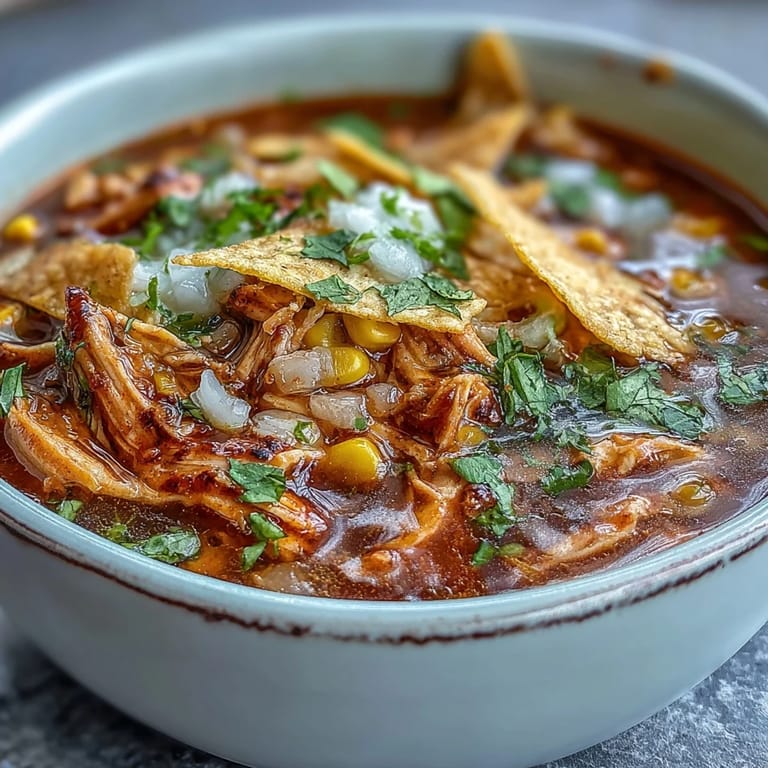
- Now drop in those chicken breasts whole (don't cut them yet), pour in your fire-roasted tomatoes with all their juice, add the corn, toss in that bay leaf, and pour in the chicken broth. Bring everything to a boil, then turn the heat down to a gentle simmer and let it cook uncovered for about 20 minutes, until the chicken is completely cooked through.
- Shred and finish:
- Carefully remove the cooked chicken breasts with a slotted spoon and place them on a cutting board—they'll be tender and easy to shred. Use two forks to pull them apart into bite-sized pieces, then return all that shredded chicken back into the pot where it belongs.
- Brighten with citrus and herbs:
- Squeeze in your fresh lime juice and stir in that chopped cilantro, then taste the soup carefully and adjust the seasoning—maybe a touch more salt, a crack of pepper, whatever it needs. Fish out that bay leaf, and you're ready to serve.
- Assemble and serve:
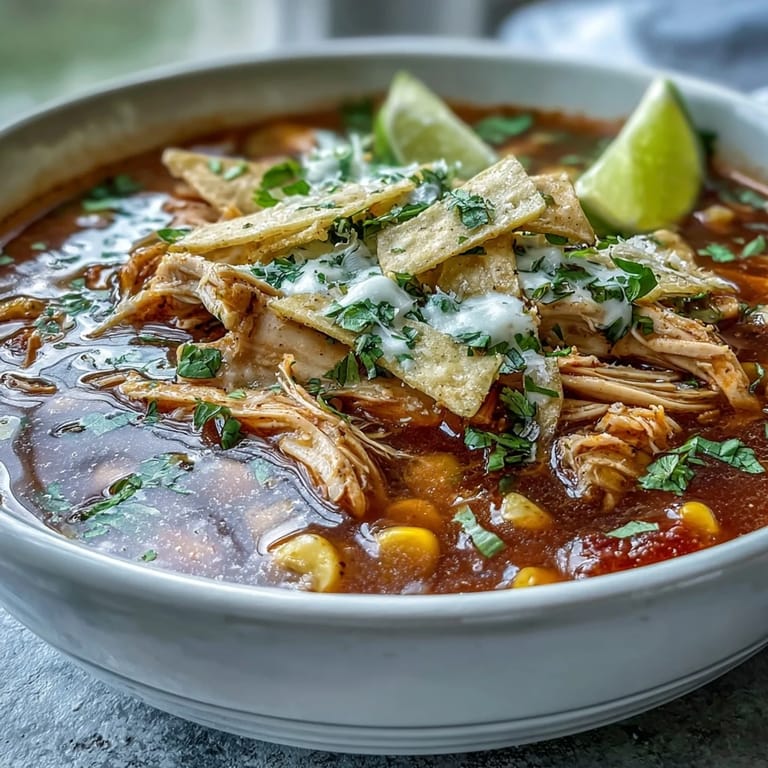
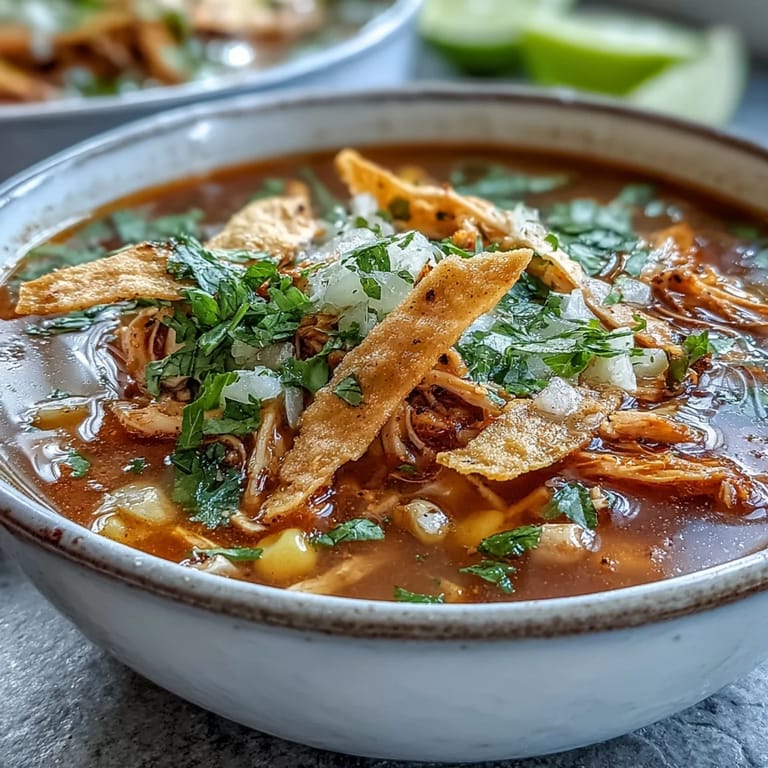
- Ladle the soup into bowls and crown each one with a handful of those crispy tortilla strips, then add whatever toppings call to you—avocado slices, shredded cheese, a dollop of sour cream, and extra lime wedges on the side.
 Save
Save There was a morning last spring when I made this soup for my sister while she was going through a rough patch, and she sat at my kitchen counter just eating it slowly, not talking, and somewhere between the second and third bowl she looked up and smiled for the first time in weeks. Food doesn't fix everything, but sometimes it holds space for healing, and that's exactly what this soup does.
Variations That Work
Once you understand this soup's architecture, you can play with it. I've made it spicier by leaving the jalapeño seeds in and adding a pinch of cayenne, which transforms it into something that wakes you up. Other times I've used rotisserie chicken from the grocery store to cut the active cooking time in half—just shred it and add it near the end instead of simmering whole breasts. For a vegetarian version, skip the chicken and use vegetable broth, then add a can of black beans for protein; it's honestly just as satisfying, though different in character.
The Science of Flavor Layers
This soup works because it builds flavor systematically—first the aromatics soften and become sweet, then the spices toast and deepen, then the acidity and heat from the tomatoes and jalapeño layer on top, and finally the brightness of lime and cilantro bring everything into focus. Each step matters because it's creating a foundation for the next one. When you skip steps or add everything at once, you lose that complexity.
Serving Suggestions and Timing
This soup is best served immediately after assembly, while those tortilla strips are still crisp and the broth is still steaming. If you need to make it ahead, prepare everything except the tortilla strips, then crisp those fresh right before serving. Pair it with warm corn tortillas or crusty bread, and maybe a cold glass of agua fresca or Mexican beer if that's your style.
- The soup keeps well in the refrigerator for up to three days, though the tortilla strips won't stay crispy—make fresh ones for leftovers.
- You can freeze the soup without the tortilla strips and toppings; thaw it overnight and reheat gently on the stove.
- Have all your toppings prepped and within arm's reach when you serve, because everyone will want different combinations and it's nice to let people customize.
 Save
Save This recipe has become one of those dishes I return to again and again, not because it's fancy but because it's honest and it feeds both body and spirit. I hope it does the same for you.
Recipe FAQs
- → Can I make this soup ahead of time?
Yes, this soup actually tastes better the next day as flavors have more time to meld together. Store in an airtight container in the refrigerator for up to 4 days. Add fresh tortilla strips and garnishes when serving to maintain their texture.
- → How can I make it spicier?
Leave the seeds in the jalapeño or add additional diced jalapeños. You can also incorporate a pinch of cayenne pepper or add your favorite hot sauce to individual servings. For maximum heat, try adding some diced chipotle peppers in adobo sauce.
- → Can I use rotisserie chicken instead?
Absolutely. Using a store-bought rotisserie chicken is a great time-saver. Simply shred the meat and add it during the last 5-10 minutes of simmering to heat through. This reduces the total cooking time significantly.
- → What can I use instead of tortilla strips?
Tortilla chips (crushed) work perfectly as a quick substitute. You could also serve with warm corn tortillas, crusty bread, or even rice. For added crunch without tortillas, try pumpkin seeds or crushed plantain chips.
- → Is this soup freezer-friendly?
Yes, the soup base freezes well for up to 3 months. However, store tortilla strips separately and add them after reheating to prevent sogginess. The texture of vegetables may soften slightly after freezing and thawing.