 Save
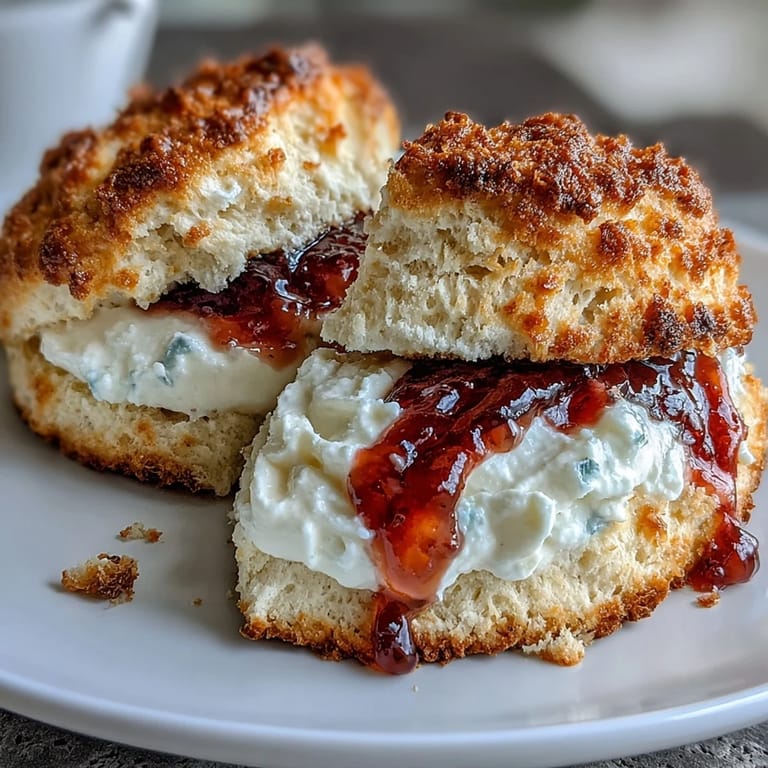
Save There's something about the smell of warm scones coming out of the oven that stops time. Years ago, I watched my neighbor arrange a small table on her garden path one April afternoon, and when she pulled a batch of these from the oven, the whole street seemed to pause. That buttery, tender texture paired with the bright tartness of jam and the cloud-soft clotted cream felt like an edible moment of peace. I've made them countless times since, and they never fail to turn an ordinary Tuesday into something worth celebrating.
I baked these for my mother's book club on a rainy spring evening, and what surprised me wasn't how quickly they disappeared, but how the conversation shifted around them. Women who'd been scrolling through phones moments before suddenly looked up, made eye contact, shared real stories. Something about breaking open a warm scone and loading it with jam does that—it softens people.
Ingredients
- All-purpose flour (2 cups): This is your foundation, and measuring by weight rather than volume makes a real difference in consistency across batches.
- Granulated sugar (1/4 cup): Just enough sweetness to complement the jam without making the scones taste like cake—restraint is the secret.
- Baking powder (1 tablespoon): Your lift mechanism; don't skip it or you'll end up with dense hockey pucks instead of cloud-like scones.
- Fine sea salt (1/2 teaspoon): This tiny amount awakens all the other flavors and prevents the butter from tasting flat.
- Unsalted butter, cold and cubed (1/2 cup): Cold butter is non-negotiable—it creates those pockets of steam that make scones flaky, so keep it in the fridge until the last moment.
- Whole milk (2/3 cup plus extra for brushing): The liquid that brings everything together; if you brush the tops before baking, you'll get that beautiful golden shine.
- Large egg (1): Adds richness and helps bind the dough without making it tough.
- Pure vanilla extract (1 teaspoon): A whisper of vanilla deepens the buttery flavor in a way people can't quite identify but absolutely notice.
- Clotted cream (1 cup): This is the crown jewel—thick, luxurious, and essential to the whole experience.
- Quality fruit jam (1 cup): Use something you'd actually eat on toast, whether strawberry, raspberry, or something more adventurous.
Tired of Takeout? 🥡
Get 10 meals you can make faster than delivery arrives. Seriously.
One email. No spam. Unsubscribe anytime.
Instructions
- Heat your oven and prep:
- Set your oven to 425°F and line a baking sheet with parchment paper—this prevents sticking and gives you even browning on the bottoms.
- Build your dry base:
- Whisk flour, sugar, baking powder, and salt in a large bowl until everything is evenly distributed and there are no pockets of baking powder that might create bitter spots.
- Work in the cold butter:
- Add your cold, cubed butter and use a pastry cutter or your fingertips to rub it into the flour mixture until it resembles coarse breadcrumbs. This texture is everything—those little butter pockets become the flaky layers.
- Mix your wet ingredients:
- In a small bowl, whisk together milk, egg, and vanilla until smooth and combined.
- Bring it together gently:
- Pour the wet mixture into the dry ingredients and mix with a fork until just barely combined—this is where most people mess up by overmixing. Stop as soon as you don't see loose flour; lumpy is better than overworked.
- Shape your dough:
- Turn the dough out onto a lightly floured surface and pat it into a 1-inch-thick round using the heel of your hand. Don't roll with a pin; patting creates better texture.
- Cut and arrange:
- Using a 2.5-inch round cutter, stamp out 8 scones, twisting slightly as you lift to help them rise evenly. Re-roll scraps gently and cut again, then place all scones on your prepared baking sheet.
- Brush and bake:
- Lightly brush the tops with milk for that golden finish, then bake for 12 to 15 minutes until they've risen and turned a beautiful warm brown. You'll know they're done when a skewer inserted in the middle comes out clean.
- Cool and serve:
- Transfer to a wire rack and let cool just slightly—they should still be warm when you split them and load them with clotted cream and jam.
 Save
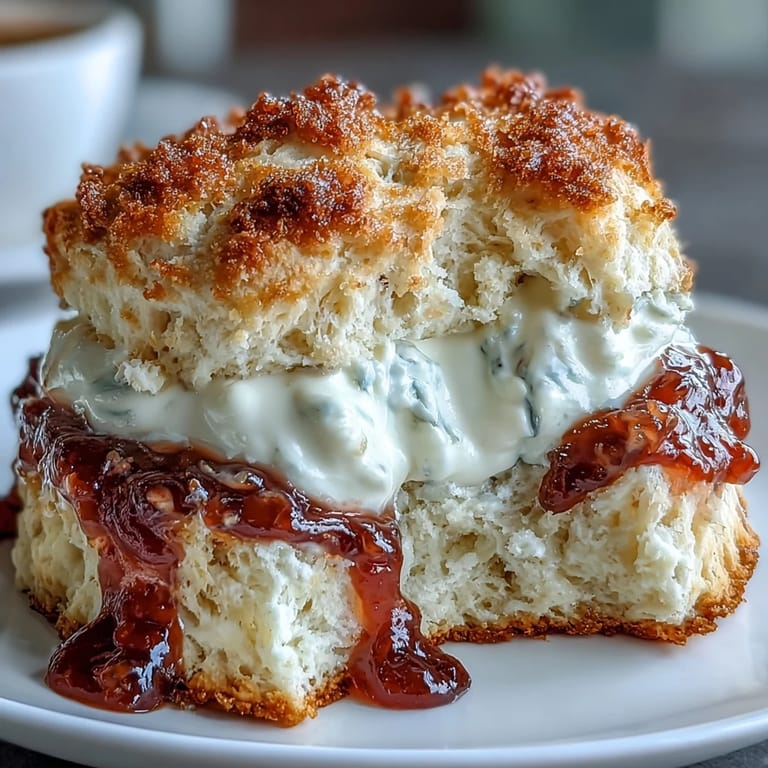
Save There was an afternoon last spring when my daughter helped me make these for the first time, and she was fascinated by how the cold butter created little pockets in the dough. We tasted the first warm scone together, and her face when that buttery steam hit her mouth was pure delight. That's when I realized this recipe isn't just about technique—it's about those moments of shared discovery.
The Clotted Cream Question
Clotted cream is thick, almost spreadable, with a texture somewhere between whipped cream and butter. If you can't find it at your regular grocery store, try the British aisle or a specialty shop. Some people make their own by heating heavy cream very slowly, but honestly, the store-bought version is worth tracking down for this—it's part of what makes the whole thing feel special. The richness of clotted cream against the tartness of jam and the tender scone is a balance that feels intentional, like someone understood what would make your mouth happy.
Why Vanilla Matters Here
It would be easy to skip the vanilla extract and the scones would still be fine. But that teaspoon of vanilla does something subtle—it deepens the butter flavor and adds a warmth that makes people want another scone. I learned this by accident when I once forgot it and someone asked if I'd changed the recipe. That one ingredient shouldn't make a difference, but it does, and now I never skip it.
Beyond Strawberry Jam
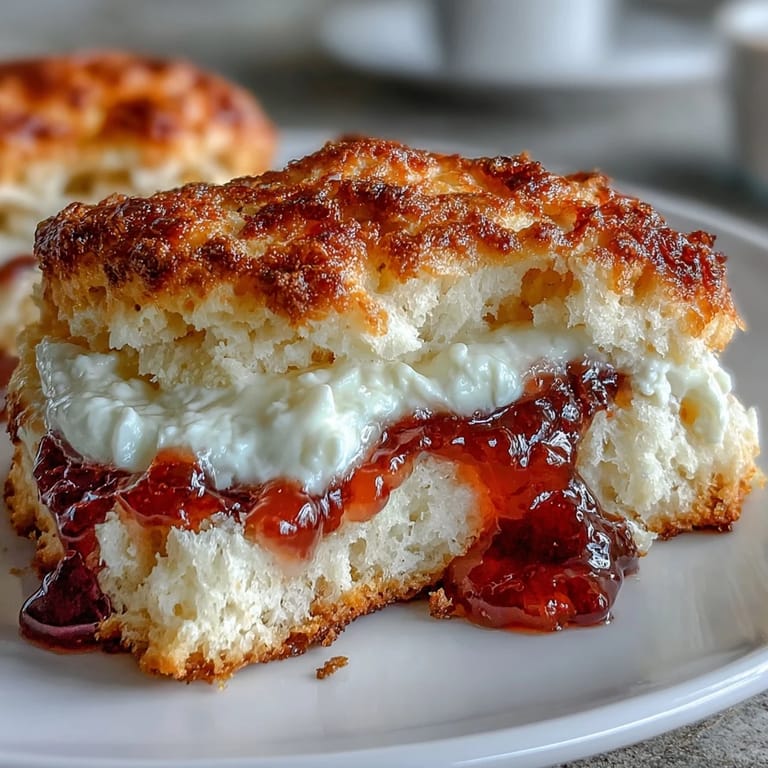
While strawberry jam is the classic pairing, these scones are forgiving enough to work with almost anything you love. Raspberry, apricot, and blackberry all shine brilliantly. Lemon curd brings a sophisticated brightness, and honey offers something gentle and floral. I've even spread them with fig jam and clotted cream on an autumn evening when someone unexpected arrived at my door, and it felt like the right choice.
- Lemon curd mixed with a tiny bit of clotted cream creates an almost cloud-like topping.
- If you want to go savory, try smoked salmon, cream cheese, and fresh dill for a completely different tea experience.
- Whatever you choose, warm the jam slightly so it spreads without tearing the scone apart.
 Save
Save Every time I make these, I'm reminded that the best recipes aren't about impressing people—they're about creating moments where someone feels cared for. These scones do exactly that.
Recipe FAQs
- → What is the best way to mix the dough?
Use a pastry cutter or fingertips to rub cold butter into the dry ingredients until coarse crumbs form, then gently fold in wet ingredients to avoid overworking the dough.
- → How do I ensure the scones turn out tender?
Keeping the butter cold and mixing gently helps create flaky layers and a tender crumb in the scones.
- → Can I use alternatives to clotted cream and jam?
Yes, try lemon curd or honey for different flavor combinations that complement the scones well.
- → What oven temperature is ideal for baking these scones?
Baking at 425°F (220°C) results in golden, risen scones with a light texture.
- → How should I store leftover scones?
Store cooled scones in an airtight container; they can also be frozen and reheated gently when needed.