 Save
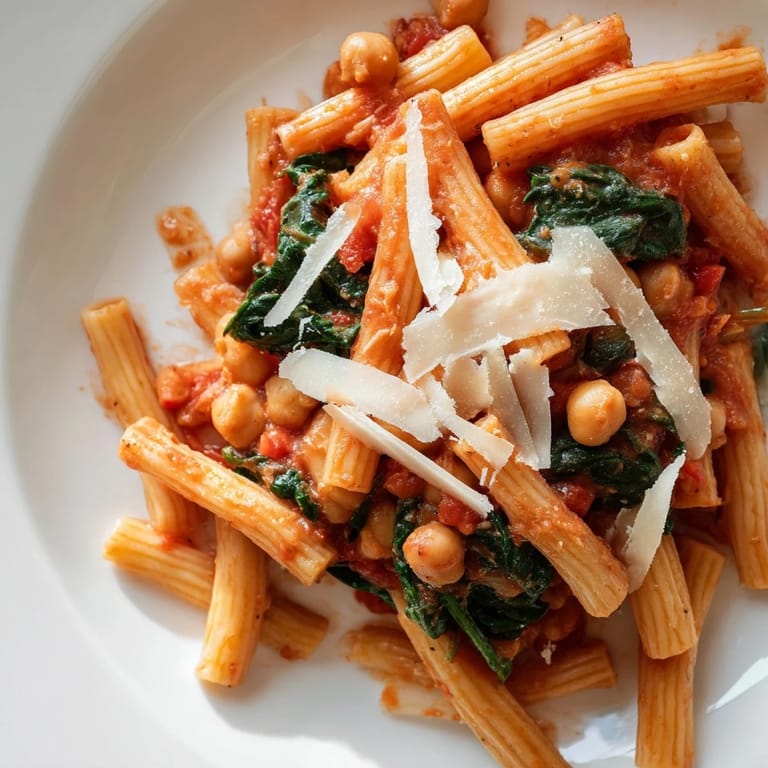
Save My roommate wandered into the kitchen one Thursday night, exhausted from work, and asked what smelled so good. I was stirring a skillet of chickpeas bubbling in cream and tomatoes, the garlic filling every corner of our tiny apartment. She grabbed a fork, tasted it straight from the pan, and declared it better than anything we'd ordered all month. That's when I knew this pasta wasn't just dinner, it was the kind of meal that makes you forget you're tired.
I made this for a small dinner party once, and my friend who claimed she didn't like chickpeas asked for the recipe before dessert even arrived. The trick was letting the chickpeas simmer long enough to soak up all the garlic and herbs, turning them soft and almost creamy on their own. When the spinach wilted into the sauce, it added just enough color and freshness to balance the richness. Everyone went quiet for a few minutes, which is always a good sign at the table.
Ingredients
- Short pasta (penne, rigatoni, or fusilli): The ridges and tubes catch the creamy sauce beautifully, and cooking it just to al dente keeps the texture from getting mushy when you toss it in the skillet.
- Olive oil: Use a good quality one since it's the base of the flavor, and it helps the onions and garlic bloom without burning.
- Yellow onion: Finely chopped onion melts into the sauce and adds a subtle sweetness that balances the acidity of the tomatoes.
- Garlic: Fresh minced garlic is non-negotiable here, it perfumes the whole dish and gives it that unmistakable warmth.
- Chickpeas: Drain and rinse them well to remove the canned taste, they become tender and almost buttery after simmering in the sauce.
- Diced tomatoes: The backbone of the sauce, they bring acidity and body, and I prefer the canned ones for their consistent texture.
- Vegetable broth: Just enough to loosen the sauce and help everything meld together without making it watery.
- Dried oregano and thyme: These herbs give the dish its Mediterranean soul, and dried works better here than fresh since they bloom in the simmering sauce.
- Crushed red pepper flakes: Optional but highly recommended, a little heat cuts through the cream and wakes up the whole dish.
- Heavy cream or plant-based cream: This is what makes the sauce luxurious and velvety, coating everything in a way that feels decadent.
- Parmesan cheese: Adds a salty, nutty depth, and it helps thicken the sauce as it melts in.
- Fresh baby spinach: Wilts down to almost nothing but adds a pop of color and a hint of earthiness that balances the richness.
- Fresh basil and extra Parmesan: A handful of torn basil at the end makes it feel restaurant-quality, and more cheese never hurt anyone.
Tired of Takeout? 🥡
Get 10 meals you can make faster than delivery arrives. Seriously.
One email. No spam. Unsubscribe anytime.
Instructions
- Boil the pasta:
- Cook your pasta in a big pot of salted boiling water until it's just al dente, then save half a cup of that starchy pasta water before draining. That water is liquid gold for adjusting the sauce later.
- Sauté the aromatics:
- Heat olive oil in a large skillet over medium heat, add the chopped onion, and let it soften for a few minutes until it's translucent and smells sweet. Toss in the garlic and stir for about a minute, just until it's fragrant but not browned.
- Simmer the chickpea mixture:
- Add the chickpeas, diced tomatoes, vegetable broth, oregano, thyme, red pepper flakes, salt, and pepper to the skillet. Let it all simmer uncovered for about 10 minutes, stirring now and then, so the chickpeas absorb the flavors and the sauce thickens slightly.
- Make it creamy:
- Lower the heat and stir in the cream and Parmesan, mixing until the sauce becomes smooth and creamy. The cheese will melt into the sauce and give it a rich, glossy finish.
- Wilt the spinach:
- Add the fresh spinach to the skillet and cook for a couple of minutes, stirring gently, until it wilts down completely. It'll look like a lot at first, but it shrinks fast.
- Toss the pasta:
- Add the drained pasta to the skillet and toss everything together, adding splashes of the reserved pasta water until the sauce coats every piece beautifully. The starch from the water helps the sauce cling and brings everything together.
- Serve and garnish:
- Plate it up right away, then tear some fresh basil over the top and shower it with extra Parmesan. Serve it hot and watch it disappear.
 Save
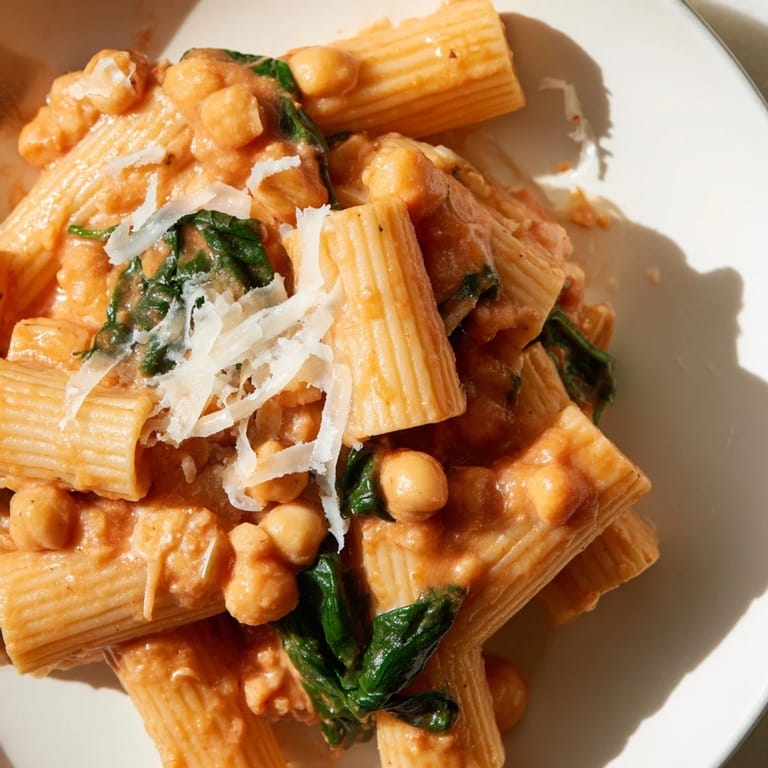
Save One rainy Sunday, I made a double batch of this and brought half to my neighbor who'd just had surgery. She texted me later that night saying it was the first thing all week that made her feel human again. It reminded me that good food doesn't just fill you up, it has a way of showing up for people when words aren't enough.
How to Make It Vegan
Swap the heavy cream for a plant-based version like cashew or oat cream, and use a vegan Parmesan or nutritional yeast for that cheesy, nutty flavor. I've done this plenty of times and honestly can't tell the difference, the sauce still clings and tastes rich. Just make sure your pasta is egg-free, and you're all set for a completely plant-based version that's just as comforting.
Ingredient Swaps and Add-Ins
If you don't have spinach, kale works just as well, though it takes a minute longer to wilt and has a heartier bite. Sun-dried tomatoes or roasted red peppers stirred in at the end add a sweet, smoky depth that makes it feel even fancier. I've also tossed in leftover roasted vegetables like zucchini or bell peppers, and they blend right into the sauce without feeling like an afterthought.
Storing and Reheating
This pasta keeps well in the fridge for up to three days in an airtight container, and the flavors actually deepen as it sits. When reheating, add a splash of broth or water to loosen the sauce since it thickens up in the cold. I usually reheat it gently on the stovetop over low heat, stirring often, but the microwave works in a pinch if you cover it and stir halfway through.
- Store in a sealed container to keep it from drying out.
- Reheat with a little liquid to bring back the creamy texture.
- Eat within three days for the best flavor and freshness.
 Save
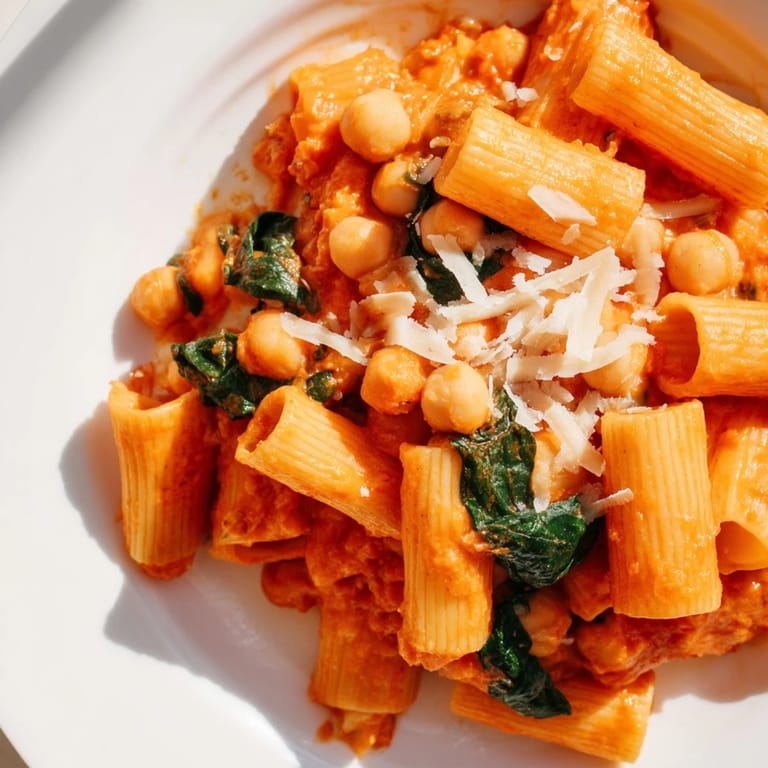
Save This dish has become my go-to when I want something that feels special but doesn't require much thought or fancy ingredients. It's proof that comfort food doesn't have to be complicated, just made with a little care and good timing.
Recipe FAQs
- → Can I make this dish dairy-free?
Yes, simply substitute the heavy cream and Parmesan cheese with plant-based alternatives. Coconut cream or oat cream work beautifully in place of dairy cream, and there are excellent vegan Parmesan options available that melt smoothly into the sauce.
- → What type of pasta works best for this dish?
Short pasta shapes like penne, rigatoni, or fusilli work best as they capture the creamy sauce effectively. These tube or spiral shapes hold the sauce better than long pasta and create a more cohesive dish with the chickpeas and spinach.
- → How do I prevent the cream from curdling?
Always reduce the heat to low before adding the cream, and ensure the base sauce is no longer rapidly boiling. Temper the cream by adding it slowly while stirring constantly. Never let the sauce boil vigorously once cream is incorporated.
- → Can I substitute the chickpeas with another legume?
Absolutely. White beans, cannellini beans, or lentils are excellent alternatives that provide similar texture and protein content. Adjust cooking time slightly if using dried legumes that require longer simmering.
- → What wine pairs well with this dish?
A crisp Pinot Grigio or Verdicchio complements the creamy sauce and tomato flavors beautifully. The acidity of white wine cuts through the richness of the cream, balancing the overall flavor profile of this Mediterranean dish.
- → Can I prepare this ahead of time?
Yes, prepare the sauce components in advance and store them separately. Cook the pasta fresh just before serving to maintain optimal texture. Combine everything in the final minutes for best results with creamy consistency.