 Save
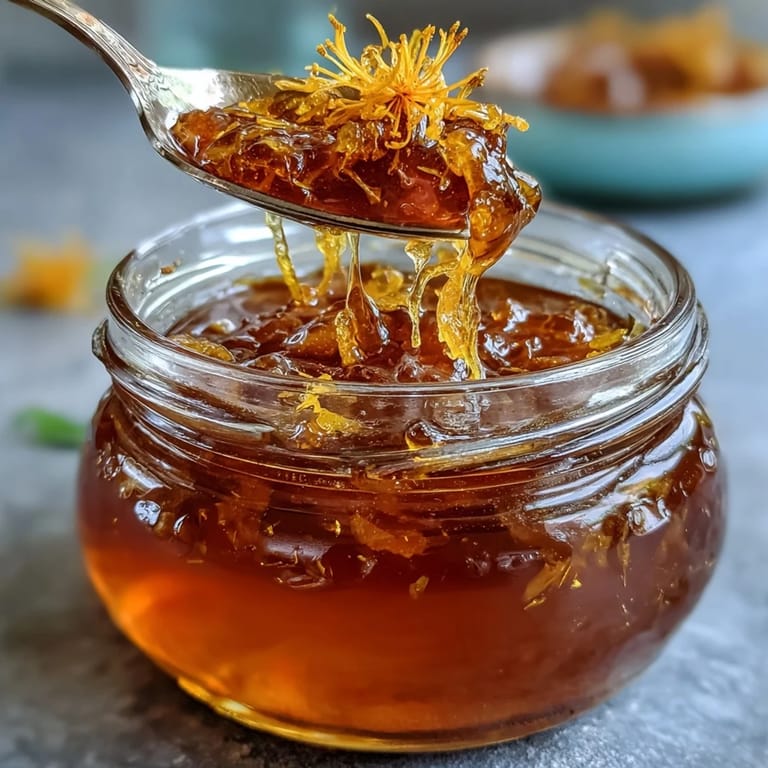
Save My neighbor's yard was overrun with dandelions one spring, and instead of cursing them, she invited me over to forage. We spent a sunny afternoon plucking bright yellow petals, our fingers stained golden, laughing about how something so despised could taste so delicate. That first batch of jelly was liquid sunshine in a jar—a color so luminous it stopped people mid-bite.
I'll never forget spreading this on warm scones at a potluck and watching someone's face light up when they tasted it—they genuinely couldn't believe dandelions made something so smooth and silky. That moment made every petal I'd plucked worth it.
Ingredients
- Dandelion petals: Pick from pesticide-free areas in spring or early summer when they're tender and bright; you'll need to strip away all the green bits, which take patience but make a huge difference in flavor.
- Water: Plain tap water works perfectly to create the base tea that carries all that delicate floral essence.
- Fresh lemon juice and zest: This keeps the jelly from being cloying and adds a brightness that makes people lean in for another taste.
- Honey: Adds subtle depth and acts as a natural preservative alongside the pectin.
- Granulated sugar: Essential for the gel structure; don't skip it even if you think it'll be too sweet.
- Powdered fruit pectin: This is what creates that perfect wobble and spread; use the powdered kind for reliable setting.
Tired of Takeout? 🥡
Get 10 meals you can make faster than delivery arrives. Seriously.
One email. No spam. Unsubscribe anytime.
Instructions
- Gather and prep your petals:
- Rinse dandelion blossoms gently under cool water and pat dry with a kitchen towel. This is meditative work—pinch off every green sepal and stem, keeping only the sunny yellow petals, which takes maybe fifteen minutes but determines your final flavor.
- Brew the dandelion tea:
- Combine petals and water in a medium saucepan, bring to a rolling boil, then dial it back to a gentle simmer for ten minutes. The kitchen will smell almost herbal at this point, subtle and green—let it steep for thirty minutes off heat so every bit of floral magic transfers into the water.
- Strain and capture the liquid:
- Pour everything through a fine mesh sieve or cheesecloth, pressing the softened petals to squeeze out every drop of tea. You want about three to three and a half cups of golden liquid; if you have more, that's fine—if less, add a splash of water.
- Build your flavor base:
- Return the tea to a clean saucepan and stir in lemon juice, lemon zest, and honey until completely combined. Taste it here; it should feel bright and slightly floral, not cloying.
- Add pectin and reach the boil:
- Whisk in the powdered pectin and crank the heat to high, stirring constantly until the mixture reaches a full, rolling boil that doesn't stop when you stir. This usually takes five to seven minutes and is when things get exciting.
- Add sugar and boil hard:
- Dump all the sugar in at once and keep stirring as it returns to a full boil, then let it bubble hard for one to two minutes—no shortcuts here, as this is when the gel chemistry happens. The mixture will smell intensely sweet and fragrant.
- Skim and jar:
- Remove from heat and use a spoon to lift off any pale foam floating on top. Pour the hot jelly into sterilized jars using a ladle, leaving exactly a quarter inch of headspace, then wipe the rims clean with a damp cloth before sealing with lids and bands.
- Water bath processing:
- Lower the sealed jars into a canning pot of boiling water and process for five minutes to ensure they seal properly. Remove with a jar lifter and set them on a towel to cool completely, resisting the urge to move them around.
 Save
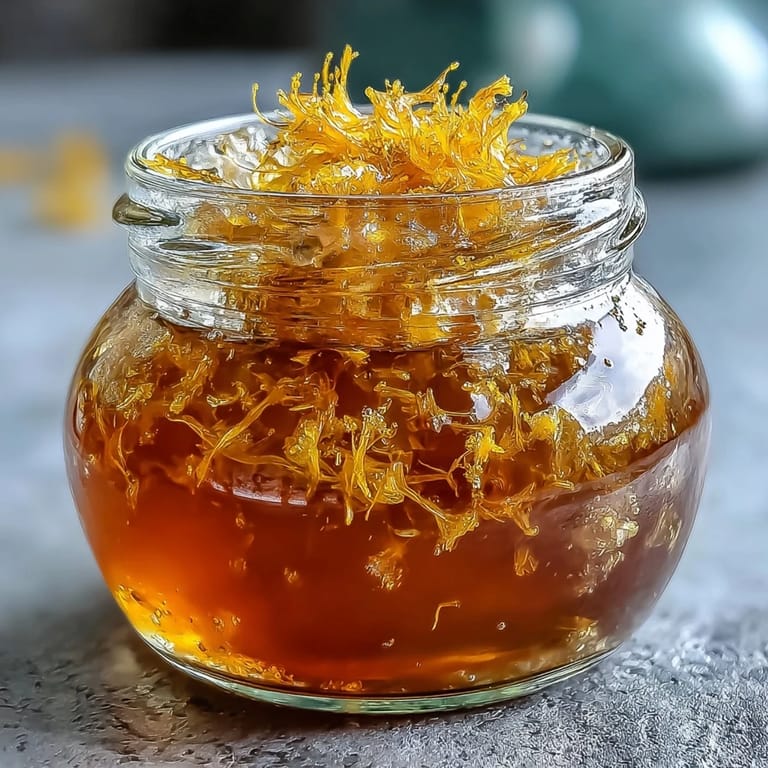
Save My sister called me three weeks after I gifted her a jar, just to say she'd been rationing it on her morning toast because she knew I only made it once a year. That's when I realized this jelly had become a small annual tradition between us.
The Magic of Foraging at Home
There's something deeply satisfying about walking your own yard or a trusted local patch and harvesting food instead of buying it. Once you know how to identify dandelions—and honestly, who doesn't—you'll start seeing them as opportunity instead of nuisance. Spring mornings are ideal because the petals are tender and the day hasn't yet heated them up.
Why Lemon and Honey Matter So Much
Dandelions have this lovely but subtle floral note that needs an anchor to shine, and lemon juice does exactly that, cutting through and brightening everything. The zest adds tiny bursts of citrus oil that make people pause and ask what they're tasting. Honey brings it all together with a soft sweetness that feels more refined than plain sugar would alone.
Storage, Gifting, and Using Your Jelly
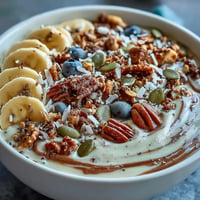
Properly sealed jars will keep in a cool, dark pantry for at least a year, though once you taste this, they rarely last that long. The jelly spreads beautifully on warm scones, swirls into yogurt, or glazes a simple vanilla cake. It's unusual enough that people actually remember it and ask for more.
- Store unopened jars in a cool pantry away from direct light to preserve the gorgeous golden color.
- Once opened, keep it in the refrigerator and use within three weeks for best flavor and food safety.
- Wrap jars in pretty cloth and tie with twine if you're gifting; the story of dandelion jelly always delights people.
 Save
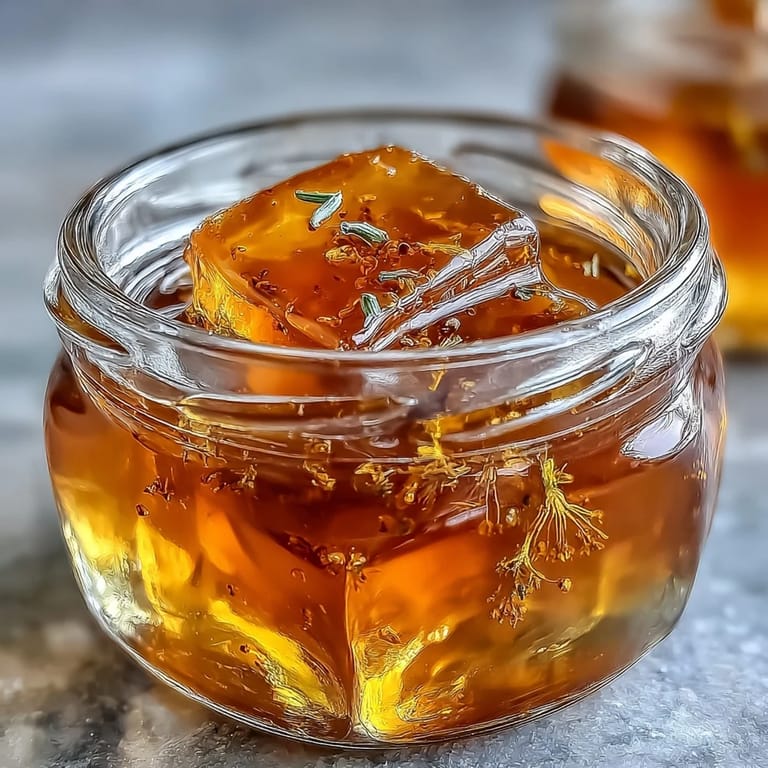
Save Making dandelion jelly feels like capturing spring in a jar, turning something overlooked into something treasured. Every spoonful tastes like an afternoon well spent.
Recipe FAQs
- → How do I prepare dandelion petals for use?
Gently rinse the blossoms, removing all green stems and sepals, keeping only the yellow petals for a pure floral flavor.
- → What is the purpose of lemon juice and zest in the jelly?
Lemon juice and zest add bright acidity and fresh citrus notes, which balance the floral sweetness and enhance the overall flavor.
- → Can honey be substituted in the sweetening process?
Yes, honey can be replaced with agave syrup to suit dietary preferences while maintaining a natural sweetness.
- → What is the role of powdered fruit pectin?
Powdered fruit pectin helps the jelly to set properly, giving it the desired gel-like texture without altering flavor.
- → How long does the jelly take to fully set?
After processing and cooling, the jelly may require up to 24 hours to achieve full firmness and texture.
- → What are ideal serving suggestions for this jelly?
It pairs wonderfully with toast, yogurt, scones, pancakes, or as a glaze on cakes and desserts.