 Save
Save I remember the moment I first saw a fractal tree pattern in nature—it was during a autumn walk when I noticed how a bare oak tree's branches repeated the same shape at every level. That observation stuck with me for years until one dinner party when I needed something visually stunning but quick to prepare. I realized I could translate that natural geometry into food, and the Fractal Tree Branching Bread Platter was born. My guests couldn't believe something so architectural and impressive took less than half an hour to create, and now it's become my signature move whenever I want to impress without spending hours in the kitchen.
I'll never forget my friend Sarah's face when she walked into my kitchen and saw the completed platter gleaming under the lights. She's a mathematician, and she actually got emotional about the recursive beauty of it all. We spent the whole evening talking about nature, design, and why food arranged thoughtfully just tastes better somehow. That's when I knew this wasn't just an appetizer—it was a conversation starter and a small moment of shared wonder.
Ingredients
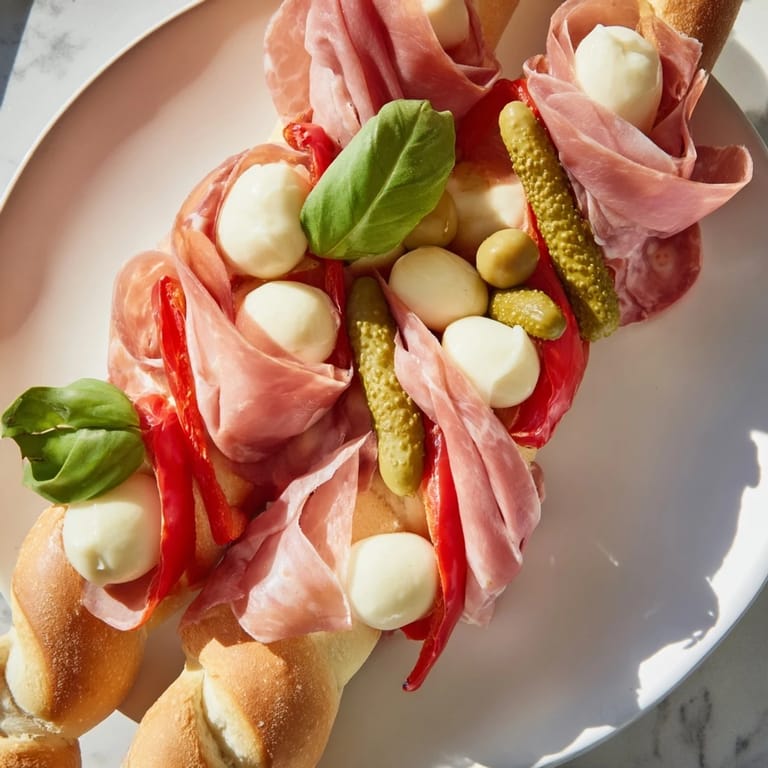
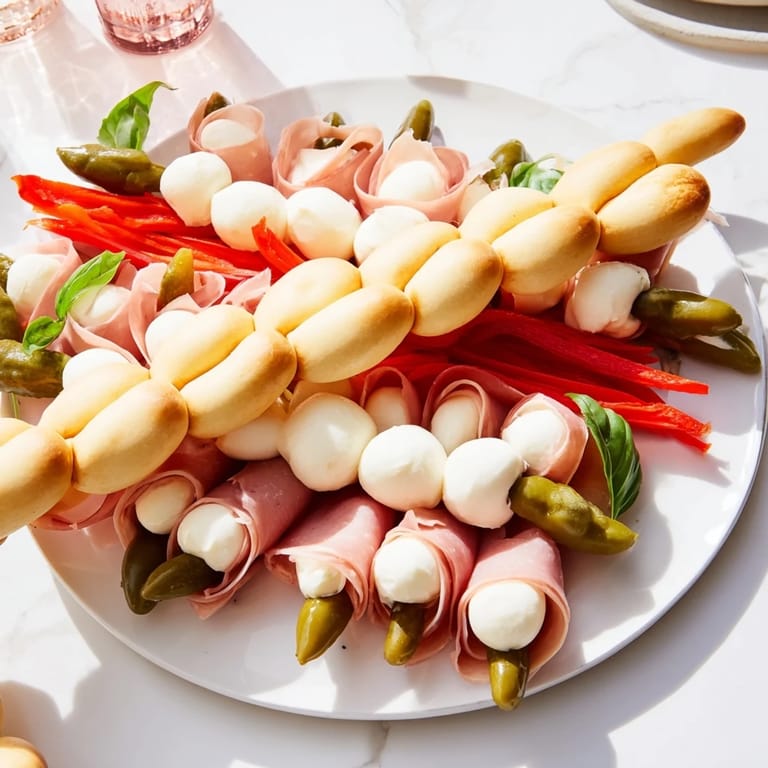
- 1 large breadstick (about 25–30 cm long): This is your anchor, your tree trunk. I prefer a rustic Italian breadstick because it has enough structural integrity to stand proud on the platter without looking droopy. The color and texture matter as much as the shape here—it's literally the centerpiece of your design.
- 6 slices prosciutto or vegetarian deli slices: The first major branches need something substantial and flavorful. Prosciutto brings a salty, sophisticated note, but quality vegetarian deli slices work beautifully if you're going that direction. The thinness matters because you want these to arrange gracefully.
- 6 mini mozzarella balls or small cheese cubes: These add visual contrast with their white color and creamy texture. I learned to pat them dry before arranging because any moisture can shift them as guests pick around the platter.
- 6 baby pickles or gherkins: The acid and crunch cut through the richness of the other elements. They're smaller branches that actually taste like something, which I appreciate.
- 12 cherry tomatoes, halved: Halving them lets you nestle them between other items and creates interesting negative space. Choose tomatoes that are just ripe—overripe ones fall apart when guests handle them.
- 12 thin cucumber slices: I use a mandoline or vegetable peeler to get them thin enough to feel delicate rather than chunky. This is where patience pays off visually.
- 12 green or black olives: These are your tiny punctuation marks, adding pops of color and umami. I've learned to pick ones that still have the pit because they're less likely to roll around.
- 18 small basil leaves: These are the finest branches, the tips of the tree. Use young basil leaves if you can find them—they're more tender and feel less waxy to guests.
- 18 roasted red pepper strips: I buy them jarred if I'm short on time, and no one ever judges. They add sweetness and color and are forgiving if your arrangement isn't pixel-perfect.
- 18 small crackers or crostini: These tiny platforms elevate the smaller ingredients and add textural variety. They're the last branch tips, so they should be delicate enough to feel like the end of something.
Tired of Takeout? 🥡
Get 10 meals you can make faster than delivery arrives. Seriously.
One email. No spam. Unsubscribe anytime.
Instructions
- Set your foundation:
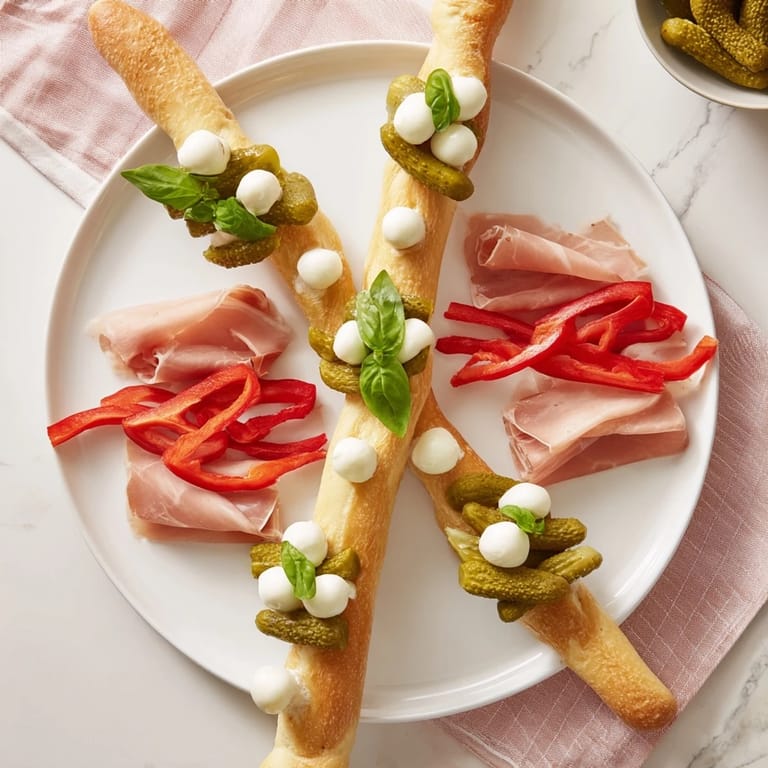
- Place your breadstick in the exact center of your platter, running horizontally like a tree trunk laid on its side. This is your anchor point—everything radiates from here. I usually position it slightly off-center if my platter is rectangular, just to leave more room for branching outward on one side.
- Build the first layer of branches:
- Take your prosciutto, mozzarella, and pickles and arrange them in three pairs radiating outward from the breadstick, alternating the ingredients. Think of it like spokes on a wheel—one pair going to the upper right, one straight up, one to the left, and mirror that pattern on the opposite side. This doesn't have to be mathematically perfect; nature's fractals aren't perfectly symmetrical either.
- Add the second layer:
- Now take the cherry tomato halves, cucumber slices, and olives and cluster them around the outer edges of your first-layer ingredients. These should feel like they're branching off from the endpoints of the larger pieces. Space them closer together than the first layer but maintain the radiating pattern. This is where it starts to look intentional rather than random.
- Finish with the finest branches:
- The basil leaves, red pepper strips, and crackers go in the outermost ring, nestled into any gaps and tapering toward the edges of the platter. These tiny elements should feel delicate and precise, like you're painting the tips of branches. This layer requires the most attention to detail, but also the most visual payoff.
- Step back and adjust:
- Once everything is placed, walk away and look at your platter from above. Adjust spacing where things feel too crowded or too sparse. Rotate items so they're at flattering angles. Add or remove pieces until it feels balanced. I usually spend five minutes here, making tiny adjustments that somehow make everything feel intentional rather than haphazard.
- Serve and invite interaction:
- Present it as a centerpiece and encourage guests to pick pieces starting from the outer branches and working inward, like deconstructing the tree. There's something playful about this that makes the whole experience feel less formal and more collaborative.
 Save
Save There was a moment at that same dinner party when a child asked if the platter was real or a decoration. Her mother gently plucked a piece of prosciutto from the first branch, and suddenly everyone understood they could touch it, taste it, engage with it. Watching the platter disappear piece by piece, from the outer branches inward, while people talked and laughed—that's when I realized this dish does something special. It transforms food into an experience, into a shared moment of creativity and wonder.
The Fractal Principle in Action
A true fractal means the same pattern repeats at different scales, and that's exactly what's happening here. Your largest branch combination is three ingredients arranged together, and that same three-ingredient pattern echoes in the medium and small branches, just using different foods and in tighter clusters. Understanding this principle helps you improvise with whatever you have on hand. If you don't have gherkins, use something else small and pickled. If you can't find baby mozzarella balls, use any white cheese you can cut into small pieces. The pattern is the real recipe; the specific ingredients are just your canvas.
Making It Your Own
The first time I made this, I used only what was in my kitchen, which meant some unconventional choices. I used marinated artichokes instead of gherkins, grilled vegetables instead of prosciutto, and tiny breadsticks instead of one large one. It was less like a scientific exercise and more like improvisation, and somehow that made it feel even more personal. The platter became a reflection of what I had access to and what I loved, which is exactly what food should be. I've since made versions themed around different cuisines—Mediterranean, Italian antipasto, vegetarian garden—and each one feels fresh because the framework is so flexible.
Pairing and Presentation
I serve this with a drizzle of really good olive oil and a sprinkle of cracked black pepper just before guests arrive, which adds both flavor and sophistication. A dry white wine or sparkling water in nearby glasses makes it feel intentional and elevated rather than casual. The beauty of this dish is that it works for a sophisticated dinner party or a casual gathering—it adapts to the occasion based entirely on the quality and selection of your ingredients and how you present it. One final thought: take a photo before anyone touches it, because once the deconstructing begins, it's pure chaos and joy.
- If you're making this more than an hour ahead, keep ingredients separate and wait to assemble until guests are about to arrive
- Use a large platter—the space around the arrangement matters as much as the arrangement itself
- Consider dietary restrictions when choosing your branch ingredients and communicate them clearly to guests
 Save
Save This platter has become my signature because it combines beauty with simplicity, and it makes everyone feel like they're part of something intentional. Every time I create one, I'm reminded that food is rarely just about nourishment—it's about connection, creativity, and the small moments that make gatherings memorable.
Recipe FAQs
- → What is the central element of the platter?
A large breadstick functions as the tree trunk, serving as the base for arranging other ingredients outward in layers.
- → Can I make it vegetarian-friendly?
Yes, replace cured meats with extra cheese or grilled vegetables to suit vegetarian preferences.
- → How do the ingredients arrange on the platter?
Ingredients are placed in progressively smaller symmetrical layers radiating from the breadstick, mimicking fractal branches.
- → Are there suggestions for pairing drinks?
Dry white wines or sparkling water complement the variety of flavors in the platter nicely.
- → Can allergens be avoided easily?
Yes, use gluten-free breadsticks and plant-based cheeses to accommodate gluten or dairy sensitivities.
- → What tools are useful for assembly?
A large serving platter and a sharp knife make arranging ingredients straightforward and precise.