 Save
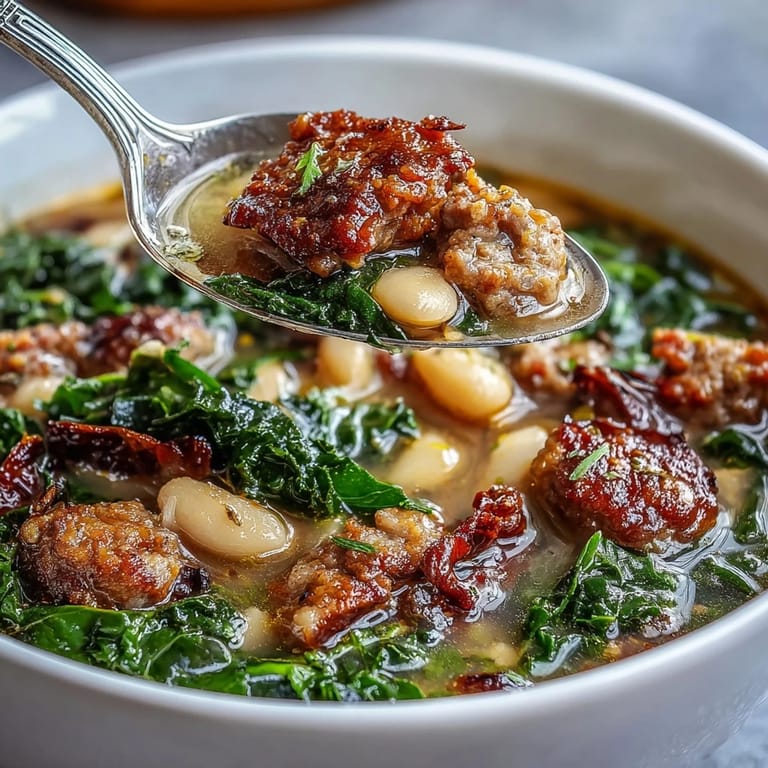
Save There's something about a pot of bubbling soup that fills a kitchen with purpose. My neighbor Marco handed me a container of his homemade Italian sausage soup one November evening, and I spent the next week trying to recreate it from memory and guesswork. The turning point came when I roasted the garlic instead of throwing it in raw—that one decision transformed the whole thing into something restaurant-quality, the kind of soup that makes people linger at your table longer than they planned.
I made this for a group of friends who'd been arguing about whether soup could be a main course. By the third bowl, they stopped talking and just kept eating, which felt like the truest endorsement possible. The sausage releases these little bursts of spice, the beans go creamy at the edges, and somehow it all comes together into something that tastes like it knew exactly what it was doing.
Ingredients
- Spicy Italian sausage, 1 lb with casings removed: Look for real Italian sausage at a butcher if you can—it makes a noticeable difference in flavor and texture, and removing the casings lets it break into tiny, flavorful bits throughout the soup.
- Olive oil, 2 tbsp: Use a decent quality oil here since you're tasting it directly, not just using it as a cooking medium.
- Yellow onion, 1 large, diced: Yellow onions are sweeter than white ones and they mellow out beautifully as they cook down.
- Carrots, 2 medium, diced: Cut them roughly the same size as your onions so everything cooks evenly and looks intentional.
- Celery, 2 stalks, diced: This is the quiet ingredient that builds flavor foundation—don't skip it.
- Garlic, 6 cloves, peeled: Roasting transforms garlic from a background player into something almost sweet and mellow that threads through every spoonful.
- Tuscan kale, 1 bunch (about 6 oz), stems removed, leaves chopped: Tuscan kale holds up better to simmering than curly kale and has an earthier, less bitter taste that pairs perfectly with sausage.
- Cannellini beans, 2 cans (15 oz each), drained and rinsed: Draining and rinsing removes excess sodium and starch so your broth stays clear and clean-tasting.
- Low-sodium chicken broth, 6 cups: Low-sodium lets you control the salt level and taste the actual ingredients instead of fighting saltiness.
- Water, 1 cup: Water dilutes the broth just enough to let the vegetables and beans shine without overwhelming everything with salt.
- Dried thyme, 1 tsp: Thyme is herbaceous without being aggressive, and it plays nicely with both the sausage and the greens.
- Dried oregano, 1 tsp: Oregano is the spice that whispers Italian in every direction.
- Crushed red pepper flakes, 1/2 tsp optional: Use this if you want the soup to have a gentle background heat that builds rather than hits.
- Salt and freshly ground black pepper, to taste: Always taste before serving because broth saltiness varies wildly between brands.
- Parmesan cheese, freshly grated for garnish: A handful of freshly grated Parmesan melts slightly into the hot soup and adds richness without making it heavy.
- Extra virgin olive oil for drizzling: This is your finishing touch—a good one makes a real difference in how the soup tastes on your spoon.
Tired of Takeout? 🥡
Get 10 meals you can make faster than delivery arrives. Seriously.
One email. No spam. Unsubscribe anytime.
Instructions
- Roast the garlic until it becomes golden and sweet:
- Preheat your oven to 400°F. Wrap peeled garlic cloves loosely in foil with a small drizzle of olive oil, then roast for about 20 minutes until the cloves are completely soft and the kitchen starts smelling almost caramel-like. Let them cool just enough to handle, then press them into a smooth paste with the back of a fork—this becomes your secret weapon for depth.
- Brown the sausage until it's broken into small, flavorful pieces:
- Heat 1 tablespoon of olive oil in your largest pot over medium heat, add the sausage, and break it up with a wooden spoon as it cooks. You want it in small pieces rather than clumps, and it should take about 6 to 8 minutes total. Use a slotted spoon to remove it and set it aside while you build the rest of the flavor.
- Sauté the vegetables until they're soft and starting to turn golden at the edges:
- Pour the remaining tablespoon of oil into the same pot, add your diced onion, carrots, and celery, and let them cook together for about 6 minutes, stirring occasionally. This is the moment when the kitchen starts smelling like actual cooking is happening, and you'll notice the vegetables releasing their moisture and then starting to caramelize slightly.
- Bloom the herbs and garlic paste for one fragrant minute:
- Stir in your roasted garlic paste, thyme, oregano, and red pepper flakes, and let everything cook together for just 1 minute. You'll see the dried herbs open up and release their oils, filling the air with that unmistakable Italian herb smell.
- Combine beans, sausage, and broth, then let it simmer:
- Add the drained beans, the sausage you set aside, and both the broth and water to the pot. Bring everything to a boil, then reduce the heat and let it simmer uncovered for 15 minutes so the flavors can get to know each other.
- Add kale and finish cooking until it's tender but still vibrant:
- Stir in your chopped kale and continue simmering for another 10 to 12 minutes until it's completely tender but hasn't turned dark or lost its color entirely. The soup will go from looking sparse to looking full and substantial in these final minutes.
- Taste and adjust the seasoning to your preference:
- Taste a spoonful and decide if it needs more salt, pepper, or even a tiny pinch more red pepper flakes. Remember that broth varies, so trust your own taste buds here.
- Serve hot with all your favorite toppings:
- Ladle the soup into bowls and let everyone finish their own with grated Parmesan, a drizzle of excellent olive oil, and crusty bread for dipping if they want it.
 Save
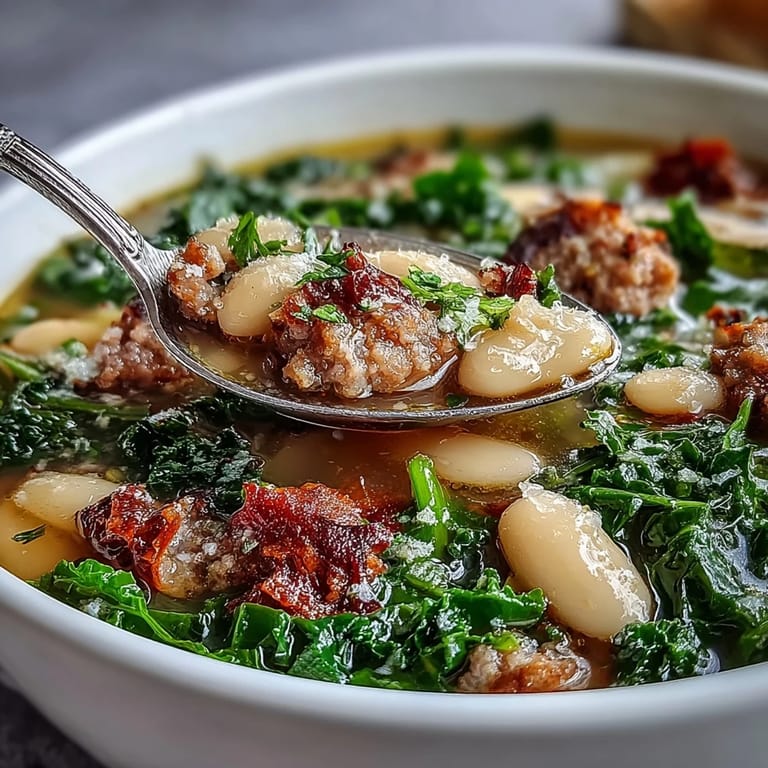
Save My eight-year-old actually asked for seconds of this soup, which was the moment I realized I'd made something special. That's when food stops being about recipes and starts being about moments at a table.
The Power of Roasted Garlic
Roasting garlic is one of those small kitchen moves that feels almost too simple to matter, but it genuinely transforms dishes. When raw, garlic can overpower everything around it with a sharp, aggressive bite that lingers. But when you roast it wrapped in foil with just a touch of oil, something magical happens—the natural sugars caramelize, the harsh edges soften, and you get this creamy, almost sweet paste that enriches everything it touches. I started roasting garlic not just for soup but for mashed potatoes, pasta, and even spreading on bread, and every time I'm reminded that the best cooking is often about working with ingredients at their best rather than trying to force them into submission.
Why This Soup Works as a Complete Meal
This isn't a side soup or a starter bowl—it's the kind of thing you make when you want dinner to be satisfying without requiring three other dishes. The sausage provides protein and richness, the beans add substance and creaminess, and the kale brings nutrition and volume so the bowl feels full and intentional. The broth ties everything together without being so heavy that you feel weighed down after eating, which is the hardest balance to strike in comfort food but the most important one.
Make It Your Own
The beautiful thing about this soup is that it's more of a template than a prescription. Once you understand how the flavors work together, you can adjust things based on what's in your kitchen or what you're craving. Spinach or Swiss chard work just as well as kale if that's what you have on hand, and the soup tastes just as good with plant-based sausage and vegetable broth if you're cooking vegetarian. Some people add a Parmesan rind while simmering for extra richness, which melts into the broth and then gets removed before serving—that's a subtle touch that feels sophisticated and takes zero extra effort.
- Try adding white beans and sausage to your broth in the ratio that feels right to you rather than following measurements exactly.
- If you want it brothier, add more liquid; if you want it more stew-like, simmer longer uncovered to reduce.
- This freezes beautifully for up to two months, so make a double batch and you've got winter lunches handled.
 Save
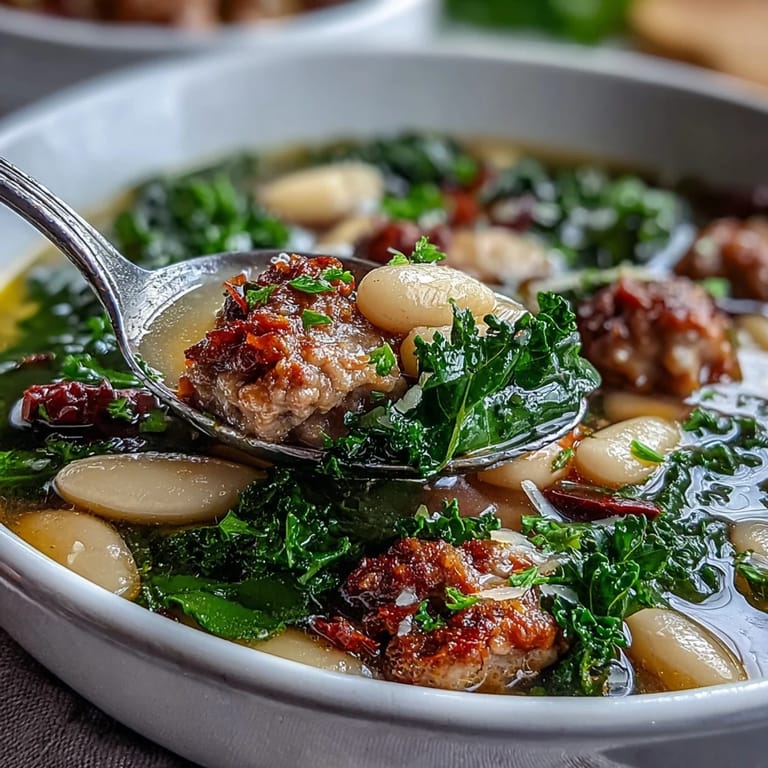
Save This soup tastes even better the next day when all the flavors have had time to settle and get comfortable with each other. Make it ahead if you can, and you'll understand why people have been making soups like this for centuries.
Recipe FAQs
- → What type of beans work best?
Cannellini beans are traditional for this soup, but Great Northern beans or navy beans work equally well. The key is using white beans that become creamy when simmered.
- → Can I make this vegetarian?
Absolutely. Substitute plant-based Italian sausage for the pork sausage and use vegetable broth instead of chicken broth. The flavor profile remains delicious and satisfying.
- → How long does this soup keep?
This soup stores beautifully in the refrigerator for up to 4 days. The flavors actually develop and deepen overnight. It also freezes well for up to 2 months—just cool completely before transferring to freezer-safe containers.
- → What can I serve with this soup?
Crusty bread is perfect for dipping and soaking up the flavorful broth. A simple green salad with vinaigrette balances the hearty soup. For a complete Italian meal, serve with a glass of Chianti and some aged Parmesan on the side.
- → Is roasting the garlic necessary?
While not strictly necessary, roasted garlic adds a deep, mellow sweetness that raw garlic lacks. If you're short on time, you can skip this step and add minced garlic with the vegetables, though the flavor profile will change slightly.