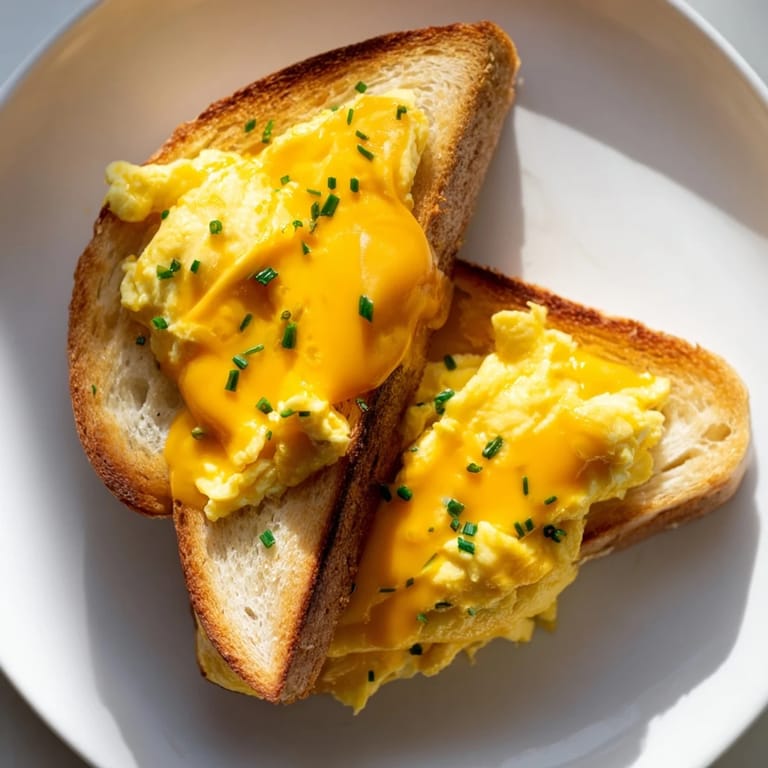
 Save
Save I started making this sandwich on weekday mornings when I was too tired to juggle multiple pans. The idea came from watching eggs bubble around toast in the same skillet and thinking, why not just let them cook together? It turned into my fastest breakfast, especially when I'm running late but still want something warm and filling instead of grabbing cereal.
The first time I made this for my roommate, she watched me pour eggs right over the bread and said it looked like a mess. Then she tasted it and asked me to make her one the next morning. Now she makes it herself on weekends, sometimes adding leftover roasted peppers or crumbled feta, and it's become our shared lazy Sunday routine.
Ingredients
- Eggs: Use large eggs for the right ratio of fluffiness to bread coverage, and whisk them well with milk so they stay tender instead of rubbery.
- Milk: Just a splash makes the eggs creamy and soft, I learned this after making dry scrambled eggs too many times in college.
- Salt and black pepper: Season the raw egg mixture generously because the flavor mellows once cooked, and plain eggs on toast can taste flat.
- Sturdy sandwich bread: Sourdough or whole wheat holds up to the moisture without getting soggy, white sandwich bread tends to fall apart under the eggs.
- Unsalted butter: This toasts the bread and adds richness without making the sandwich overly salty, especially if your cheese is already sharp.
- Cheddar cheese: I use sharp cheddar for a bold flavor, but any melty cheese works, even pepper jack if you want a little heat.
- Chives or green onions: A fresh garnish that adds color and a mild onion bite, completely optional but it makes the sandwich feel less plain.
Tired of Takeout? 🥡
Get 10 meals you can make faster than delivery arrives. Seriously.
One email. No spam. Unsubscribe anytime.
Instructions
- Whisk the eggs:
- Combine eggs, milk, salt, and pepper in a bowl until the yolks and whites are fully blended and slightly frothy. This ensures even cooking and a smooth texture.
- Melt the butter:
- Heat your skillet over medium and let the butter melt completely, swirling it around so the entire surface is coated. If the butter browns too fast, lower the heat a notch.
- Toast the bread:
- Lay both slices flat in the pan and let them sizzle for 1 to 2 minutes until the bottom turns golden and crisp. Flip them over so the toasted side is now facing up.
- Pour the eggs:
- Pour the whisked egg mixture directly over and around the bread, letting it pool in the gaps. Wait about 10 to 15 seconds without stirring so the bottom starts to set.
- Push the eggs:
- Use a spatula to gently nudge the eggs toward the bread edges, allowing the runny parts to flow underneath and cook. Keep doing this until the eggs are mostly set but still glossy on top.
- Add the cheese:
- Place one slice of cheese on each piece of bread while the eggs are still slightly wet. The residual heat will start melting it right away.
- Fold and stack:
- Use your spatula to fold any loose cooked egg onto each bread slice, then carefully lift one slice and stack it on top of the other to form a sandwich. Press down gently so the cheese glues everything together.
- Finish cooking:
- Let the sandwich sit in the pan for another 1 to 2 minutes, pressing lightly with the spatula until the cheese is fully melted and the outside is golden. Flip it once if you want both sides extra crispy.
- Serve:
- Remove from heat, cut in half if you like, and sprinkle with chives or green onions. Eat it while its hot and the cheese is still gooey.
 Save
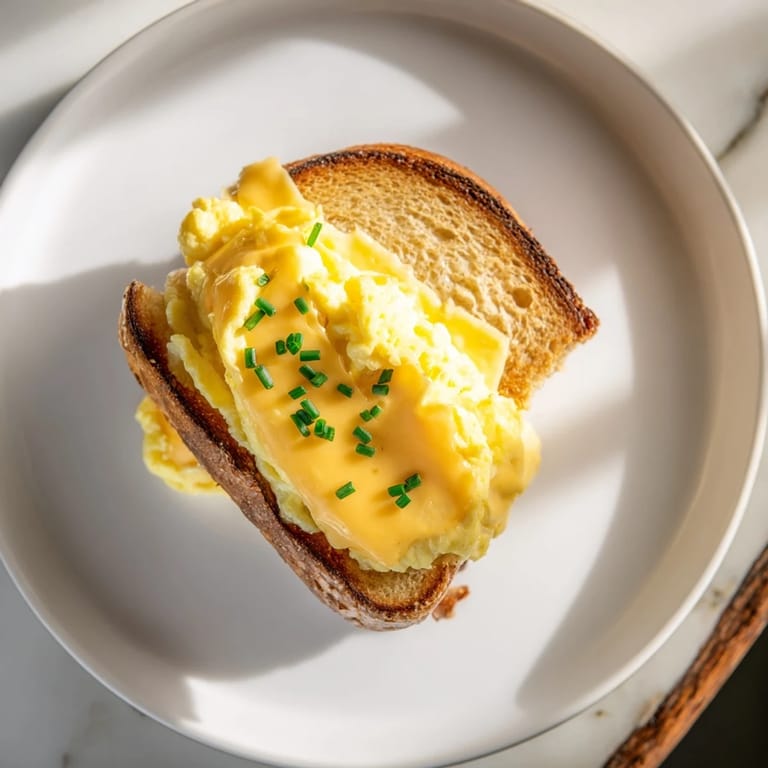
Save One Saturday morning I added crispy bacon and a drizzle of hot sauce, and it felt like eating at a diner without leaving my apartment. My neighbor smelled it through the wall and knocked to ask what I was cooking, and I ended up teaching her the recipe right there in my kitchen while we ate together.
Customizing Your Sandwich
This recipe is a template more than a strict formula. I've thrown in leftover sautéed mushrooms, diced ham, cherry tomatoes, even crumbled feta when I had it. The key is to keep add ins small and already cooked so they warm through without making the eggs watery or undercooked.
Choosing the Right Bread
Thin sliced white bread gets too soggy and tears when you fold the eggs. I learned this the hard way and ended up with a scrambled egg puddle instead of a sandwich. Sourdough, whole wheat, or any bakery style bread with a sturdy crumb works best because it can handle moisture and still hold its shape.
Storage and Reheating
Honestly this sandwich is best eaten fresh, but if you have leftovers you can wrap it tightly and refrigerate for up to one day. Reheat it in a skillet over low heat instead of the microwave so the bread stays crisp and the eggs dont turn rubbery.
- Wrap the sandwich in foil if reheating in a toaster oven to keep it from drying out.
- Add a fresh slice of cheese when reheating for extra creaminess.
- Avoid freezing because the texture of scrambled eggs changes and becomes watery when thawed.
 Save
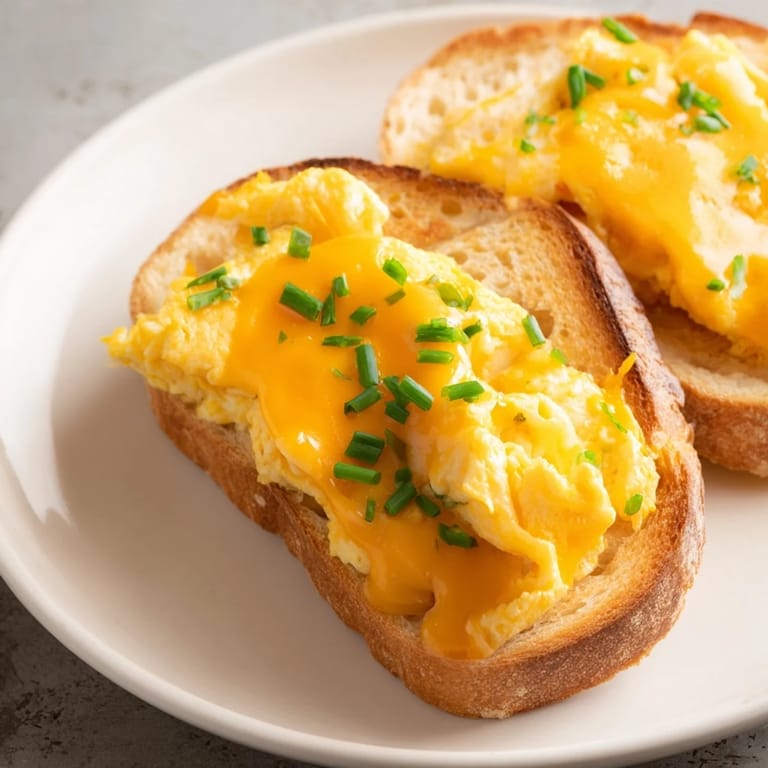
Save This sandwich has saved me on countless rushed mornings, and it never feels boring because I can change it up with whatever Im craving. I hope it becomes your go to quick breakfast too.
Recipe FAQs
- → How do you cook the eggs directly on the bread?
After toasting one side of the bread in the pan, pour the whisked eggs over and around the bread slices. Let the eggs begin to set, then gently push them toward the bread edges so uncooked eggs flow beneath, creating a soft layer.
- → What type of bread works best?
Sturdy sandwich bread like sourdough or whole wheat holds up well during cooking and toasting in the pan, preventing sogginess and adding texture.
- → Can I add extra toppings?
Yes, adding cooked bacon, ham, or sautéed vegetables enhances flavor. Fresh chives or green onions also provide a subtle, fresh note.
- → How do you melt the cheese properly?
Place cheese slices on the mostly set eggs and continue cooking gently while pressing the sandwich together. The residual heat melts the cheese evenly.
- → Is this method suitable for dietary substitutions?
Absolutely. Use gluten-free bread if needed, and substitute dairy or eggs with preferred alternatives, keeping allergen considerations in mind.