 Save
Save My kitchen smelled like toasted sesame oil the afternoon my friend Maya stopped by hungry and skeptical about plant-based bowls. I had just discovered that quinoa wasn't boring if you treated it right, and that crispy tofu could actually convert people. She watched me build the first bowl, layered with care, and asked for seconds before finishing the first bite. That's when I knew this recipe had something special—it wasn't trying too hard, just honest food that somehow felt both nourishing and exciting.
I made this for my parents last summer when my mom was curious about trying more plant-based meals but remained unconvinced. My dad, who treated tofu like a personal insult, took a bite of the crispy cubes and actually asked what they were before I told him. By the end of the meal, my mom was already thinking about the vegetables she'd swap in next time. That quiet moment of someone genuinely enjoying something you cooked with intention—that's what this bowl does.
Ingredients
- Quinoa, 1 cup rinsed: Rinsing removes the bitter coating and prevents a grainy texture; I learned this the hard way on my first attempt.
- Water, 2 cups: Use filtered water if your tap water is heavily chlorinated, as it can mute the subtle nuttiness of quinoa.
- Salt, 1/4 teaspoon: This goes into the cooking water, not sprinkled after, which seasons the grain evenly.
- Sesame oil, 1 tablespoon for vegetables: The real thing matters here—toasted sesame oil has a deeper flavor than plain varieties.
- Red bell pepper, 1 thinly sliced: Slicing thin ensures it softens slightly while maintaining a snap; thick pieces stay too raw.
- Broccoli florets, 1 cup: Cut them small so they cook through in the brief stir-fry window without turning mushy.
- Carrot, 1 medium julienned: Julienne, not sliced, matters because the thin strips cook at the same speed as the other vegetables.
- Snap peas, 1 cup trimmed: A sharp knife and one quick motion removes the string; rushing this step makes them fibrous.
- Red onion, 1/2 thinly sliced: The raw bite of red onion balances the richness of the sauce and the earthiness of quinoa.
- Garlic, 3 cloves minced total: Two for the vegetables, one for the sauce; mince them fresh, not from a jar.
- Fresh ginger, 2 teaspoons grated total: Grate it on a microplane so it releases oils and distributes evenly without stringy pieces.
- Extra-firm tofu, 1 block pressed: Pressing removes water that prevents crisping; wrap it in a clean kitchen towel with something heavy on top for 15 minutes minimum.
- Cornstarch, 1 tablespoon plus 1 tablespoon for sauce: This creates the crispy exterior on tofu and thickens the teriyaki into a glossy coating.
- Vegetable oil, 1 tablespoon for frying: Use neutral oil with a high smoke point; olive oil burns before tofu browns.
- Low-sodium soy sauce, 1/4 cup: Low-sodium prevents the final dish from tasting one-dimensional or overly salty.
- Maple syrup or agave nectar, 2 tablespoons: Maple syrup adds warmth; agave is more neutral if that feels right to you.
- Rice vinegar, 2 tablespoons: This brightens the sauce without the harsh bite of white vinegar.
- Sesame oil for sauce, 1 tablespoon: Keep this separate from the cooking oil; it's for flavor, not heat.
- Sesame seeds, 2 tablespoons optional: Toast them lightly in a dry pan first if you want that nutty, deeper flavor.
- Green onions, 2 thinly sliced optional: The green parts add color and freshness; the white parts are subtle sweetness.
Tired of Takeout? 🥡
Get 10 meals you can make faster than delivery arrives. Seriously.
One email. No spam. Unsubscribe anytime.
Instructions
- Cook the quinoa with intention:
- Combine rinsed quinoa, water, and salt in a saucepan and bring to a rolling boil. The moment it boils, cover it, lower the heat to barely a simmer, and set a timer for exactly 15 minutes—this is the only moment you need precision. Once the timer sounds, remove it from heat, keep the lid on, and let it sit for 5 minutes so the last bit of moisture absorbs and each grain becomes fluffy.
- Press and crisp the tofu:
- Pat your pressed tofu dry with paper towels, cut it into cubes, and toss with cornstarch until every piece is coated. Heat oil in a skillet over medium-high heat until it shimmers, then add the tofu in a single layer and resist the urge to move it around—let each side develop a golden, crispy shell for 2 to 3 minutes before you flip.
- Craft the teriyaki sauce:
- In a small saucepan, combine soy sauce, maple syrup, rice vinegar, sesame oil, ginger, and garlic over medium heat. Once it begins to steam and smell deeply savory-sweet, whisk together cornstarch and water separately, then pour it in while whisking constantly—it will thicken almost instantly and become glossy and beautiful.
- Stir-fry the vegetables with confidence:
- Heat sesame oil in a wok or large skillet over medium-high heat, add minced garlic and ginger, and let them perfume the oil for just 30 seconds. Add the harder vegetables first (peppers, broccoli, carrot), stir constantly for 2 minutes, then add snap peas and onion for another 2 to 3 minutes—you want everything tender but still with a slight resistance when you bite it.
- Build your bowl with care:
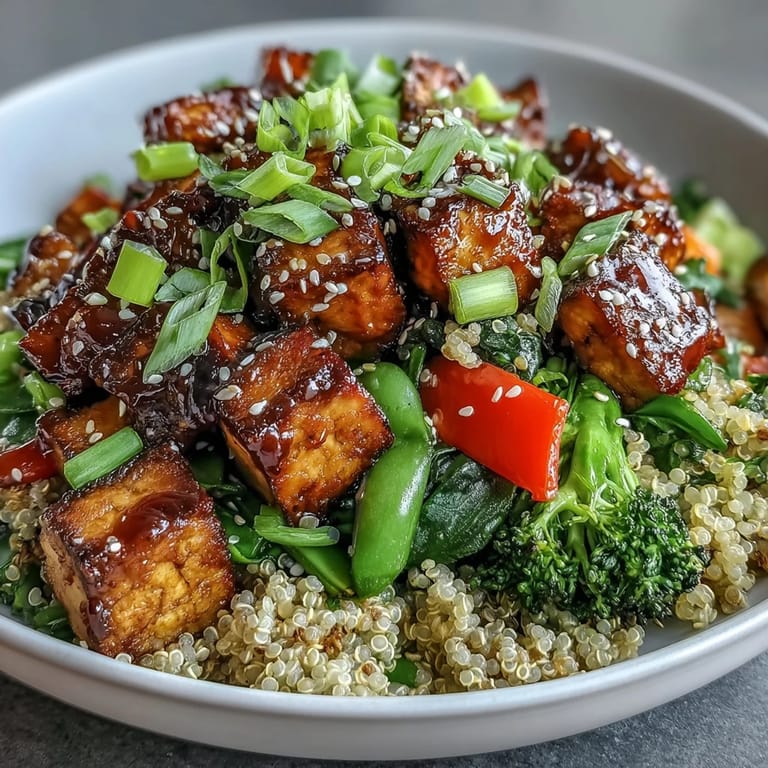
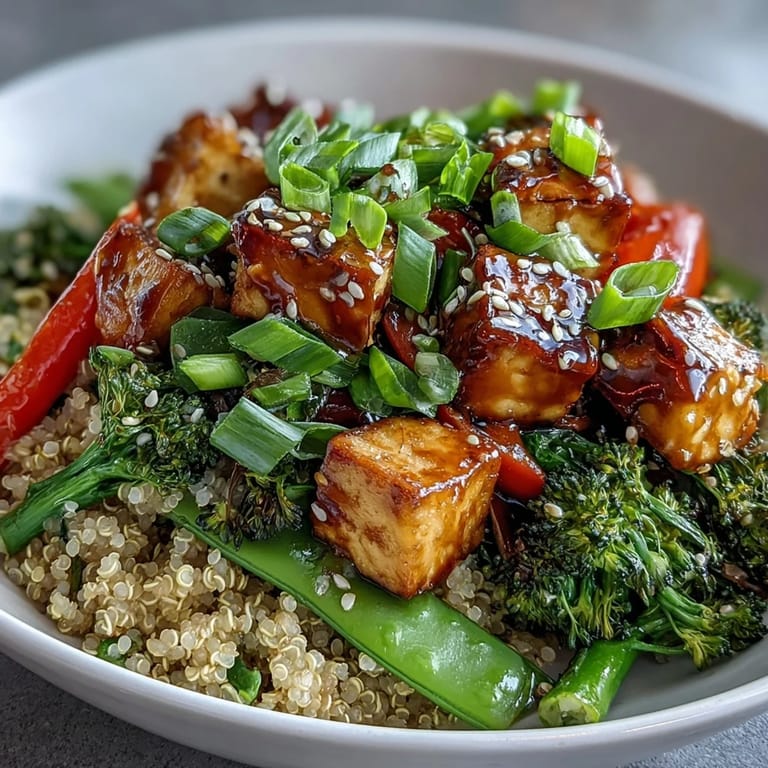
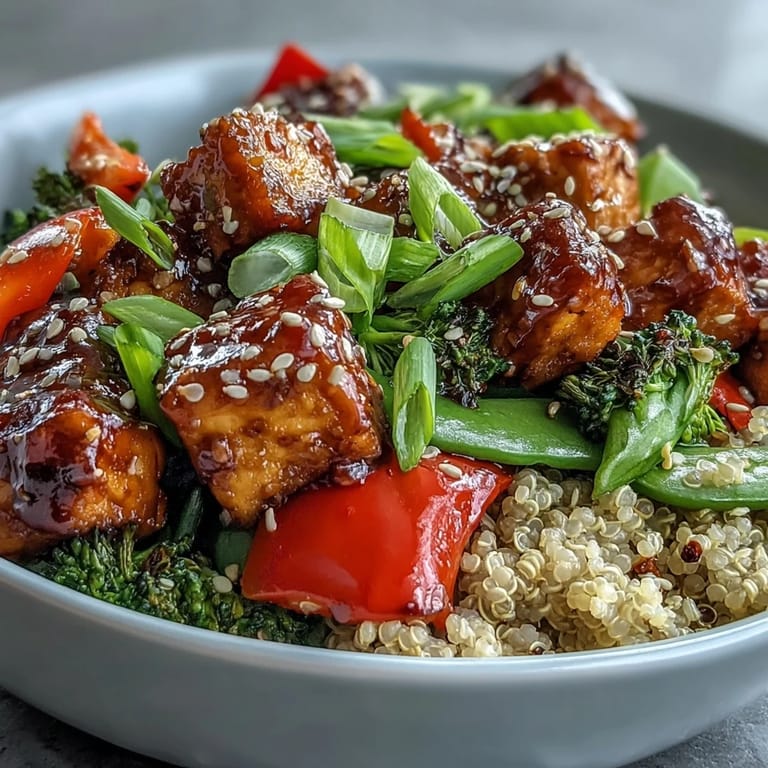
- Divide the fluffy quinoa among four bowls, creating a small well in the center. Top with the tender vegetables, arrange the crispy tofu cubes, and drizzle the teriyaki sauce generously over everything so it seeps into the grain.
- Finish with brightness:
- Sprinkle sesame seeds and sliced green onions over the top just before serving so they stay crisp and vibrant.
 Save
Save There's a moment on Sunday evenings when I'm prepping containers for the week ahead and I realize this bowl actually tastes better on day two, the flavors settling into each other like they've gotten to know one another. That small revelation changed how I think about meal prep—not as obligation, but as a small act of caring for your future self.
Why the Components Work Together
Quinoa provides a mild, slightly nutty base that doesn't compete with the other flavors; it absorbs the teriyaki sauce without turning to mush. The vegetables add texture and color but also nutrients that feel intentional rather than virtuous. The crispy tofu offers protein and substance without heaviness, and the teriyaki sauce ties everything together with a balance of sweet, salty, and savory that makes each bite feel complete. When you build the bowl thoughtfully, no single component overwhelms—instead, they create a conversation.
Variations That Keep Things Interesting
The beauty of this bowl is its flexibility without losing its identity. I've made it with tempeh when I wanted something earthier, and with chickpeas when my grocery run was limited. The vegetables shift with seasons—winter brings mushrooms and bok choy, summer invites zucchini and cucumber ribbons. I once added a handful of toasted cashews on impulse and suddenly the dish felt celebratory.
Serving and Pairing Ideas
This bowl stands entirely on its own, but a wedge of lime squeezed over the top brightens everything in ways that feel almost necessary. If you're serving to others, a small side of pickled ginger or extra sauce lets people adjust seasoning to their own taste. For drinks, cold green tea or a light white wine both complement the umami and sweetness of the sauce without competing.
- A squeeze of fresh lime adds brightness that transforms the entire bowl.
- Make extra teriyaki sauce and you'll find yourself drizzling it on roasted vegetables for days.
- Keep pressed tofu in your fridge and this meal goes from ingredient list to dinner in about half an hour.
 Save
Save This bowl became a regular in my kitchen not because it's trendy or perfect, but because it actually nourishes you and makes you happy to eat it. That's the kind of recipe worth keeping around.
Recipe FAQs
- → Can I make the teriyaki sauce ahead of time?
Yes, prepare the sauce up to one week in advance and store in an airtight container in the refrigerator. Reheat gently on the stove, adding a splash of water if needed to reach desired consistency.
- → What other proteins work well in this bowl?
Tempeh, edamame, or chickpeas make excellent plant-based alternatives. For non-vegetarian options, grilled chicken strips or sautéed shrimp pair wonderfully with the teriyaki flavors.
- → How do I keep vegetables crisp-tender?
Stir-fry over medium-high heat and keep the vegetables moving constantly. Cook for just 4–5 minutes until they're tender but still retain their crunch. Avoid overcrowding the pan.
- → Can I use pre-cooked quinoa?
Absolutely. Use 3 cups of cooked quinoa to replace the uncooked portion. Warm it slightly before assembling bowls, or serve at room temperature for a refreshing twist.
- → Is this bowl freezer-friendly?
Store cooked quinoa and vegetables separately in the freezer for up to one month. Reheat in the microwave or on the stovetop. Add fresh teriyaki sauce and garnishes just before serving for best texture.
- → How can I add more vegetables?
Mushrooms, zucchini, baby corn, or bok choy make excellent additions. Add heartier vegetables like mushrooms first, then quick-cooking varieties like snap peas toward the end of stir-frying.