 Save
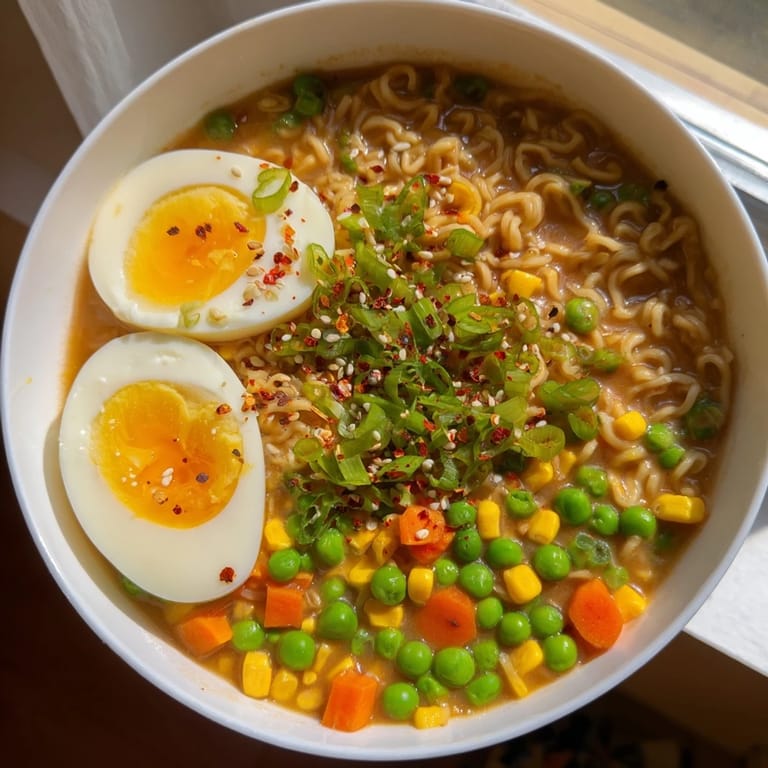
Save There's something about a steaming bowl of ramen that makes everything feel manageable. I discovered this version one Tuesday night when my grocery budget was stretched thin but I wanted something that felt like actual cooking, not just survival food. A handful of frozen peas changed everything—suddenly my humble instant ramen wasn't just filling, it was colorful, packed with nutrients, and genuinely exciting to eat.
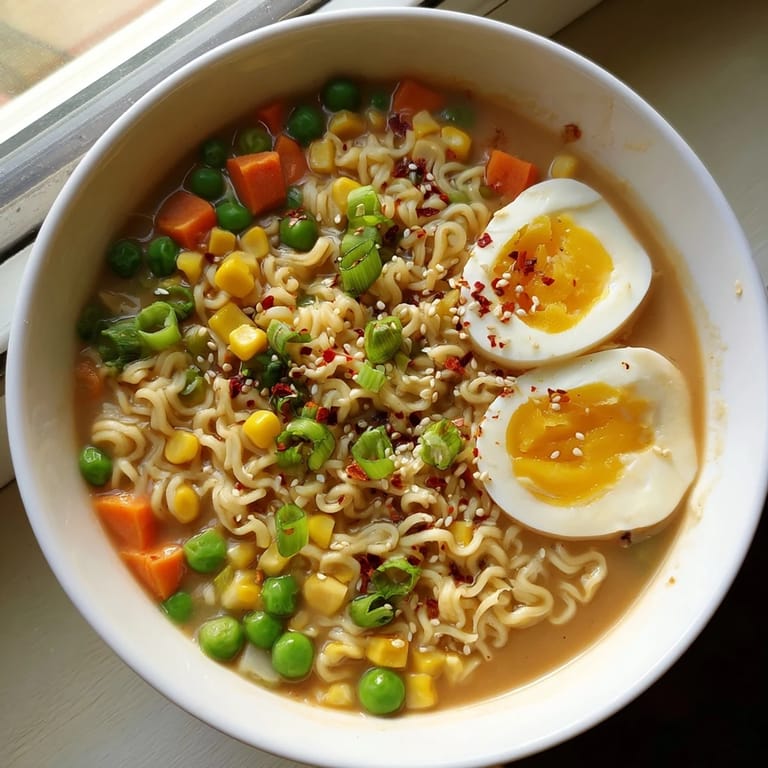
I made this for my roommate on a particularly rough day, and watching her face light up when she saw the soft-boiled egg nestled in the noodles reminded me that thoughtful food doesn't require hours or expensive ingredients. She asked for the recipe that same evening.
Ingredients
- 2 packs instant ramen noodles: The foundation of speed and comfort—choose your favorite brand or go for something with seasoning you love.
- 1 cup frozen peas: These tiny powerhouses add sweetness, color, and protein without requiring any chopping or thawing.
- 1 cup frozen mixed vegetables: Carrots, corn, and green beans work beautifully together and contribute different textures and flavors.
- 2 green onions, sliced: They bring a fresh bite that cuts through the richness and adds a hint of elegance to something simple.
- 2 cloves garlic, minced: The aroma when this hits hot oil is half the reason to make this dish.
- 4 cups low-sodium vegetable broth: This gives you control over saltiness, which matters when ramen seasoning packets are already quite assertive.
- 2 tablespoons soy sauce: The savory depth that makes broth taste like broth and not just hot water.
- 1 teaspoon sesame oil: A small amount creates an unmistakable richness that elevates the entire bowl.
- 2 large eggs, optional: A soft-boiled or poached egg transforms this from weeknight dinner into something restaurant-worthy.
- 1 tablespoon toasted sesame seeds: These add crunch and nuttiness in a way that feels intentional.
- Chili flakes or sriracha: Heat is optional but always appreciated when you want to wake up your palate.
Tired of Takeout? 🥡
Get 10 meals you can make faster than delivery arrives. Seriously.
One email. No spam. Unsubscribe anytime.
Instructions
- Bloom the garlic:
- Warm sesame oil in a medium saucepan over medium heat and add your minced garlic. You're looking for that moment when the smell shifts from raw to sweet and fragrant—about 30 seconds. Don't let it brown or it becomes bitter.
- Build your broth:
- Pour in the vegetable broth and soy sauce, then bring everything to a gentle boil. This is where the magic starts—the aroma tells you something delicious is happening.
- Warm the vegetables:
- Add frozen peas and mixed vegetables directly to the boiling broth. They'll release their flavors and heat through in 2 to 3 minutes—no thawing needed.
- Cook the noodles:
- Break up your ramen and add it to the pot along with the seasoning packet if you want extra flavor, or skip it if you prefer to keep things lighter. Cook for the time the package suggests, usually 2 to 3 minutes, until the noodles are tender but not mushy.
- Finish with brightness:
- Stir in half of your sliced green onions and taste the broth. Add more soy sauce if it needs more depth, more water if it feels too intense.
- Serve with intention:
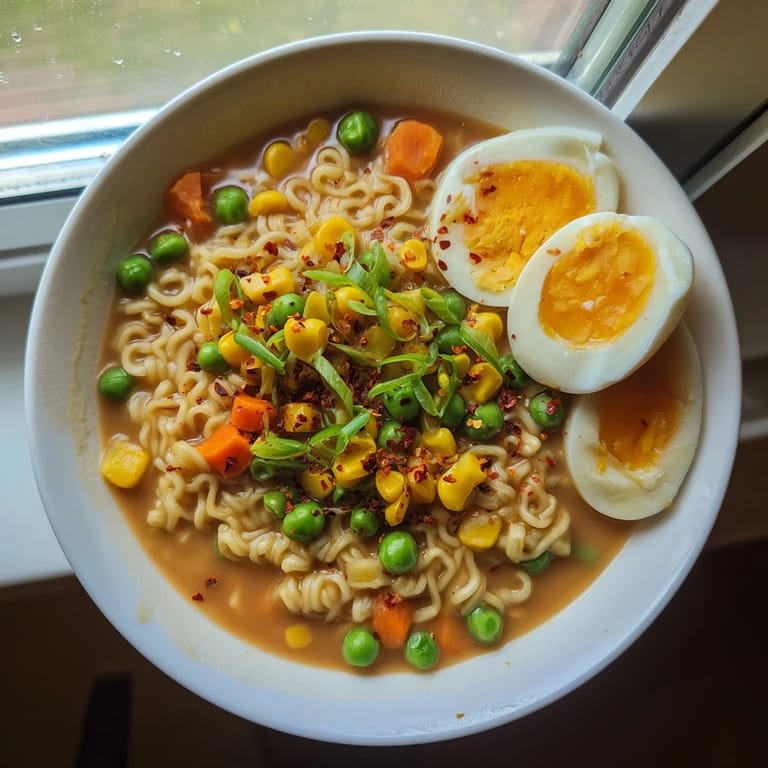
- Divide everything between two bowls—noodles, vegetables, and broth all together. Top each bowl with an egg if you're using one, the remaining green onions, a scatter of sesame seeds, and as much heat as you want.
 Save
Save The first time someone told me instant ramen could be elevated, I thought they were being pretentious. Now I understand they were just sharing joy—the joy of making something nourishing taste like it came from genuine care.
Why Frozen Vegetables Are Your Friend
I used to feel like frozen vegetables were a compromise, something you used when fresh wasn't available. Then I learned they're often fresher because they're frozen immediately after harvest, locking in nutrients and flavor. For ramen especially, they soften just enough in the hot broth without becoming mushy, and they add visual interest that makes the meal feel more complete.
Making It Your Own
This recipe is genuinely flexible because ramen itself is a canvas. I've made this with spinach instead of peas, added a splash of lime juice for brightness, and once even threw in some thinly sliced mushrooms because that's what I had. The structure stays the same—blooming the garlic, building the broth, warming vegetables, cooking noodles—but the details can dance around however you want.
Variations and Substitutions
For protein flexibility, soft tofu soaks up the broth beautifully, shredded cooked chicken turns this into something heartier, and edamame can replace peas if you want a nuttier flavor. The vegetable broth can be swapped for chicken or dashi if you have it. If you need gluten-free, tamari replaces soy sauce and most brands make gluten-free ramen noodles now.
- Experiment with different ramen brands and seasoning packets to find your favorite base flavor.
- A squeeze of fresh lime or lemon juice at the end adds unexpected brightness that makes people ask what your secret is.
- Keep a bottle of chili oil on hand because sometimes the heat makes everything taste better.
 Save
Save This bowl exists in that perfect space between weeknight necessity and genuine pleasure. Make it for yourself on a Tuesday, make it for someone else on a night when they need comfort without fanfare.
Recipe FAQs
- → Can I use fresh peas instead of frozen?
Yes, fresh peas can be used as a substitute. They may require a shorter cooking time to keep their texture vibrant and tender.
- → Is it possible to make this dish vegan?
Absolutely, omit the eggs and ensure noodles and broth are plant-based for a fully vegan option.
- → What can I add for extra protein?
Adding tofu, shredded chicken, or soft-boiled eggs will increase the protein content and make the dish more filling.
- → How can I adjust the flavor to be spicier?
Incorporate chili flakes or a splash of sriracha to the broth or as a topping to bring a spicy kick.
- → Are there gluten-free alternatives for the noodles and soy sauce?
Yes, use gluten-free noodles and tamari sauce as a gluten-free substitute without sacrificing flavor.