 Save
Save I stumbled onto this idea while reorganizing my pantry and spotted a collection of jerky varieties I'd picked up over months of farmers market visits. My friend Maya was coming over that evening, and instead of making the usual cheese board, I wondered what would happen if I treated jerky and cheese like edible building blocks. Twenty minutes later, we were both laughing at how this humble snack had turned into something that looked almost too pretty to eat—a woven masterpiece that tasted even better than it looked.
The first time I served this at a dinner party, I made it an hour too early and panicked that it would fall apart. Instead, sitting in the fridge under plastic wrap seemed to actually help everything bond together more cohesively, and the flavors deepened slightly from the time spent together. That happy accident became my favorite prep-ahead party trick.
Ingredients
- Beef jerky: Go for a quality brand with visible marbling—the fattier strips weave more elegantly and won't snap when you're layering them.
- Turkey jerky: Turkey tends to be leaner and chewy in a good way, offering textural contrast without competing flavor-wise with the beef.
- Pork jerky: This is your secret weapon for sweetness; it bridges the savory jerky and creamy cheese beautifully.
- Sharp cheddar: The sharpness cuts through the salt and adds a pleasant tang—mild cheddar just disappears into the composition.
- Monterey Jack: Creamy and buttery, it's the gentle counterbalance that softens the jerky's intensity.
- Smoked gouda: Use this sparingly if it's your first time; the smoke can overwhelm everything if you're not careful, but it absolutely transforms the whole thing if you get the proportion right.
- Fresh parsley or chives: Don't skip this—the brightness of green against all that brown and yellow is what makes people stop and actually look at your board before eating.
Tired of Takeout? 🥡
Get 10 meals you can make faster than delivery arrives. Seriously.
One email. No spam. Unsubscribe anytime.
Instructions
- Choose your canvas:
- Pick a cutting board or platter that's large enough to give your weaving room to breathe—a cramped surface makes the whole project frustrating. I learned this the hard way on my second attempt.
- Lay your foundation:
- Stand about half of your jerky strips vertically across the board, alternating beef, turkey, and pork as you go. Spacing matters here; leave just enough room between strips that cheese can slip through without bunching.
- Begin the weave:
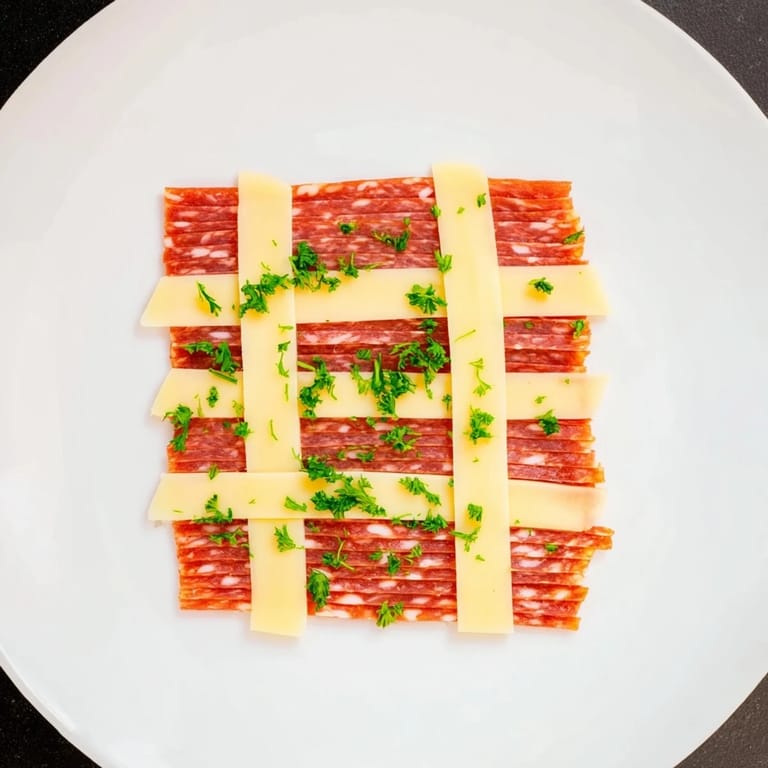
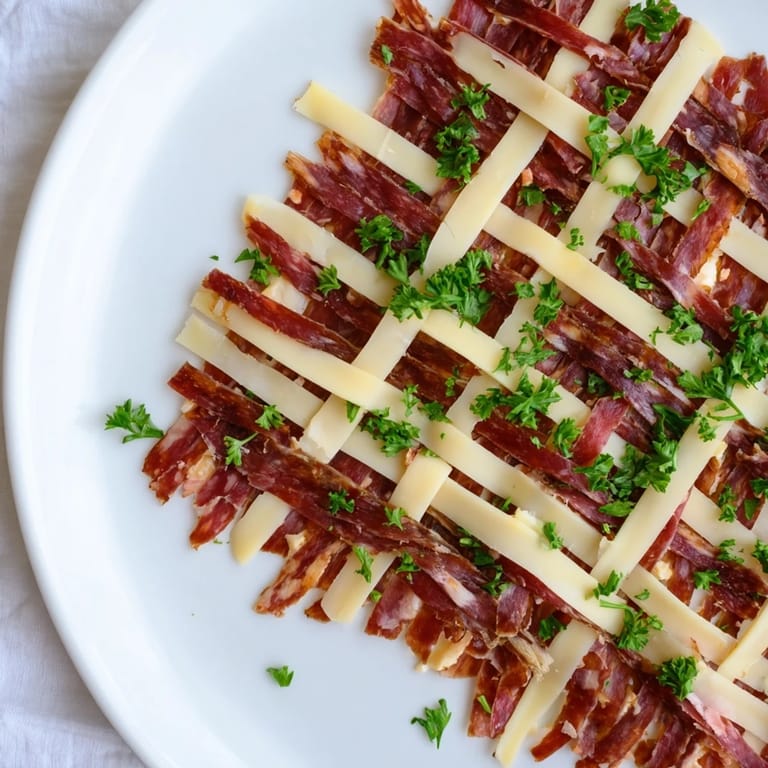
- Starting at one edge, take your first cheese strip and gently weave it over and under the jerky, alternating cheddar, Monterey Jack, and smoked gouda. This is exactly like weaving on a loom, except everything is delicious and won't unravel the second you look away.
- Build the pattern:
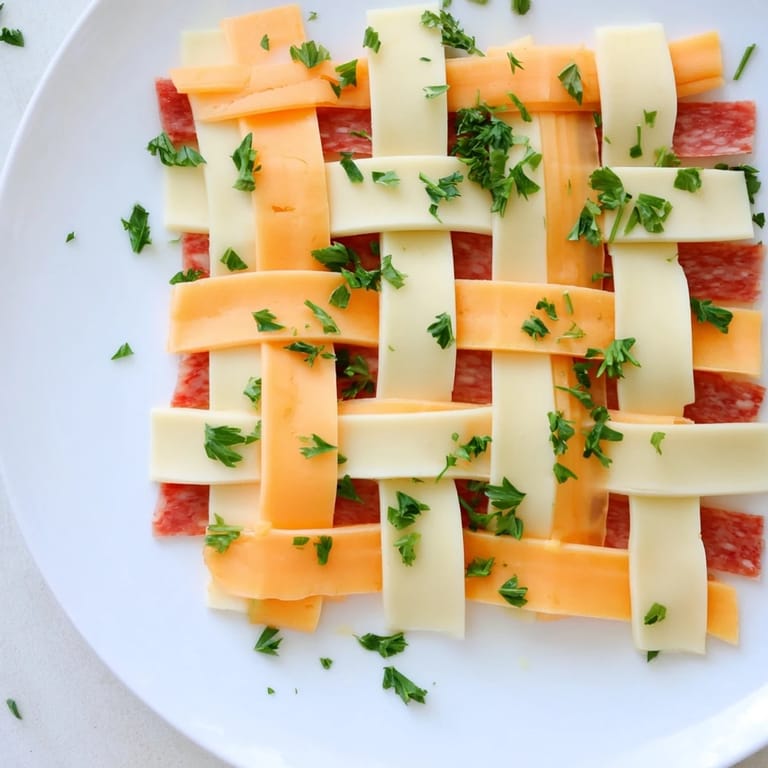
- Layer your remaining jerky and cheese strips, always switching directions and colors to keep that tartan effect visible. The pattern emerges slowly at first, then suddenly it clicks into place and looks intentional rather than chaotic.
- Set the structure:
- Gently press down on the entire arrangement with the palm of your hand. This helps everything hold together without crushing the individual strips into submission.
- Perfect the edges:
- Use a sharp knife to trim the outer edges into neat lines if you want that gallery-quality presentation. This step is entirely optional but surprisingly satisfying.
- Finish with green:
- Scatter your chopped parsley or chives across the top right before serving—this adds color, freshness, and a subtle herbaceous note that brings the whole thing into focus.
 Save
Save What surprised me most was watching people actually slow down around this dish. In a world of appetizers that disappear in seconds, this one inspired conversation—people would point out their favorite color combinations before eating, or ask about where I found each jerky. It became less about feeding people and more about giving them a small moment of joy wrapped in red, brown, and golden layers.
The Art of the Weave
The weaving technique is deceptively simple once you understand the rhythm. Think of it like the back-and-forth of walking through a forest—you're always alternating which direction you're moving, which creates the visual magic. The key is maintaining that alternation without overthinking it; let your hands find the pattern naturally rather than stressing over mathematical perfection. Real tartan doesn't need to be flawless to be beautiful.
Flavor Layering Wisdom
Each jerky brings its own personality to the board, and the cheese is there to soften their intensity into something more collaborative. Beef jerky provides the bold foundation, turkey adds chew, and pork introduces just enough sweetness to make your palate curious. The cheese strips are like diplomatic emissaries, negotiating between different flavors and preventing any single ingredient from dominating too much.
Serving and Storage Secrets
This appetizer thrives on the dinner party circuit because it requires zero heat and genuinely improves with an hour of cold rest. Covered and refrigerated, it holds together beautifully for up to two hours—any longer and the cheese can start absorbing moisture and losing its structural integrity. Serve it straight from the cold, cut into squares if you want individual portions, or leave it whole for people to tear off pieces freestyle.
- Pair it with dry white wine, crisp hard cider, or a light lager that won't overpower the delicate layering.
- Store any leftover pieces in an airtight container and eat within a day; it's still good but loses some of its textural appeal as the cheese firms further.
- For a vegetarian version, seek out quality smoked tofu and vegetarian jerky alternatives—the weaving technique works just as well.
 Save
Save The Tartan Plaid taught me that simple ingredients arranged with intention become memorable. It's proof that you don't need complex techniques or exotic ingredients to make people feel genuinely delighted by what you've made.
Recipe FAQs
- → Can I substitute different types of cheese for this appetizer?
Yes, you can use various cheeses with firm textures and contrasting colors to maintain the plaid effect while complementing the jerky flavors.
- → How should I prepare the jerky strips for assembling?
Cut the jerky into thin, uniform strips to allow easy weaving with cheese and create a neat tartan appearance.
- → Is it possible to make a vegetarian version of this dish?
Yes, substitute jerky with smoked tofu or vegetarian jerky alternatives while keeping the cheese strips for flavor and texture.
- → What is the best way to serve and store this appetizer?
Serve immediately for the best presentation, or cover tightly and refrigerate for up to 2 hours to maintain freshness.
- → What beverages pair well with this appetizer?
Dry white wine, light beer, or apple cider complement the savory flavors and provide a balanced tasting experience.
- → Can I add herbs or garnishes to enhance the dish?
Fresh parsley or chives sprinkled on top add color and a subtle herbal brightness to balance the rich ingredients.