 Save
Save I discovered this bowl on a Tuesday night when I was supposed to have a plan but didn't. My fridge had salmon left from the weekend, and I was craving something that felt both comforting and exciting—not the kind of thing you apologize for eating alone at your counter. The teriyaki glaze came together in seconds, and watching it thicken in the pan felt like small kitchen magic. That first bite, with the sweet-savory salmon hitting creamy mayo, changed how I thought about weeknight dinners.
Last month, I made this for my partner who claimed they weren't hungry, then ate most of their bowl before I even finished assembling mine. We sat on the kitchen steps eating straight from the bowls, not bothering with the table, just talking about nothing important. That's when I realized this recipe does more than feed you—it creates these small moments where food becomes an excuse to pause.
Ingredients
- Salmon fillets (2, about 150g each): Skinless means the glaze clings better and you get that perfect flaky texture; look for fillets that feel firm when you gently press them.
- Soy sauce (2 tbsp): The backbone of your glaze—use regular soy sauce unless you need it gluten-free, then reach for tamari.
- Mirin (1 tbsp): This sweet rice wine is what makes the glaze shine; don't skip it or substitute with just sugar, the flavor won't be the same.
- Honey or maple syrup (1 tbsp): Adds depth and helps the glaze caramelize; maple gives it an earthier note.
- Rice vinegar (1 tbsp): The acid that balances the sweetness and keeps everything from tasting one-dimensional.
- Sesame oil (1 tsp): Just a touch—it's potent and aromatic, too much overwhelms everything else.
- Garlic and ginger (minced and grated): Freshness matters here; the heat of the pan will release their oils and fill your kitchen with the best smell.
- Cornstarch slurry (1 tsp dissolved in water): This thickens your glaze into something glossy that actually clings to the salmon instead of sliding off.
- Short-grain white rice (2 cups cooked): The sticky texture holds everything together; leftover rice works beautifully here.
- Avocado, cucumber, carrot, scallions: These aren't just garnish—they're the textural contrast that makes every bite interesting.
- Toasted sesame seeds and nori strips: These add a whisper of umami and a little crunch that elevates the whole bowl.
- Sriracha mayo (3 tbsp mayo, 1 tbsp sriracha, 1 tsp lime juice): The creamy, spicy element that ties everything together; adjust sriracha to your heat tolerance.
Tired of Takeout? 🥡
Get 10 meals you can make faster than delivery arrives. Seriously.
One email. No spam. Unsubscribe anytime.
Instructions
- Build your glaze:
- Whisk soy sauce, mirin, honey, rice vinegar, sesame oil, garlic, and ginger in a small bowl until combined. The mixture will be amber and smell immediately inviting.
- Marinate the salmon:
- Lay salmon fillets in a shallow dish and pour half the glaze over them. Let them sit for 10 minutes—this isn't long, but it's enough for the flavors to start seeping in.
- Sear and cook:
- Heat your non-stick skillet over medium heat until a drop of water sizzles and disappears. Place salmon skin-side up and cook for 3–4 minutes until the bottom is golden, then flip gently and cook the other side the same way.
- Make the glaze glossy:
- Pour the remaining marinade into the pan and stir in your cornstarch slurry. Watch it thicken into something shiny and coat-able, about 1–2 minutes, then return the salmon to nestle in the glaze.
- Mix the sriracha mayo:
- While the salmon finishes, whisk mayo, sriracha, and lime juice until smooth. Taste it and adjust—if you want more heat, add sriracha a few drops at a time.
- Assemble the bowls:
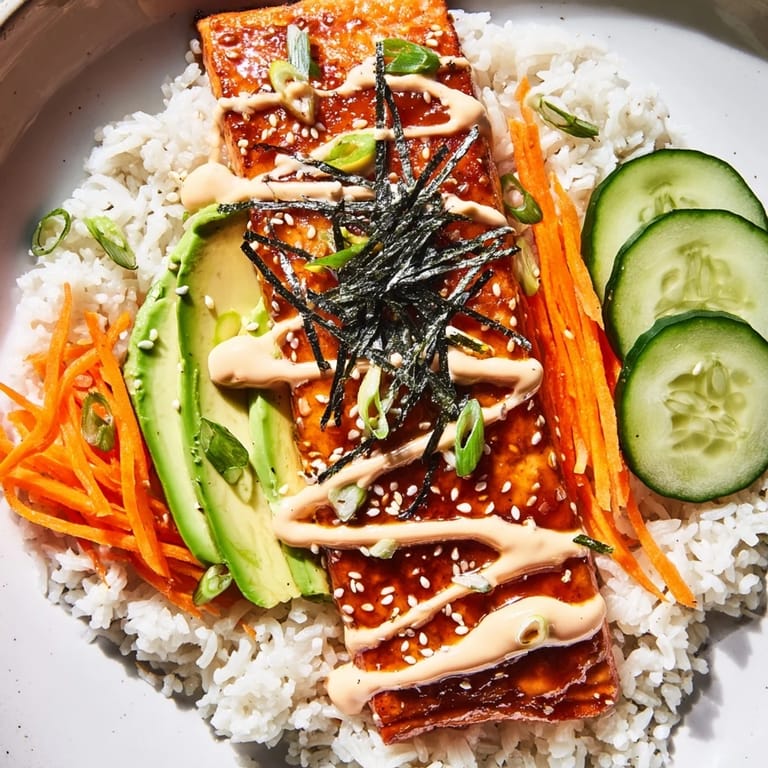
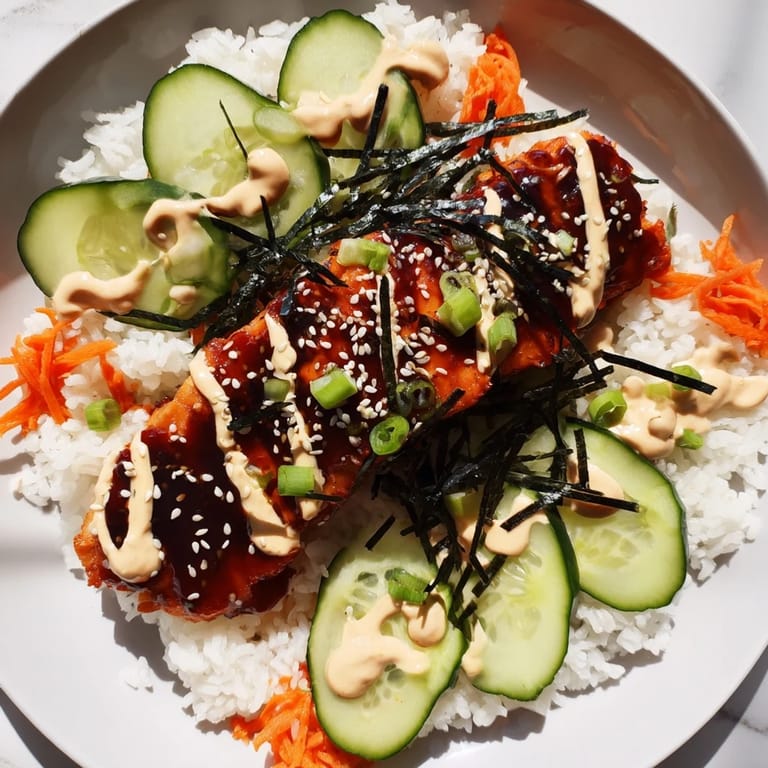
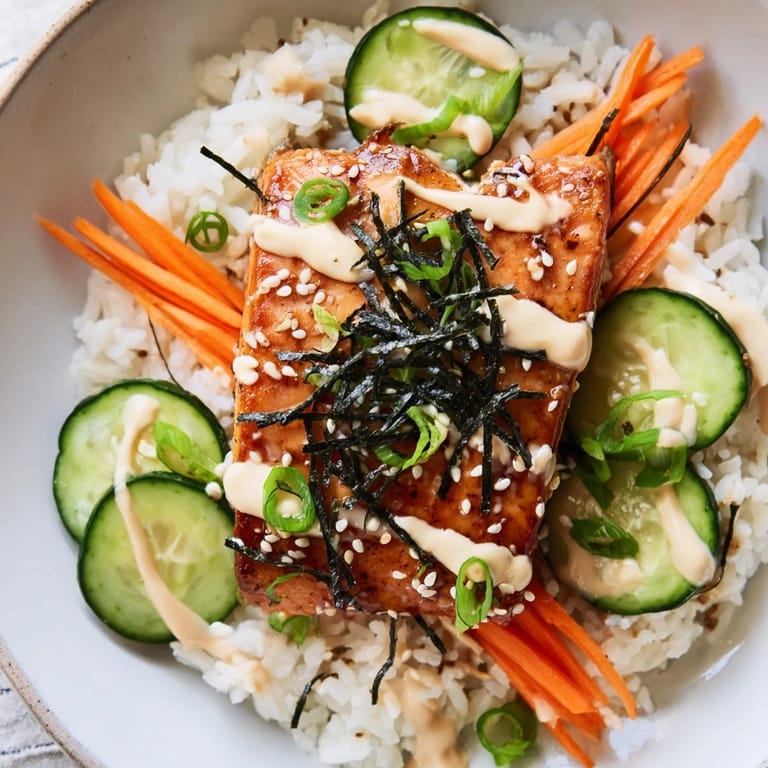
- Divide warm rice between two bowls, flake the glazed salmon over the top, and arrange your vegetables in little clusters around it. Drizzle with sriracha mayo in artistic swoops or practical zigzags—it doesn't matter as long as you get some in every bite.
- Finish and serve:
- Scatter scallions, sesame seeds, and nori strips across the top and eat immediately while everything is still warm and the textures haven't started melting into each other.
 Save
Save There's something almost meditative about laying out all the vegetables before you start cooking, arranging them into a beautiful puzzle. My grandmother would have called it fussy, but I think it's part of why this bowl works—you're not just eating, you're building something that makes you want to slow down and actually taste it.
Why This Bowl Works
Every component serves a purpose beyond looking pretty. The rice is your canvas, cool enough to balance the warm salmon but sticky enough to hold everything together. The raw vegetables keep things fresh and crisp against the richness of the glaze and mayo. The sriracha mayo bridges sweet and spicy in a way that makes you want another bite immediately after the last one. It's the kind of bowl that feels indulgent but isn't heavy—you can eat the whole thing and feel energized rather than sluggish.
Customizing Your Bowl
The beauty of this recipe is that it genuinely welcomes substitutions. Brown rice or quinoa add nuttiness and fiber if white rice feels too plain. Edamame or pickled ginger become little flavor bombs scattered through the bowl. If you're cooking for someone with dietary restrictions, this recipe bends easily—tofu takes the teriyaki glaze just as well as salmon does, vegan mayo swaps seamlessly, and tamari replaces soy sauce without anyone noticing the difference. The core logic stays the same: something glazed, something creamy, something fresh, something with crunch.
Making It Your Own
The first time I made this, I forgot to cook the rice ahead and had to use day-old takeout rice from the back of the fridge. It turned out better that way—less sticky, each grain separate and distinct. Mistakes like that are worth remembering. You might discover that you prefer your vegetables thicker or thinner, your mayo spicier or milder, your salmon slightly more or less cooked. These tiny adjustments are what turn a recipe into something that feels like yours.
- Toast your sesame seeds fresh if you can; they taste entirely different from the ones that have been sitting in your pantry.
- Make the sriracha mayo first so it has time to meld before you drizzle it.
- Eat this as soon as you've assembled it—the vegetables stay crisp, the salmon stays warm, and everything tastes like it was meant to be together.
 Save
Save This bowl has become my answer to so many kitchen moments—when I want something that feels special but I'm tired, when I'm cooking for someone I want to impress without seeming like I tried too hard, when I'm just hungry and want something that tastes like care. That's really all a good recipe needs to be.
Recipe FAQs
- → How can I ensure the salmon stays moist during cooking?
Marinate the salmon briefly in the teriyaki glaze and cook it over medium heat for just a few minutes per side to keep it tender and juicy.
- → Can I substitute the short-grain rice with another grain?
Yes, brown rice or quinoa can be used to add fiber or change texture while complementing the dish's flavors.
- → What alternatives are there for the creamy sriracha mayo?
You can replace it with plain mayonnaise, a yogurt-based sauce, or a vegan mayo mixed with chili sauce for similar creaminess and heat.
- → How do I make this dish gluten-free?
Use tamari or a gluten-free soy sauce alternative to replace regular soy sauce in the glaze.
- → What toppings add the most flavor and texture contrast?
Sliced scallions, toasted sesame seeds, and nori strips provide savory crunch and umami balance to the rich salmon and creamy sauce.
- → Is it possible to make a vegan version of this dish?
Yes, grilled tofu can replace salmon, and using vegan mayo with sriracha keeps the creamy, spicy element intact.