 Save
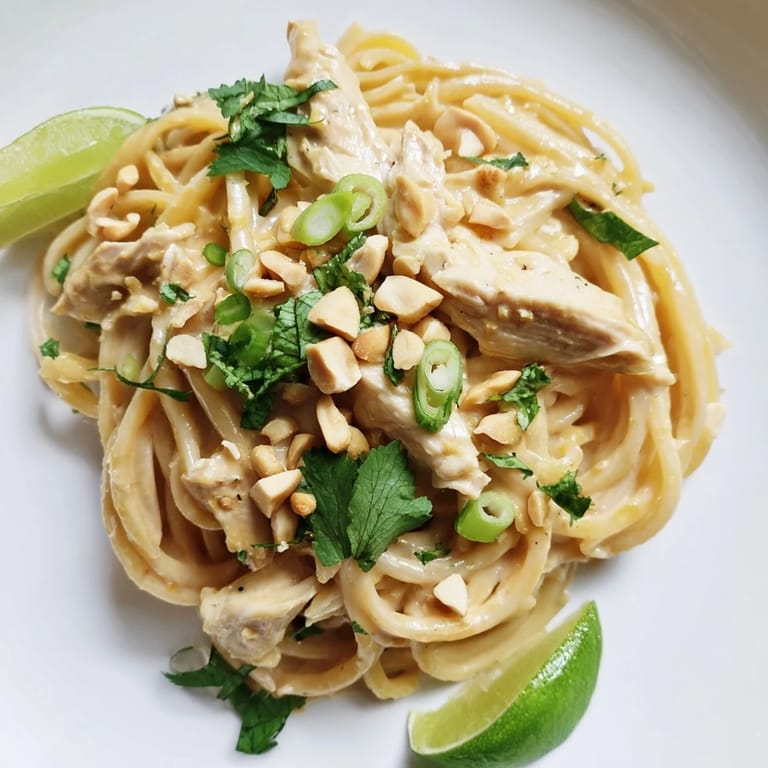
Save There's something about the smell of garlic hitting hot oil that makes you forget you're rushing through a weeknight. I discovered this Thai peanut chicken pasta on an ordinary Tuesday when I was staring at a nearly empty fridge, some linguine, and a jar of Thai peanut sauce left over from last weekend's takeout experiment. What started as improvisation became the dish I now make when I want something that feels special but doesn't demand hours in the kitchen.
I made this for a friend who claimed she didn't like pasta, and watching her ask for seconds was one of those quiet kitchen victories. The creamy-tangy balance seems to work on everyone, even people who think they're too sophisticated for a weeknight noodle dish.
Ingredients
- Linguine or spaghetti (340 g): Any long pasta works, but linguine holds the sauce just slightly better than spaghetti, with a little more surface area to catch those peanut-coconut notes.
- Chicken breast (450 g), thinly sliced: Slicing thin means it cooks fast and picks up flavor quickly; don't skip this step even though it takes an extra minute.
- Vegetable oil (1 tbsp): Use something neutral that won't compete with the sauce; I prefer avocado oil for a slightly higher smoke point.
- Salt and black pepper: Season the chicken generously before it hits the pan, not after.
- Ready-made Thai peanut sauce (1 cup): This is your shortcut and your friend; choose one with coconut milk and a bit of heat if you can.
- Soy sauce (2 tbsp): Adds salt and depth without tasting salty; low-sodium works but won't have quite the same umami punch.
- Lime juice (2 tbsp): Fresh lime is non-negotiable here; bottled lime juice tastes thin and hollow by comparison.
- Fresh ginger (1 tsp), grated: The ginger wakes everything up and prevents the sauce from feeling too heavy or one-dimensional.
- Garlic (2 cloves), minced: Garlic at the end adds a raw sharpness that balances the richness of the peanut sauce beautifully.
- Fresh cilantro (1/4 cup), chopped: Cilantro is the finishing touch that makes this feel intentional instead of lazy.
- Fresh mint (2 tbsp, optional): If you have it, use it; the cool mint flavor is a secret ingredient that makes people pause and wonder what you did differently.
- Green onions (2), thinly sliced: Divide them so you can add some during cooking and use the rest for garnish; this gives you both cooked onion flavor and fresh onion bite.
- Roasted peanuts (1/4 cup), chopped: Toast your own if you have time, but store-bought works too; the crunch is essential for texture.
- Lime wedges: For serving, so people can adjust the tang to their preference.
Tired of Takeout? 🥡
Get 10 meals you can make faster than delivery arrives. Seriously.
One email. No spam. Unsubscribe anytime.
Instructions
- Start the pasta:
- Bring a large pot of salted water to a rolling boil while you prep everything else. The water should taste like the sea, which tells you the pasta itself will be seasoned. Add pasta and cook until al dente, about 2 minutes before the package says it's done, then drain and set aside.
- Cook the chicken until golden:
- Heat oil in your skillet over medium-high heat and listen for that subtle sizzle when the first chicken piece hits the pan. Season with salt and pepper, let it sit for a moment so it browns instead of steams, then toss and cook until the pieces are pale gold on both sides and cooked through, about 5 to 7 minutes total. You'll know it's ready when the thickest piece feels firm when poked.
- Build the sauce gently:
- Lower the heat to medium, pour in the peanut sauce along with soy sauce, lime juice, ginger, and garlic. Stir slowly and let it warm through for a few minutes; you're not trying to reduce it, just bring everything to the same temperature so the flavors knit together.
- Bring it all together:
- Add the drained pasta and cooked chicken back to the skillet and toss everything until the strands are coated evenly in that creamy, nutty sauce. The pasta will continue to absorb flavor for the next minute, so taste it and adjust the lime juice or soy sauce if needed.
- Finish with freshness:
- Remove from heat and stir in cilantro, mint if you're using it, and half the green onions. This is where the dish comes alive with brightness instead of feeling like a heavy, one-note sauce.
- Plate and garnish:
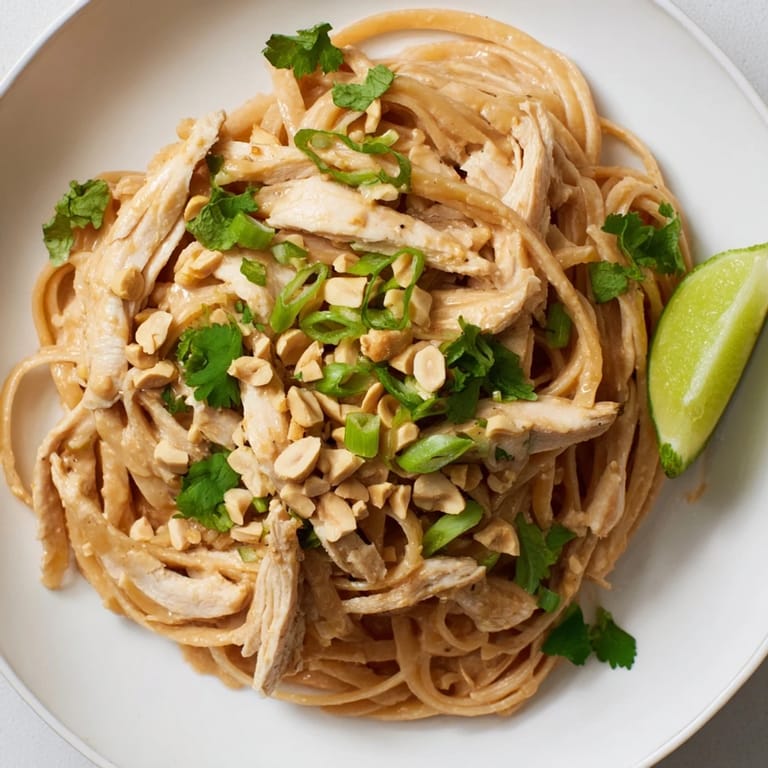
- Divide among bowls and top with chopped peanuts, the remaining green onions, and a lime wedge on the side. Serve immediately while the pasta is still warm and the herbs are still fragrant.
 Save
Save There was a moment when my partner came home mid-cooking, smelled the ginger and garlic hitting the pan, and just stood in the doorway for a second. That's when I knew this wasn't just dinner; it was the kind of simple meal that makes a house feel like a home.
Why This Works as Fusion
Thai peanut sauce and pasta shouldn't technically work together, but they do because they're both fundamentally about coating and clinging. The key is treating the sauce as a cohesive whole rather than a condiment added to noodles. I've made this with different brands of peanut sauce, different pastas, even different proteins, and the formula holds because the balance of acid from lime, umami from soy, heat from ginger, and richness from peanut is solid. You're not fighting against the dish's nature; you're working with it.
Variations Worth Trying
The beauty of this dish is how flexibly it adapts without losing its identity. I've swapped in shrimp when chicken feels boring, pressed extra-firm tofu for vegetarian nights, and even used coconut milk in place of half the peanut sauce when I wanted it richer. Rice noodles work if gluten is a concern, though they absorb sauce differently and won't hold it quite as well. The herbs are where you can really play: basil instead of mint, more cilantro if you love it, even a handful of microgreens if you're feeling fancy.
The Small Details That Matter
I've learned that this dish lives in the finishing touches rather than the main components. The raw garlic at the end cuts through richness in a way cooked garlic never quite does. The lime juice shouldn't be added to the sauce and forgotten; it should be tasted and adjusted based on the acidity of your specific peanut sauce, which varies by brand. The heat of the pan when you toss everything together matters too—if the skillet has cooled down too much, the sauce won't coat the pasta as evenly.
- Always taste a strand of pasta before draining it, since the difference between al dente and slightly soft is just a minute or two.
- If your peanut sauce is very thick, thin it slightly with a splash of water or low-sodium broth before adding it to the skillet so it coats everything smoothly.
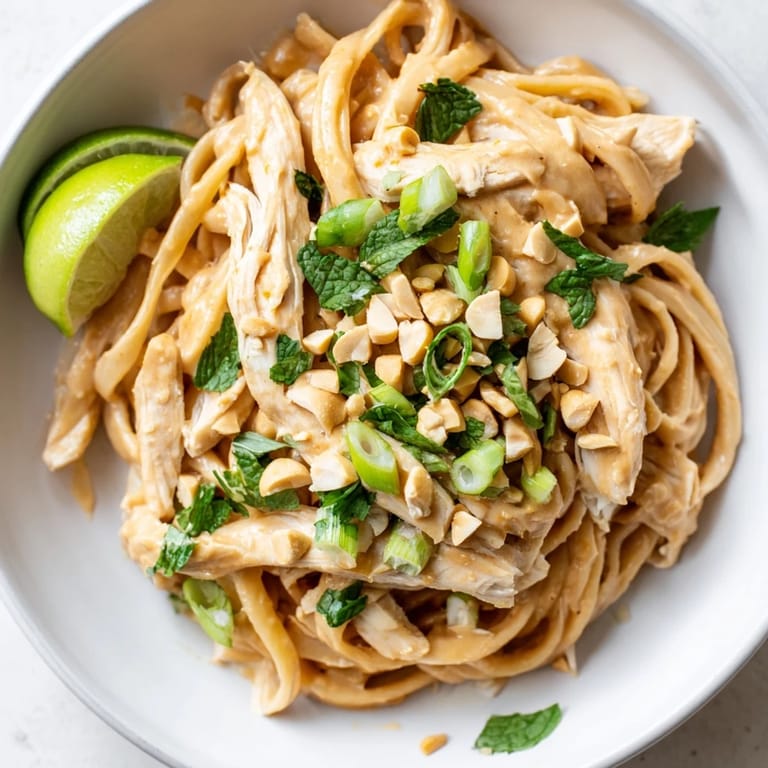
- Serve immediately in warm bowls so the pasta doesn't start to absorb all the sauce and become gluey as it cools.
 Save
Save This dish has become my answer to the question what's for dinner when I want something that feels effortless but tastes intentional. It's proof that sometimes the best cooking happens when you stop overthinking and start trusting that good ingredients, properly balanced, will do the heavy lifting for you.
Recipe FAQs
- → What type of pasta works best with this dish?
Linguine or spaghetti are ideal as they hold the creamy peanut sauce well without overpowering the dish.
- → Can I substitute chicken with another protein?
Yes, tofu makes a suitable vegetarian substitute, offering a similar texture and absorbing the sauce flavors effectively.
- → How do I enhance the spiciness of this meal?
Adding sriracha, red chili flakes, or finely chopped fresh chilies to the sauce will bring a desired spicy kick.
- → Is it necessary to use fresh herbs?
Fresh cilantro and mint brighten the flavors and add a refreshing contrast; however, they can be omitted if unavailable.
- → What are good beverage pairings for this dish?
A crisp Riesling or iced Thai tea complements the rich peanut flavors with refreshing balance.