 Save
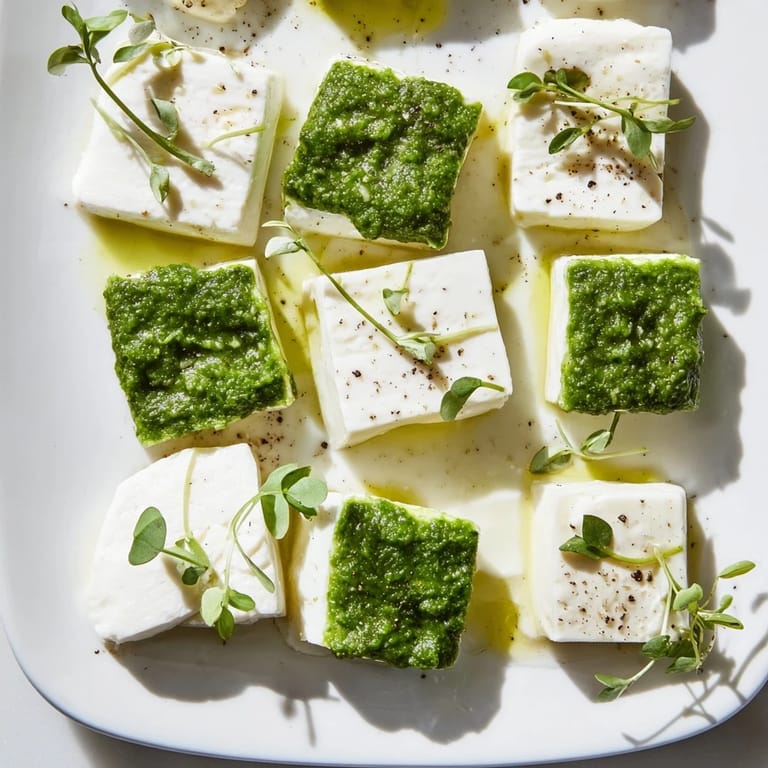
Save There's something about a checkerboard that stops people mid-conversation. I discovered this appetizer by accident one summer when I had three different cheeses in my fridge and a handful of fresh herbs that were about to wilt. Instead of tossing them, I started arranging them like tiles on a platter, and my friend leaned over and said, 'That's almost too pretty to eat.' Almost. By the time we finished, we'd eaten the whole thing and I was already planning my next one.
I made this for a book club once, and it became the thing everyone remembered—not the wine, not the discussion, just the beautiful platter on the coffee table. One guest photographed it before eating anything, which I took as the highest compliment. That's when I realized it wasn't just about taste; it was about creating something that felt special enough to pause for.
Ingredients
- Fresh mozzarella (150 g): Use the freshest you can find because it's the blank canvas here, mild and creamy with just enough structure to slice cleanly without crumbling.
- Ricotta cheese (150 g): This is your workhorse for spreading—it's dense enough to hold a clean square but soft enough to give you grace if your spatula work isn't perfect.
- Feta cheese (150 g): The sharp one, bringing salt and tang that wakes up the whole board and keeps it from tasting one-note.
- Fresh basil leaves (1 cup): Pick these the morning of if you can; the flavor difference between morning-fresh and day-old is real.
- Fresh flat-leaf parsley (1 cup): The workhorse herb that adds substance and a gentle earthiness without overpowering the delicate cheeses.
- Chives, chopped (2 tbsp): These give you a whisper of onion flavor and a hint of color that makes the green pop.
- Extra virgin olive oil (2 tbsp): Use something you actually like drinking, because you'll taste it directly.
- Garlic clove (1 small): Just one—you want presence, not a raw garlic punch that lingers on the palate.
- Lemon zest (1 tsp): The secret ingredient that brightens everything without making it taste citrusy.
- Salt and pepper: Season as you go because the cheeses have their own salt, and you're building layers of flavor, not drowning them.
- Microgreens or edible flowers (optional): These are the jewelry on the platter, purely for impact and that finishing flourish.
Tired of Takeout? 🥡
Get 10 meals you can make faster than delivery arrives. Seriously.
One email. No spam. Unsubscribe anytime.
Instructions
- Blend your herb base:
- Pulse the basil, parsley, chives, olive oil, garlic, and lemon zest in a food processor until it's a smooth, vibrant paste. Taste it as you go because you're not just making an ingredient—you're building the personality of the whole board.
- Prep your canvas:
- Line a square or rectangular tray with parchment paper; it keeps things clean and lets you slide the whole masterpiece onto a serving platter without any anxiety.
- Cut with precision:
- Slice your mozzarella and feta into even squares about the same size as your herb portions—a ruler or cookie cutter isn't cheating, it's confidence. Clean, uniform squares make the checkerboard read immediately.
- Spread the ricotta:
- Use an offset spatula to create ricotta squares with clean edges, or pipe it if you want that extra polish. Either way, these squares become your grid lines, so take your time.
- Build the pattern:
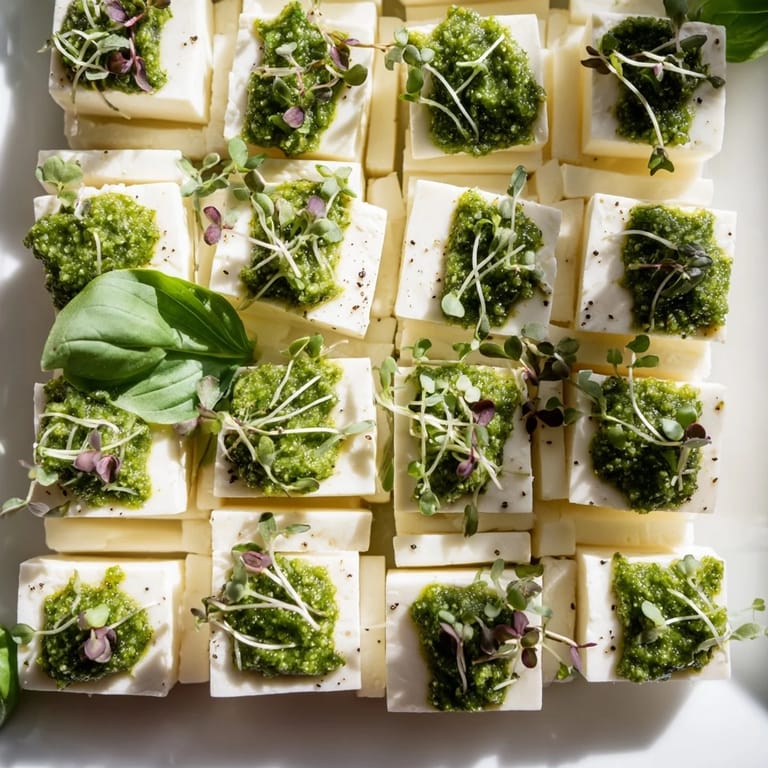
- Start in one corner and alternate: herb, cheese, herb, cheese, working your way across like you're creating a garden. The rhythm of the pattern is half the appeal.
- Garnish with intention:
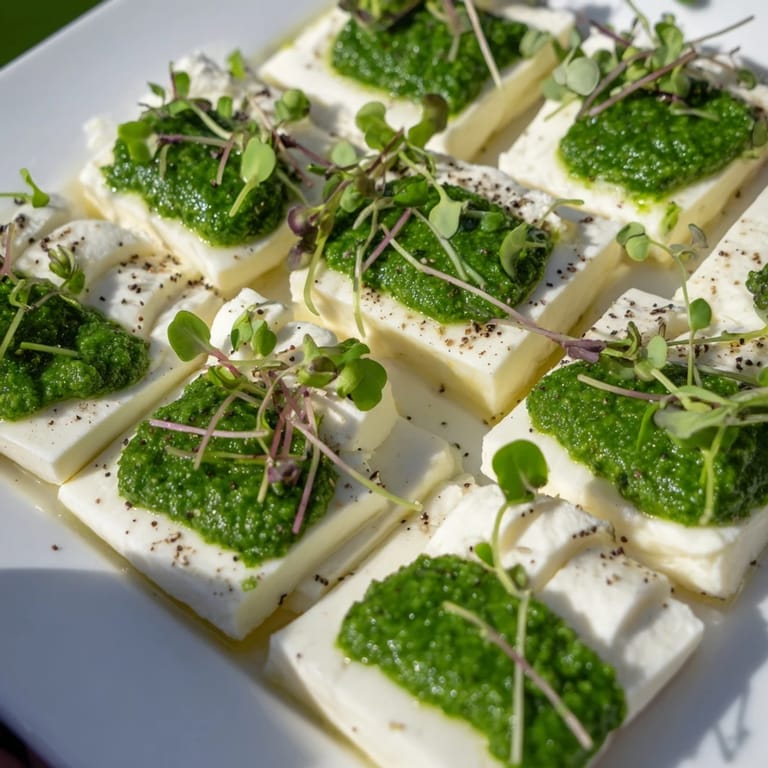
- Scatter microgreens or edible flowers across the top if you have them, or add a careful grind of black pepper for sophistication. This is your signature moment.
- Chill and serve:
- Give it 10 to 15 minutes in the fridge so the cheeses set and the flavors knit together slightly. Serve it with crackers, toasted bread, or fresh vegetables on the side.
 Save
Save I brought this to a potluck at my neighbor's house, and somehow it ended up being the thing people talked about for the next three seasons. It wasn't fancy, wasn't expensive, but it had intention written all over it, and I think that's what people remember.
The Geometry of Presentation
The checkerboard pattern isn't just pretty—it's functional. When you arrange in alternating squares, every person gets a taste of both the creamy and herbaceous elements without having to build their own combination. The contrast of textures and flavors happens on the same bite, which is why this works so well as an appetizer. You're doing the flavor work for them, which means they can just enjoy the moment.
Playing with Variations
Once you understand the basic structure, you can remix it based on what's in your fridge or what season you're cooking in. Swap ricotta for goat cheese if you want something tangier, or layer thin cucumber or radish slices under the cheese squares for crunch and freshness. Spring calls for more delicate herbs like tarragon and chervil; summer wants basil and mint; fall invites sage and thyme. The technique stays the same, but your garden changes.
Pairing and Serving Strategy
This appetizer sits happily in the appetizer category, but it also works as a stunning cheese course or a light lunch with good bread. Pair it with a crisp Sauvignon Blanc or a light Pinot Grigio that won't overpower the delicate herbs and cheeses. Serve it on a large board or platter so people can see the full checkerboard before they dig in—the visual moment matters as much as the taste.
- Cut crackers or toast thin slices of baguette just before serving so they stay crisp.
- Arrange crudités around the edges so people have vegetable options alongside the bread.
- Make it 2 to 3 hours ahead and chill it completely, but assemble no more than 30 minutes before guests arrive for the brightest herb color.
 Save
Save This recipe taught me that sometimes the most memorable food isn't complicated—it's just thoughtful and beautiful. People remember the care you took to create something they could actually see.
Recipe FAQs
- → What cheeses are used in the Checkerboard Garden?
Fresh mozzarella, ricotta, and feta cheeses are featured, each prepared into square portions for layering.
- → How is the herb mixture prepared?
Basil, parsley, and chives are blended with olive oil, garlic, lemon zest, salt, and pepper into a smooth, vibrant green paste.
- → Can this dish be prepared ahead of time?
Yes, it can be assembled and chilled for 10-15 minutes before serving for the best presentation.
- → Are there suggestions to enhance flavor variations?
Try layering thin cucumber or radish slices beneath the cheeses or substituting goat cheese for ricotta for a tangier note.
- → What serving accompaniments work well with this dish?
It pairs beautifully with crackers, toasted bread, crudités, or crisp white wines like Sauvignon Blanc or Pinot Grigio.