 Save
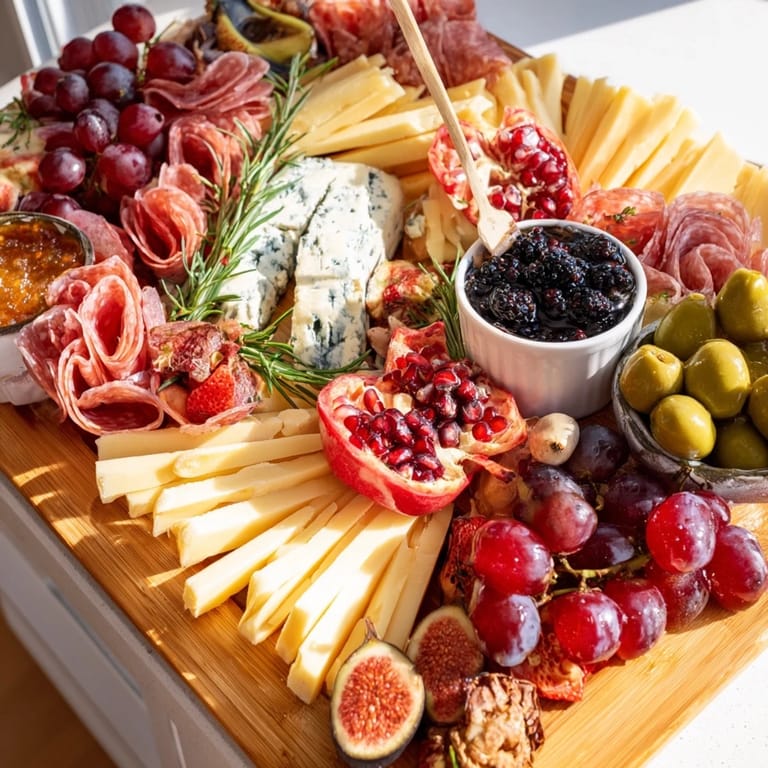
Save There's something about arranging a grazing board that reminds me of theater—the way ingredients tumble and cascade, creating drama on a simple wooden stage. I discovered this particular style at a gallery opening where a caterer had arranged cheeses and fruits to spill dramatically over the table edge, and guests couldn't stop circling back to admire it before they even tasted anything. It felt less like eating and more like participating in an edible performance, which seemed exactly right for the occasion. Now whenever I want to impress without fussing over a plated meal, I think of that moment and build something equally theatrical.
I made this for my sister's book club and watched it become the main event before anyone even sat down to discuss the novel. What started as cheese and fruit became this glorious conversation starter, with everyone debating which cheese pairing tasted best with which fruit, and suddenly the whole spread was half gone within twenty minutes. It taught me that sometimes the simplest arrangements hold the most power to bring people together.
Ingredients
- Brie: Slice it into wedges rather than chunks so it catches the light and creates those beautiful creamy lines when it cascades.
- Aged Cheddar: Cut into sticks instead of cubes to maintain clean lines as things tumble over the board's edge.
- Blue Cheese: Break into generous chunks so the veining shows—it's visually striking and worth highlighting.
- Prosciutto: Let the slices drape loosely and naturally rather than folding them too precisely; wrinkles add sophistication.
- Soppressata: Fold gently so the pattern stays visible; this is about the visual as much as the taste.
- Red Grapes: Keep them on the stem when possible—they cascade like tiny beads on a string.
- Fresh Figs: Halve them right before assembly so they stay plump and don't oxidize into dull tones.
- Strawberries: Halve lengthwise to show the beautiful interior and create visual interest.
- Pomegranate Seeds: These are your garnish jewels; scatter them last for pops of color that catch light.
- Baguette: Slice at an angle for elegance and fan the pieces slightly so they look intentional.
- Seeded Crackers: Their texture contrasts beautifully with soft cheeses and they won't overshadow delicate flavors.
- Fig Jam: The acidity bridges blue cheese and sweet fruits in unexpected ways.
- Honey: Drizzle it just before serving so it glosses everything beautifully without pooling.
- Marcona Almonds: Their buttery texture elevates the whole board beyond ordinary.
- Olives: Pit them beforehand so guests can eat freely without hunting for stones.
- Fresh Herbs: Tuck sprigs of rosemary or thyme between ingredients for fragrance and theater.
Tired of Takeout? 🥡
Get 10 meals you can make faster than delivery arrives. Seriously.
One email. No spam. Unsubscribe anytime.
Instructions
- Choose Your Stage:
- Select a large wooden or marble board and position it where it can be seen as guests enter. The edge placement matters because that's where the magic happens—where ingredients will tumble and create visual drama rather than look haphazard.
- Lead With Cheese:
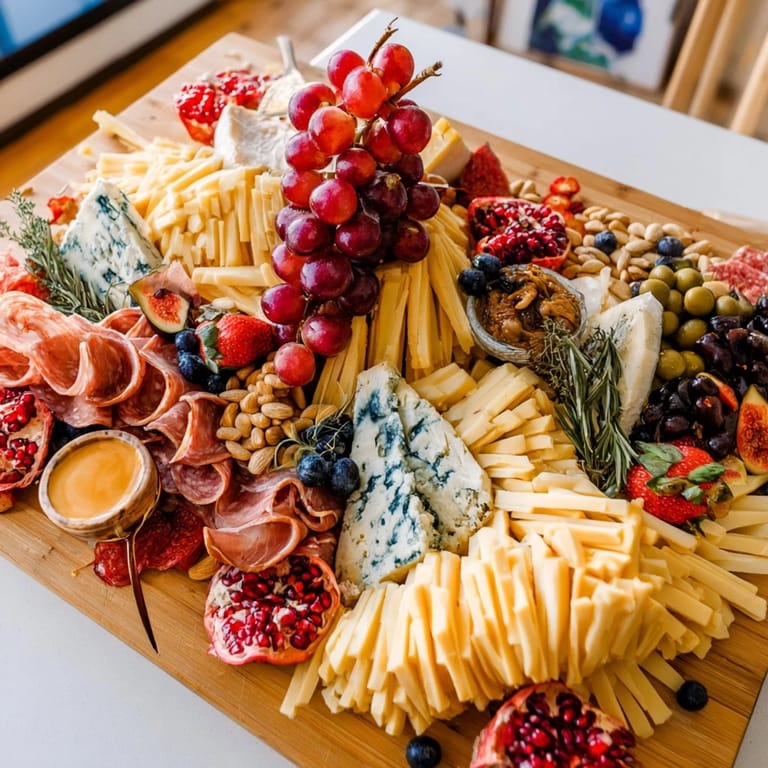
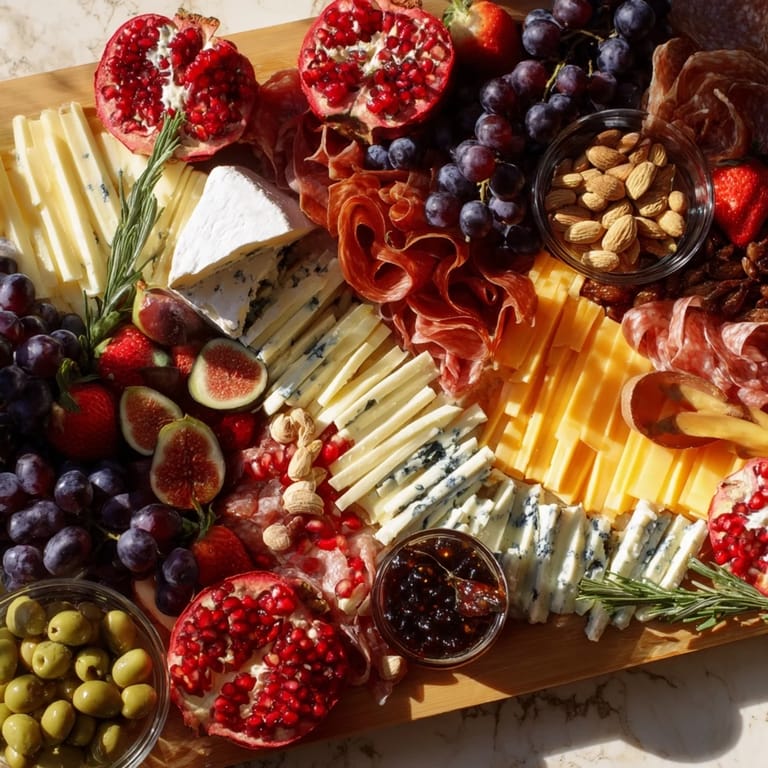
- Arrange your three cheeses so some pieces spill deliberately over the edge, creating the illusion of draped velvet curtains. Position them at varying heights so each cheese has its own moment of glory and doesn't compete for space.
- Add the Silk:
- Fold and layer prosciutto and soppressata loosely, letting the folds cascade down the sides. The key is resisting the urge to make them neat; slight wrinkles and organic folds are what make this feel intentional rather than overthought.
- Scatter Your Jewels:
- Tuck grapes in their bunches, halved figs, strawberries, and pomegranate seeds between the cheeses, letting some trail over the edge. Think of this as composing a painting where each color and shape plays off the others.
- Frame With Bread:
- Fan your baguette slices and crackers alongside the cheeses, allowing them to slightly overhang. This creates visual flow and gives guests something to build with rather than just admire.
- Nest the Condiments:
- Place small bowls of fig jam, honey, olives, and almonds on the board, nestled in pockets between other ingredients. These become functional art—beautiful to look at and necessary for building bites.
- Crown It All:
- Garnish with fresh herb sprigs tucked throughout, letting rosemary and thyme peek out from between ingredients. This final flourish adds fragrance and signals that you understand what makes food feel special.
- Present Immediately:
- Serve right away so everything is fresh and the visual arrangement hasn't been disturbed. Encourage guests to graze freely and create their own combinations.
 Save
Save What surprised me most about mastering this board was discovering that guests treat it like a puzzle to solve, each one finding their own perfect combination of flavors. The grazing board stopped being about me feeding people and became about giving them permission to play with food again, which felt like a small gift.
The Art of the Cascade
The cascading effect is what transforms a grazing board from functional to theatrical, and it's simpler than you'd think. Start by placing your tallest or most dramatic pieces—wedges of brie, folded prosciutto—closest to the edge, then let each subsequent ingredient build that flow naturally. The rule I learned is that nothing should look forced; if a piece doesn't want to tumble, it doesn't belong in that spot. Trust the arrangement and adjust as you go, and you'll find that asymmetry looks far more elegant than perfect symmetry ever could.
Building Flavor Pairings
The magic of this board lives in the combinations guests discover themselves, but understanding which flavors amplify each other helps you position things strategically. Blue cheese + fig jam is a classic pairing that deserves to be within arm's reach of each other, while honeyed almonds bridge sharp cheddar and sweet strawberries in unexpected ways. I've learned to place condiments where they'll naturally lead people toward discoveries rather than obvious choices, creating little flavor journeys across the board that feel personal rather than prescriptive.
Adapting for Dietary Needs
This board is endlessly flexible without losing its impact, which makes it perfect for mixed groups or specific diets. For a vegan version, excellent plant-based cheeses now exist that melt and slice beautifully, and roasted nuts or seeds can replace the charcuterie without diminishing the visual drama. The beauty of a grazing board is that every ingredient stands alone but belongs to the whole, so you can swap items based on what your guests need while keeping the theatrical presentation intact.
- Edible flowers like pansies or nasturtiums add extra color and feel luxurious without effort.
- Seasonal adjustments keep the board fresh throughout the year—summer calls for berries and lighter cheeses while fall invites roasted grapes and aged varieties.
- Pair this with a crisp rosé or sparkling wine that doesn't compete with the delicate flavors but makes every bite taste better.
 Save
Save A grazing board is ultimately an invitation to slow down and savor not just food but moments with people you care about. Every time I build one, I'm reminded that the best meals aren't always about cooking but about creating spaces where flavor and beauty and conversation can all exist together.
Recipe FAQs
- → What cheeses work best for this grazing board?
Brie, aged Cheddar, and blue cheese offer a well-rounded mix of creamy, sharp, and tangy flavors that complement the fresh fruits and savory meats.
- → Can this board be made vegan-friendly?
Yes, substitute the cheeses with plant-based alternatives and omit the charcuterie for a vegan-friendly option without losing visual appeal.
- → How do I create the cascading effect on the board?
Arrange the cheeses and meats so they spill slightly over the edge of the board, mimicking draped curtains, and tuck fresh fruits to trail along the sides.
- → What pairings complement this grazing board?
A crisp rosé or sparkling wine enhances the flavors and adds a festive touch to this elegant spread.
- → How should the board be served and stored?
Serve immediately to enjoy freshness; if prepping ahead, cover tightly and refrigerate, bringing to room temperature before serving.