 Save
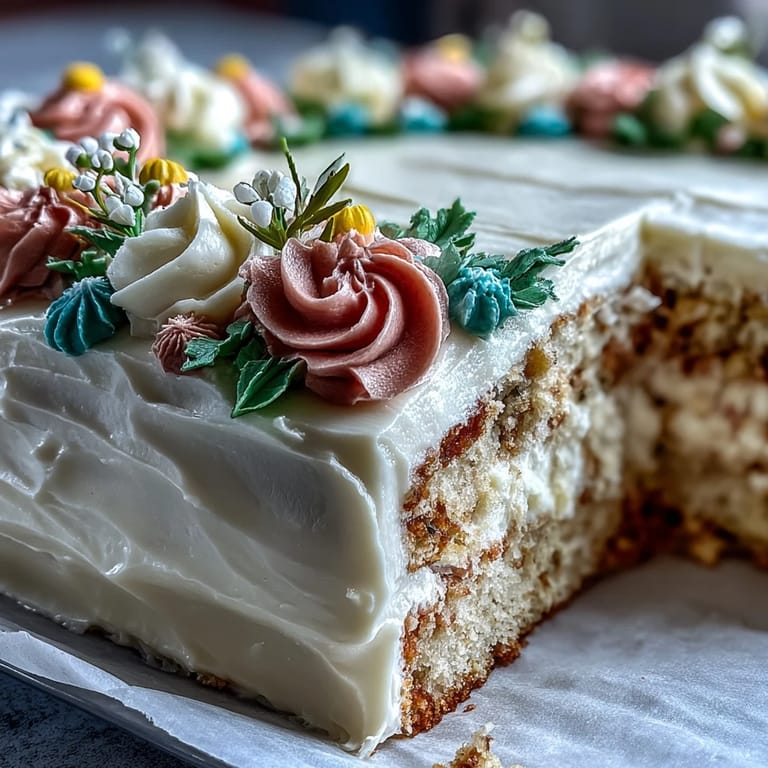
Save The scent of vanilla and butter drifting through the kitchen makes me think of spring mornings, when sunlight spills onto the table and everyone seems to expect cake. I once decided to make this sheet cake for my niece&apost;s First Communion, not quite knowing how the flowers would turn out, but trusting that a little practice with a piping bag would work wonders. The anticipation in the air as the cake cooled was almost as sweet as the batter itself. There&apost;s something quietly joyful about decorating a cake for such an occasion—every swipe of buttercream and swirl of color feels celebratory. That first slice always reminds me that sometimes, simplicity and heart make the best dessert.
The afternoon I made this for my niece&apost;s celebration, we gathered in the kitchen, giggling over the attempts at buttercream petals. My younger cousin gave up piping halfway through and switched to spooning dollops instead, but the cake still turned out beautiful and whimsical. Someone commented on how the vanilla aroma caught everyone&apost;s attention, and before we knew it, a crowd was waiting for the first cut. Even the smallest hands wanted a turn with the piping bag, and by the end, the cake was bright with colors and full of laughter. It became the centerpiece of the table, surrounded by glasses of lemonade and happy faces.
Ingredients
- All-purpose flour: Sifting this ensures your cake stays tender—I always measure carefully to avoid a dense bite.
- Baking powder: Don&apost;t skip it; fresh baking powder gives your cake a perfect rise.
- Salt: Just a pinch balances the sweetness and deepens the vanilla flavor.
- Unsalted butter: Room temperature makes a difference—cold butter won&apost;t cream properly for a plush cake crumb.
- Granulated sugar: Beating it patiently with butter creates a light texture you can almost taste before baking.
- Eggs: Let them warm up so your batter blends smoothly—cold eggs can break your emulsion.
- Pure vanilla extract: Real vanilla gives that classic aroma; skip imitation for special occasions.
- Whole milk: It adds richness—room temperature keeps the batter from curdling.
- Powdered sugar: Sifting prevents lumps in your buttercream—the smoothness is worth the extra step.
- Food coloring: Gel colors are vivid and won&apost;t thin your icing; choose soft pinks and yellows for a charming effect.
- Piping bags and tips: Different tips let you mix flower shapes—don&apost;t worry if you only have a few, simple flowers still look lovely.
Tired of Takeout? 🥡
Get 10 meals you can make faster than delivery arrives. Seriously.
One email. No spam. Unsubscribe anytime.
Instructions
- Get your oven and pan ready:
- Set the oven to 350°F and prep a 9x13-inch pan with parchment—that way, the cake slides out with ease.
- Whisk the dry essentials:
- Combine flour, baking powder, and salt in a medium bowl. The flour clings to the whisk and smells faintly nutty.
- Cream butter and sugar:
- In a large bowl, beat butter and sugar until pale and fluffy. You&apost;ll see the texture shift from grainy to velvety as air is worked in.
- Add eggs and vanilla:
- Drop eggs in one at a time, mixing gently so the batter stays smooth. The vanilla brings a warm, floral note.
- Alternate milk and flour:
- Blend the flour mix in thirds, with milk in between—begin and end with flour. The batter should be thick but soft, just combined so you avoid toughness.
- Fill and bake:
- Scoop into your prepared pan and smooth the top. Bake for 28–32 minutes; listen for the light crack as the cake sets.
- Cool the cake:
- Let it rest in the pan for ten minutes, then gently turn onto a wire rack. The cake smells rich and inviting as it cools.
- Prepare buttercream:
- Beat butter until creamy, then add powdered sugar and milk gradually. Mix in the vanilla and keep beating until your buttercream is billowy and soft.
- Tint your icing:
- Divide into bowls and stir in gel coloring for floral shades. Each swirl becomes a petal base as you mix.
- Frost the base layer:
- Spread plain buttercream thickly over the cooled sheet cake. The icing glides on and covers every corner.
- Decorate with flowers:
- Fill piping bags and use flower and leaf tips to pipe patterns across the cake. Focus on edges or corners for a classic, cheerful design.
- Finishing touches:
- Optionally pipe a cross or write your Communion greeting with a small round tip. Step back and admire your work—the cake is ready to celebrate.
 Save
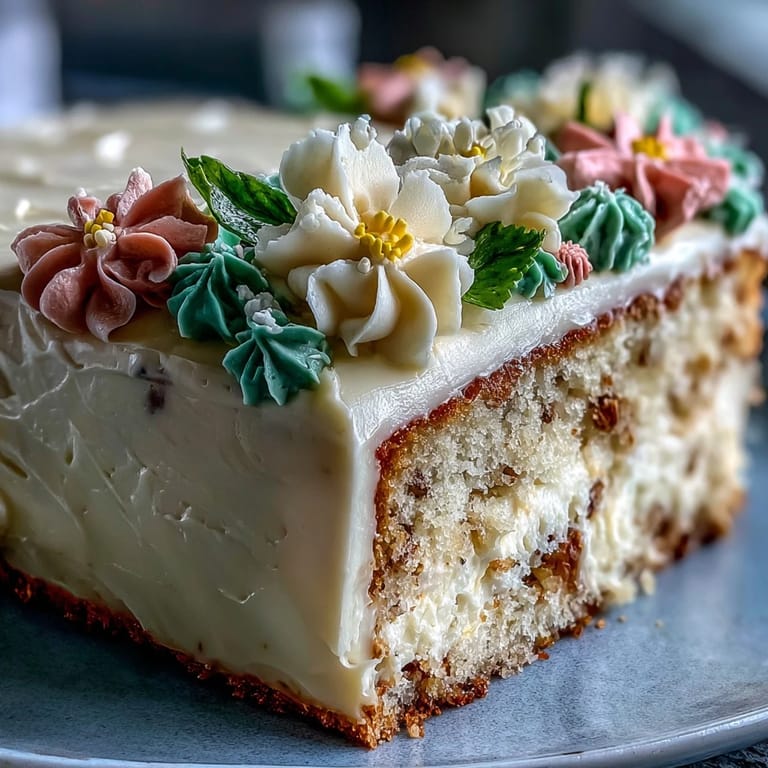
Save As we served the cake, someone paused before their first forkful, admiring the soft flowers and cross piped on top. In that quiet moment, the cake felt less like dessert and more like a celebration, a shared memory that grew sweeter with every bite. Looking back, I realized that the little details—the pastel petals, the laughter—made the occasion sing.
Mastering Buttercream Piping Without Stress
The trickiest part is always letting go of perfection—uneven petals can look charming and genuine, especially when piped by tiny hands. If you get nervous, practice designs on parchment before moving to the cake, and keep buttercream cool so it holds its shape. Sometimes, the most beautiful results happen by accident, and adding leaves can hide any little mistakes. Changing tip size lets you make different flower shapes, so explore and have fun. Swapping between pastel colors keeps the cake lively and personal.
Cake Texture Tips From Trial and Error
I used to overmix the batter, hoping for extra lightness, but learned that gentle folding gives the softest crumb. Measuring the flour by weight instead of cups made a difference—no more heavy slices or dry cake. If your eggs and milk are at room temperature, it blends smoothly and keeps the texture even. Using parchment under the cake saves you from sticking in the pan, especially for celebrations. The smell of baking vanilla is your signal that the cake is almost done.
Small Kitchen Moments That Make a Big Difference
One time, my cousin dropped a piping bag and splattered buttercream everywhere, and we ended up laughing more than decorating&mdashthe mess made the cake even more memorable. Keeping a clean dish towel nearby helps to quickly wipe hands or fix smudges. Having extra piping bags ready saves time when changing colors. If you forget the cross or your writing isn&apost;t neat, a little cluster of flowers can make up for it.
- Remember to sift powdered sugar for the smoothest icing.
- Pipe flowers along the edges for easy coverage if you&apost;re short on time.
- Don&apost;t forget: joy is the best ingredient when baking for loved ones.
 Save
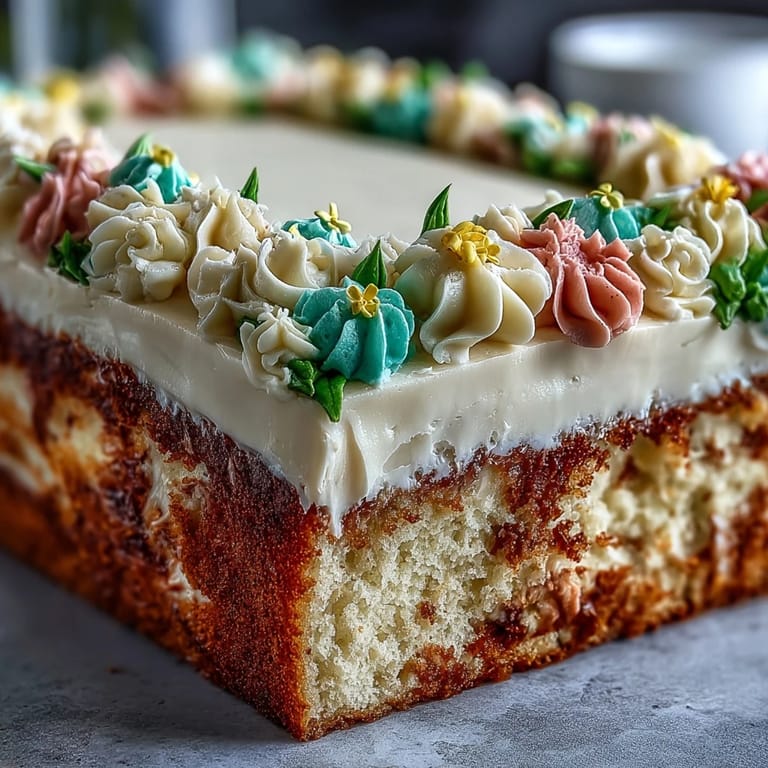
Save Baking this sheet cake always fills the kitchen with warmth and chatter, and every celebration gets sweeter with a homemade touch. May your buttercream flowers bloom colorfully, and may every slice bring smiles.
Recipe FAQs
- → How do I achieve moist texture in the sheet cake?
Use room temperature eggs and milk, and avoid overmixing the batter for a tender crumb. Properly creaming butter and sugar also helps.
- → Can I tint the buttercream in advance?
Yes, tinted buttercream can be prepared ahead and stored in airtight containers. Mix well before using to ensure consistent color.
- → What type of food coloring is best for buttercream flowers?
Gel food coloring yields vibrant hues without thinning the buttercream, making it ideal for decorative piping.
- → How should I store the sheet cake?
Store the finished cake covered at room temperature for up to one day, or refrigerate for longer freshness. Bring to room temperature before serving.
- → What tools do I need for piping flowers?
You’ll need piping bags fitted with flower and leaf tips, as well as a spatula for spreading buttercream evenly on the cake.