 Save
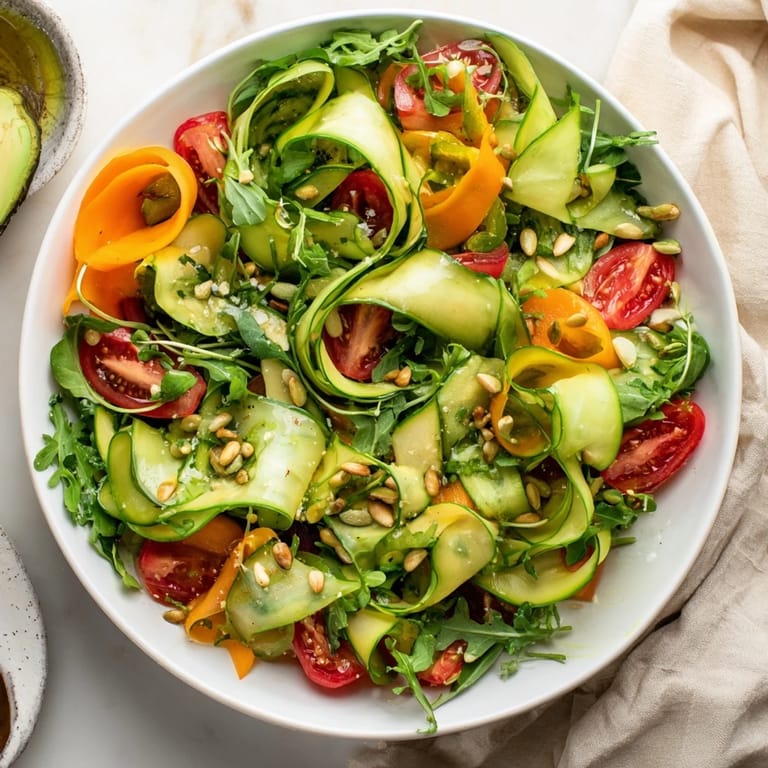
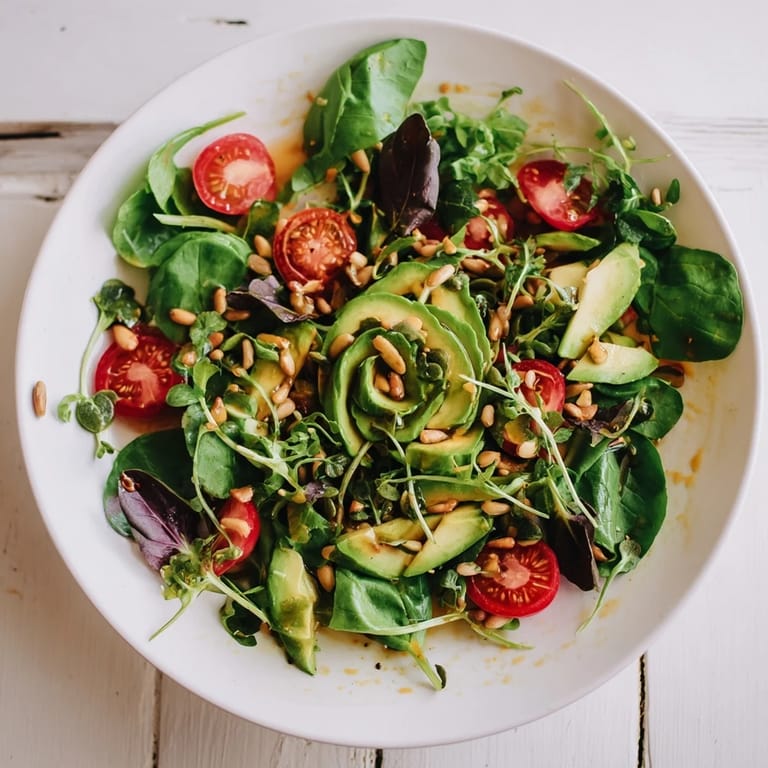
Save I discovered this salad during a moment of frustration in the kitchen, staring at a handful of beautiful produce and wondering how to make it feel special. There's something magnetic about arranging food thoughtfully, watching how colors and shapes naturally want to dance together on a plate. That afternoon, I started playing with spirals and curves, letting the vegetables guide me instead of forcing them into neat rows. What emerged felt less like a salad and more like a small work of art I'd actually get to eat. It changed how I think about everyday cooking.
I made this for my sister's book club on a warm summer evening, and I'll never forget watching everyone pause mid-conversation the moment I set the platter down. Someone asked if I'd bought it from a fancy restaurant, which made me laugh out loud. But the real magic happened after the first bites, when the conversation shifted from how it looked to how alive and fresh it tasted. That's when I knew the Golden Ratio wasn't just about mathematics—it was about creating something that felt intentional and generous.
Ingredients
- Mixed baby greens (arugula, spinach, watercress): Use 4 cups total for the base. These delicate greens provide peppery and mild notes that won't overpower the other elements.
- Cherry tomatoes: Halve 1 cup of the brightest ones you can find. They pop visually and add bursts of sweetness.
- Ripe avocado: 1 sliced just before serving keeps it from browning and maintains that creamy texture that makes everything better.
- Yellow bell pepper: Slice 1 thinly to catch the light and add a subtle sweetness without the weight of red peppers.
- Cucumber: Slice 1 small one thin so it stays crisp and doesn't overshadow the delicate greens.
- Pomegranate seeds: Use 1/2 cup for those jewel-like pops of tart and crunch that feel celebratory.
- Feta cheese: Crumble 1/2 cup into irregular pieces for texture and that salty, briny note everyone craves.
- Toasted pine nuts: Toast 1/4 cup yourself if possible—the aroma alone is worth the five minutes.
- Extra-virgin olive oil: 3 tablespoons of good quality makes all the difference in the dressing.
- Fresh lemon juice: Squeeze 1 tablespoon from a room-temperature lemon for maximum brightness.
- Honey: 1 teaspoon balances the acid and adds subtle sweetness.
- Dijon mustard: 1/2 teaspoon acts as an emulsifier and adds complexity to the dressing.
- Salt and pepper: Taste and adjust to your preference, always adding less at first.
Tired of Takeout? 🥡
Get 10 meals you can make faster than delivery arrives. Seriously.
One email. No spam. Unsubscribe anytime.
Instructions
- Lay Your Green Foundation:
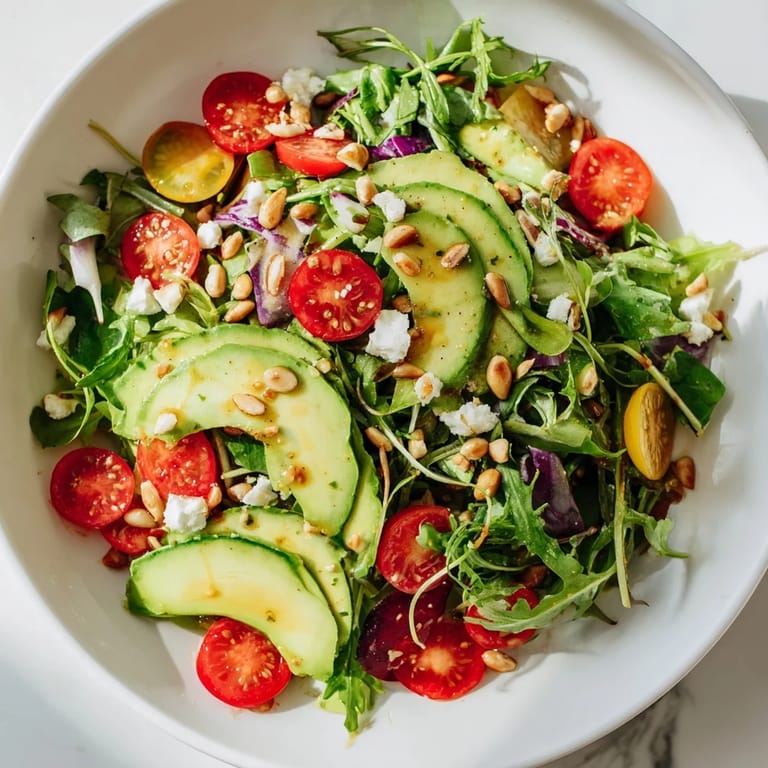
- Spread your mixed greens across a large platter, gently making them flow in a subtle spiral or sweeping curve. Think of it like creating a canvas where everything else gets to shine—don't pack them down.
- Build the Focal Point:
- Start arranging your larger elements (avocado slices, the biggest tomato halves) about two-thirds of the way across the platter, roughly where your eye naturally lands. From there, spiral outward with the remaining ingredients, letting each element have breathing room.
- Layer in Smaller Details:
- Place the cucumber slices, remaining tomatoes, and bell pepper strips to create flow and movement. Scatter the pomegranate seeds like little jewels across the whole arrangement.
- Add the Finishing Touches:
- Sprinkle the crumbled feta and toasted pine nuts over everything, with just slightly more concentration near the focal point. This weight of flavor guides the eye and the fork.
- Make Your Dressing:
- In a small bowl, whisk the olive oil, lemon juice, honey, and mustard together until it looks smooth and slightly emulsified. Season with salt and pepper, tasting as you go.
- Dress Just Before Serving:
- Drizzle the dressing evenly across the salad, moving your hand in gentle strokes so it pools in the crevices and coats the greens. Serve immediately while everything is still crisp.
 Save
Save There's a quiet moment right before I serve this salad when I step back and just look at it for a few seconds. That pause, where I notice how the colors have somehow arranged themselves into something that feels both deliberate and natural, reminds me why I cook in the first place. Food isn't just fuel—it's a small gesture of care made visible.
The Mathematics of Deliciousness
I used to think the Golden Ratio was purely mathematical until I realized it's actually how nature organizes beauty. When you arrange this salad with intention, you're not being pretentious—you're tapping into something that feels inherently right to the eye and the appetite. The visual rhythm makes the eating experience feel more present and deliberate.
When to Make This Salad
This is the salad you make when you want to impress without spending hours in the kitchen, or when you're cooking for people who deserve to feel special. I've made it for everything from quiet Tuesday dinners to fancy gatherings, and it always lands the same way—with genuine delight. It's equally at home on a casual table as it is at a celebration.
Adaptations and Personal Touches
The beauty of this salad is that it's a framework, not a rulebook. I've made it with different greens based on what was fresh, swapped colors to match the season, and even added grilled chicken when I wanted more protein. The spiral principle stays the same, but the specifics bend to what you have and what you're hungry for.
- Try goat cheese instead of feta for a creamier, more delicate tang.
- Add grilled chicken, chickpeas, or crispy tofu to turn it into a heartier main course.
- Substitute pomegranate seeds with berries or dried cranberries if that's what you have on hand.
 Save
Save This salad taught me that presentation and flavor are inseparable—when you care about how food looks, you naturally end up caring more about how it tastes. That's the real golden ratio.
Recipe FAQs
- → What makes the salad unique?
The arrangement follows the Golden Ratio, creating an appealing balance of colors and textures alongside fresh ingredients.
- → Can I substitute the feta cheese?
Yes, goat cheese works well as a creamy alternative to feta, maintaining the salad's rich flavor.
- → How should the dressing be prepared?
Whisk olive oil, lemon juice, honey, Dijon mustard, salt, and pepper until smoothly emulsified before drizzling.
- → What are suitable additions for more protein?
Grilled chicken or chickpeas can be added to enhance protein while preserving the salad's freshness.
- → How to serve for best presentation?
Arrange the ingredients on a large platter following a spiral pattern, starting with larger pieces centrally for optimal visual impact.