 Save
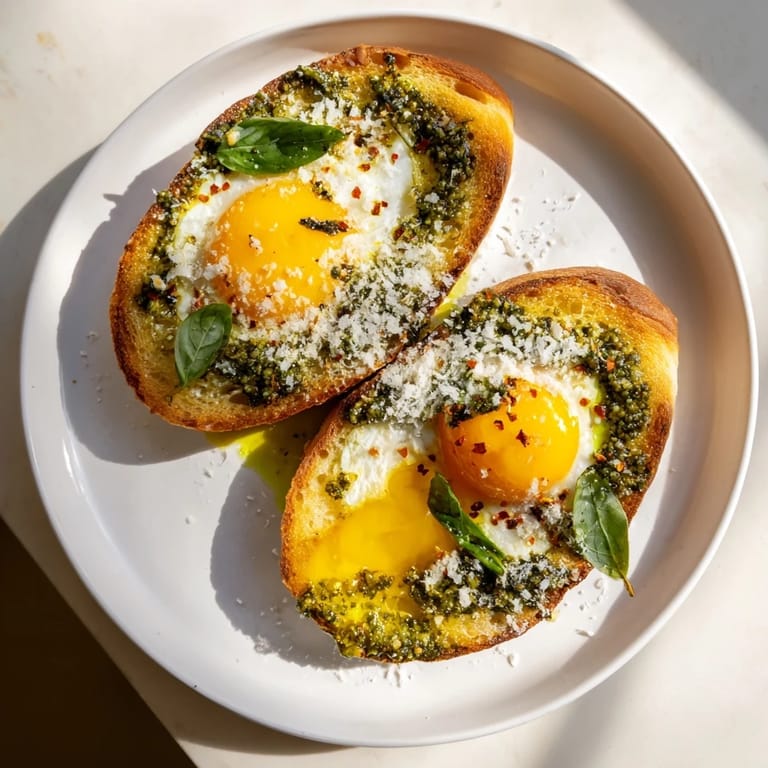
Save The first time I made pesto egg toast was on a Saturday morning when I had nothing but eggs, bread, and a small jar of pesto my neighbor had pressed into my hands the day before. I wasn't trying to be fancy—just hungry. But when I cracked into that soft, golden yolk and watched it spill onto the green-flecked toast, something clicked. This wasn't just breakfast; it felt like I'd stumbled onto a little culinary secret that had been hiding in my kitchen the whole time.
I served this to my friend Maya on a bright April morning when we were both pretending we had our lives figured out. She took one bite and got quiet in that way that means food has just solved a small problem. She came back the next week asking how I made it, and I realized I'd created one of those dishes that becomes part of people's regular rotation—the kind they make for themselves on mornings they need something good.
Ingredients
- Eggs: Two large ones, and this is where patience pays off—boiling them for exactly seven minutes is the difference between chalky yolks and that glossy, jammy center that makes the whole thing work.
- Sourdough or Country Bread: Use something with character that can stand up to the pesto without turning into mush; thin white bread will fall apart under the weight of the toppings.
- Basil Pesto: Two tablespoons of good pesto is the backbone here, whether you buy it or make it yourself—the flavor carries the whole dish.
- Extra Virgin Olive Oil: A tablespoon to finish, because that little drizzle ties everything together with warmth and depth.
- Salt and Pepper: Never skip seasoning; these humble two make the eggs taste more like themselves.
- Parmesan Cheese: Optional but worth it—a tablespoon of grated sharpness lifts the pesto and adds a salty whisper.
- Fresh Basil: If you have it, a tablespoon chopped gives you a burst of brightness that reminds you this came from something alive.
- Red Pepper Flakes: Just a pinch, but it's the small surprise that makes people ask what you did differently.
Tired of Takeout? 🥡
Get 10 meals you can make faster than delivery arrives. Seriously.
One email. No spam. Unsubscribe anytime.
Instructions
- Boil Your Eggs to Golden Perfection:
- Fill a small pot with water and bring it to a rolling boil. Gently lower your eggs in with a spoon, then lower the heat and simmer for exactly seven minutes—set a timer because even one minute off changes everything. You'll hear the gentle bubbling, smell something almost sweet from the cooking eggs, and that's when you know it's working.
- Shock the Eggs:
- The moment the timer beeps, transfer them to an ice bath or run them under cold water while you gently roll them under your fingers. This stops the cooking instantly and is the secret to that bright, jammy yolk you're after.
- Toast Your Bread:
- While the eggs cool, get your bread golden and crispy, either in a toaster or in a hot pan until both sides have color and a little snap to them.
- Peel and Slice the Eggs:
- Once they're cool enough to handle, peel them gently under a thin stream of water—the water helps separate the shell from the white.
- Build Your Toast:
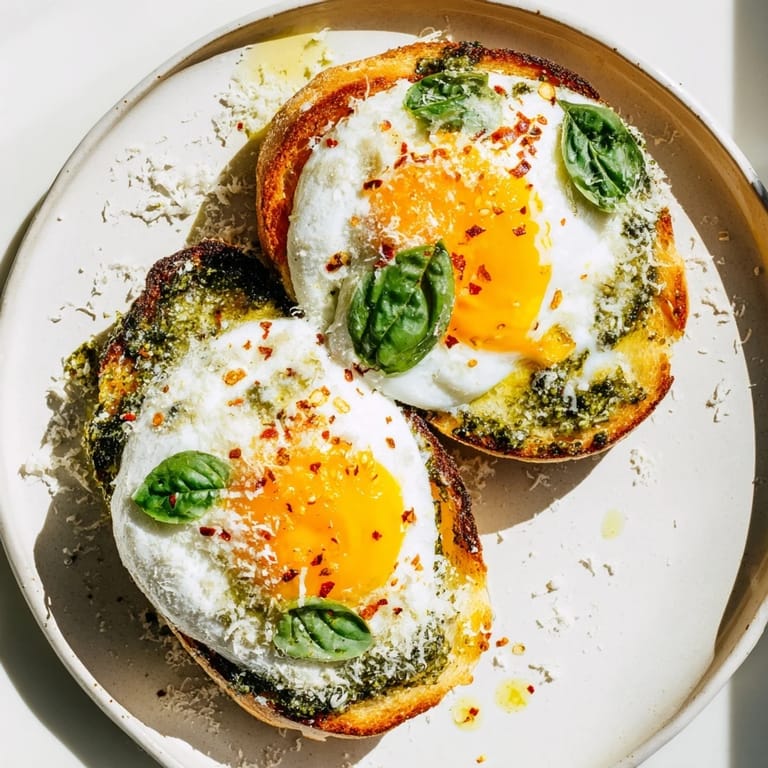
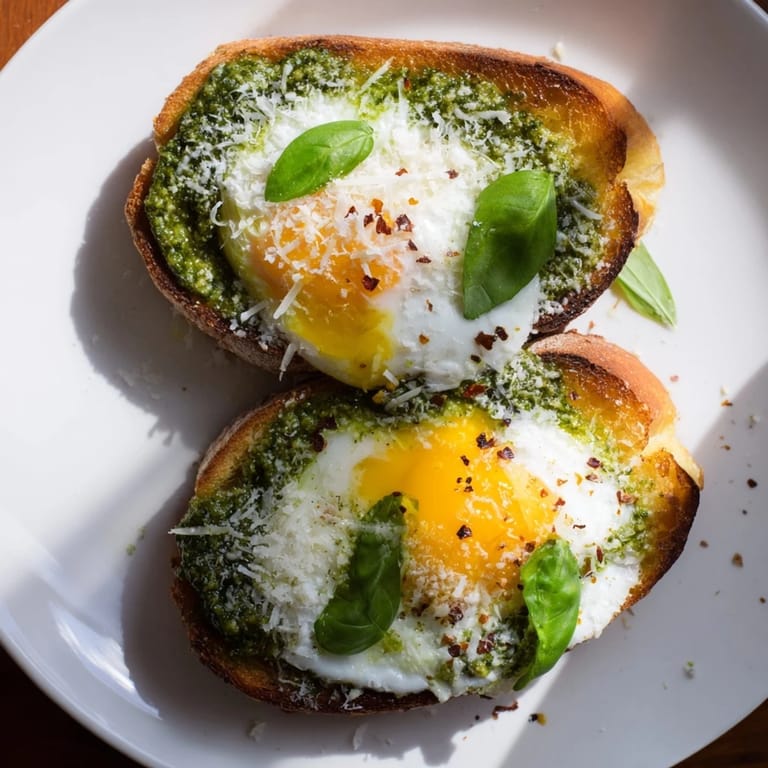
- Spread a generous tablespoon of pesto over each warm slice of toast, then halve your eggs and nestle them on top, cut side up so the yolk is visible.
- Finish and Serve:
- Drizzle with olive oil, add a pinch of salt and pepper, then sprinkle Parmesan, fresh basil, and red pepper flakes if you have them. Eat it while everything is still warm and the flavors are talking to each other.
 Save
Save There's something almost meditative about cracking into a perfectly boiled egg in the morning and watching that jammy yolk spill into the green herbs below. My partner now asks for this on mornings when the world feels too much—something about the combination of richness, brightness, and simplicity brings him back down.
The Art of the Jammy Egg
Getting the yolk right is the whole game here. Too soft and it's runny before you eat it; too firm and it becomes another ingredient instead of the star. The seven-minute window is surprisingly forgiving once you understand that cold water isn't just for stopping the cooking—it's for setting the boundary between soft and set. I've learned to trust my kitchen timer more than my intuition, and my eggs are better for it.
Pesto Possibilities
While basil pesto is the classic pairing, I've found myself experimenting with variations that change the whole mood. Sun-dried tomato pesto brings an almost sweet earthiness that pairs beautifully with the egg, and arugula pesto adds a peppery edge that makes you sit up straight. Even cilantro-based pesto works if you're in that kind of mood. The bread stays the same, the egg stays the same, but suddenly you're tasting something completely different.
Building Layers for Richness
Once you've made this basic version a few times, the door opens to all sorts of additions. A thin layer of ricotta under the pesto adds creaminess that rounds out the brightness; sliced avocado brings texture and a cooling effect that plays against the warmth of the egg. These aren't mandatory—the simple version is perfect—but they're the kinds of small decisions that let you make this recipe yours.
- Ricotta and pesto together become almost like a spread, creamy and herby and impossible to resist.
- Avocado slices should go on after the pesto but before the egg, so the egg white keeps them from sliding around.
- If you add anything, taste it before serving, because these additions shift what the salt and pepper need to do.
 Save
Save This is one of those recipes that reminds me why I cook at all—not because it's complicated or impressive, but because something so simple can taste so much like care. It's the kind of breakfast that changes a morning.
Recipe FAQs
- → How do I achieve perfectly jammy eggs?
Simmer eggs gently for about 7 minutes, then place them in an ice bath to stop cooking, ensuring creamy, soft yolks.
- → What type of bread works best for this dish?
Sourdough or country bread toasted until golden provides a crisp base that complements the creamy eggs and pesto.
- → Can I use different pesto varieties?
Absolutely! Sun-dried tomato or arugula pesto offer delicious twists while maintaining the herbaceous flavor profile.
- → Are there any optional toppings to enhance flavor?
Grated Parmesan, fresh chopped basil, and a pinch of red pepper flakes add layers of richness and a hint of spice.
- → How can I adapt this for gluten-free diets?
Simply substitute the toast with gluten-free bread to keep the dish suitable without compromising texture.
- → What pairs well with this dish for a complete meal?
Serving alongside a light salad or fresh fruit balances the flavors and adds refreshing contrast.