 Save
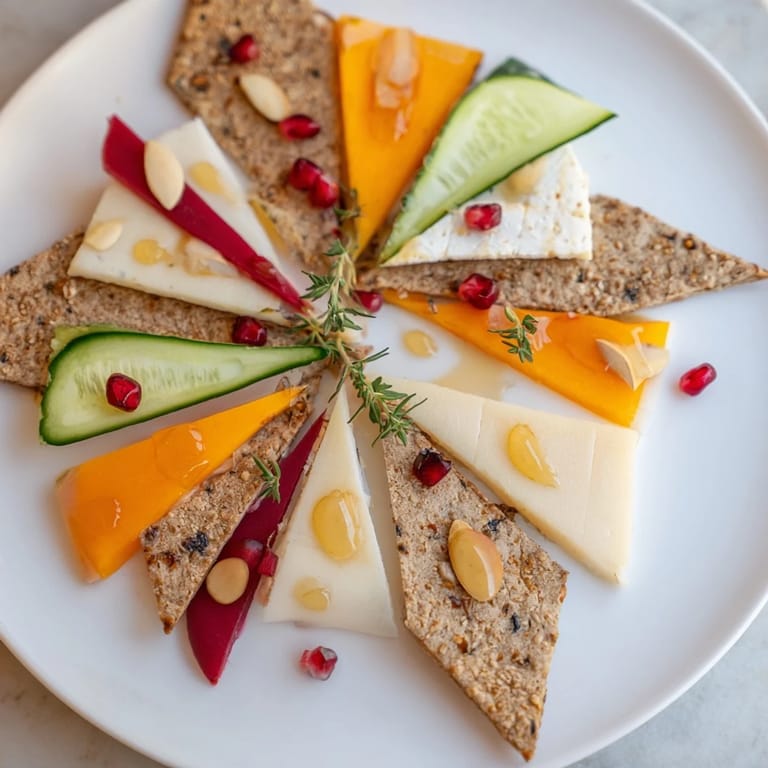
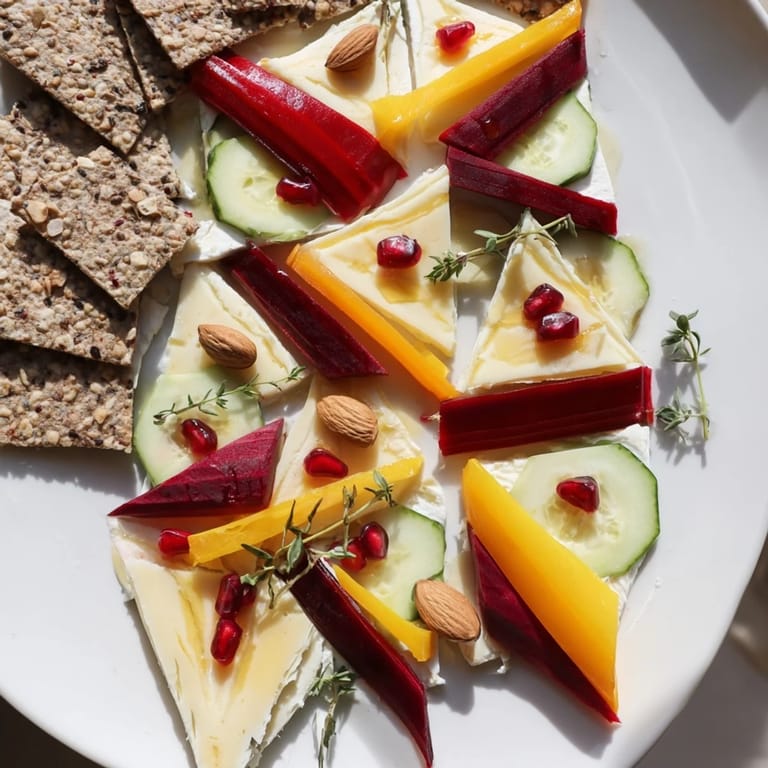
Save I discovered the magic of geometric food during a particularly stressful dinner party prep. Instead of the usual scattered cheese board, I decided to arrange everything into perfect triangles that interlocked like a puzzle. As I worked, something shifted. The act of creating order through repetition became meditative, and when my guests arrived, they literally gasped. That moment taught me that food is as much about the visual story we tell as it is about flavor. The Tessellation Triangle was born from that happy accident, and it's become my secret weapon for making entertaining feel effortless and impressive.
I'll never forget making this for my best friend's promotion party. She walked in, saw the board, and actually teared up because she said it was too beautiful to eat. Of course, that lasted about thirty seconds before everyone dove in. Watching a carefully constructed geometric pattern disappear into happy faces while people raved about the flavor combinations reminded me why I love feeding people. It wasn't just about the triangles anymore, it was about creating a moment worth remembering.
Ingredients
- Aged cheddar, 100 g: The sharpness cuts through everything else and adds a sophisticated bite. I learned to buy it as a wedge and slice it myself because pre-sliced always seems to dry out before the party starts.
- Manchego, 100 g: This Spanish beauty has a nutty, buttery quality that feels fancy but isn't fussy. It holds its shape beautifully when cut into triangles, which matters more than you'd think.
- Goat cheese, 100 g chilled: The creamy, tangy counterpoint to everything. Keeping it cold is non-negotiable, or your triangles turn into mush.
- Cucumber, 1 medium: The crisp freshness nobody realizes they're craving until they taste it. A mandoline slicer is your friend here for getting those paper-thin, even triangles.
- Red bell pepper, 1 large: The color hero of this board. Its sweetness and visual pop make the whole pattern come alive.
- Beet, 1 small cooked: The deep jewel tone that stops people in their tracks. Cook it ahead if you can, and wear gloves unless you don't mind looking like you've been in a beet battle.
- Pear, 1 large: The subtle sweetness that bridges everything together. Firm pears work better than soft ones, and a squeeze of lemon juice keeps them from browning.
- Seedless watermelon, 1/2 cup: The unexpected guest that somehow makes sense. Those small, bright triangles fill awkward gaps and add refreshing juiciness.
- Whole grain crackers, 100 g: The textural anchor. Some people skip these for a fully composed board, but I love the nutty crunch they add.
- Roasted almonds, 1/4 cup: The edible glue that fills gaps and adds subtle richness. Toast your own if you have time, the difference is real.
- Pomegranate seeds, 1/4 cup: Jewels scattered throughout. They fill tiny gaps, add color, and catch the light in the most gorgeous way.
- Honey, 2 tbsp optional: A final drizzle that makes the goat cheese triangles feel dessert-like. Use sparingly unless you love sticky fingers.
- Fresh herbs, thyme or mint: The finishing detail. A few scattered leaves say you put thought into every single element.
Tired of Takeout? 🥡
Get 10 meals you can make faster than delivery arrives. Seriously.
One email. No spam. Unsubscribe anytime.
Instructions
- Set up your canvas:
- Start with a large wooden board or platter as your base. Make sure it's clean and dry. There's something about wood that makes the colors pop more than ceramic or slate, though use whatever you have and own it confidently.
- Cut everything into triangles:
- This is the real work, and it's worth doing right. Pull out your sharpest knife or mandoline and cut every single ingredient into triangles roughly the same size. They don't have to be identical, but similar sizing is what makes the pattern work. Go slowly, especially with soft cheeses and delicate vegetables. Listen to the satisfying sound of your knife hitting the board, get into a rhythm, and don't rush this part.
- Begin from a corner:
- Start arranging from one corner and work your way across and down, like you're solving a puzzle. Alternate colors and textures constantly, so no two similar pieces sit next to each other. This is where the magic happens, and where you'll discover your own pattern instinctively.
- Fit them tightly together:
- Push each triangle snug against its neighbors. Minimize those gaps. This is what transforms it from a cheese board into a tessellation. You're basically creating living geometry, and it should feel like those pieces belong together.
- Fill the gaps:
- Once the big pieces are down, scatter pomegranate seeds and roasted almonds into any tiny spaces. They're not just gap fillers, they're the jewelry of this board.
- Optional honey finish:
- If you're using it, drizzle honey lightly over the goat cheese triangles just before serving. Be restrained, unless you want your guests eating like they're in a messy romance scene.
- Garnish and serve:
- A few fresh thyme leaves or mint scattered across the top, and you're done. Step back, admire what you've created, take a photo if you want, then let people dive in immediately.
 Save
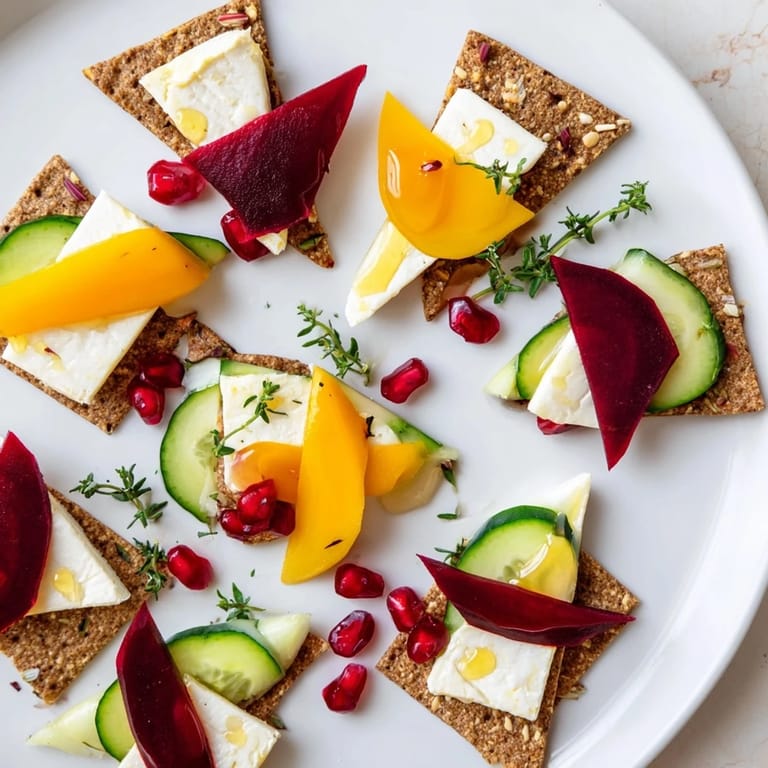
Save The real revelation came when I realized my daughter was actually sitting at the table sketching the pattern into her notebook after we'd eaten half of it. What started as a visual trick had turned into something that sparked her imagination and curiosity. That's when I understood this board is about creating an experience, not just a snack.
The Geometry of Flavor
Every triangle you place is a calculated risk and a flavor decision. When you put sharp cheddar next to sweet watermelon, next to creamy goat cheese, next to earthy beet, you're creating a conversation between ingredients. Each bite becomes an unexpected combination because you never know which three pieces someone will grab together. That's where the real intelligence of this dish lives, not in the perfection of the pattern, but in the dialogue between colors and tastes that arrangement creates.
Timing and Preparation Strategy
The beauty of this appetizer is that it doesn't require last-minute cooking stress. Everything can be cut and prepared earlier in the day, then assembled just thirty minutes before your guests arrive. I've learned to keep all the cut pieces in separate containers with damp paper towels underneath the vegetables and fruits to keep them fresh. The assembly itself becomes almost meditative when you're not rushed, and you'll actually enjoy the creative process instead of treating it like a chore.
Customizing Your Pattern
Your tessellation doesn't need to follow any rules I've laid out. Some of my favorite versions came from experimenting with different color sequences, adding ingredients I had on hand, or discovering that certain vegetables and cheeses arranged in certain ways just felt right visually. The template is there to guide you, but your instincts about color balance and texture mixing are more important than perfect repetition. Trust what you're seeing as you build it, and don't be afraid to rearrange pieces until it feels exactly right to your eye.
- For a vegan version, quality plant-based cheeses work beautifully, especially the aged varieties that hold their shape
- Add thin slices of prosciutto or other cured meats cut into triangles if you want a non-vegetarian spin that's genuinely impressive
- Consider seasonal variations, like fresh figs instead of watermelon, or roasted root vegetables in winter
 Save
Save This board taught me that entertaining doesn't have to mean complicated cooking. Sometimes the most impressive thing you can do is slow down, focus on the craft of arrangement, and create something so visually stunning that people remember the experience long after the flavors have faded. That's worth an afternoon with a sharp knife and a little patience.