 Save
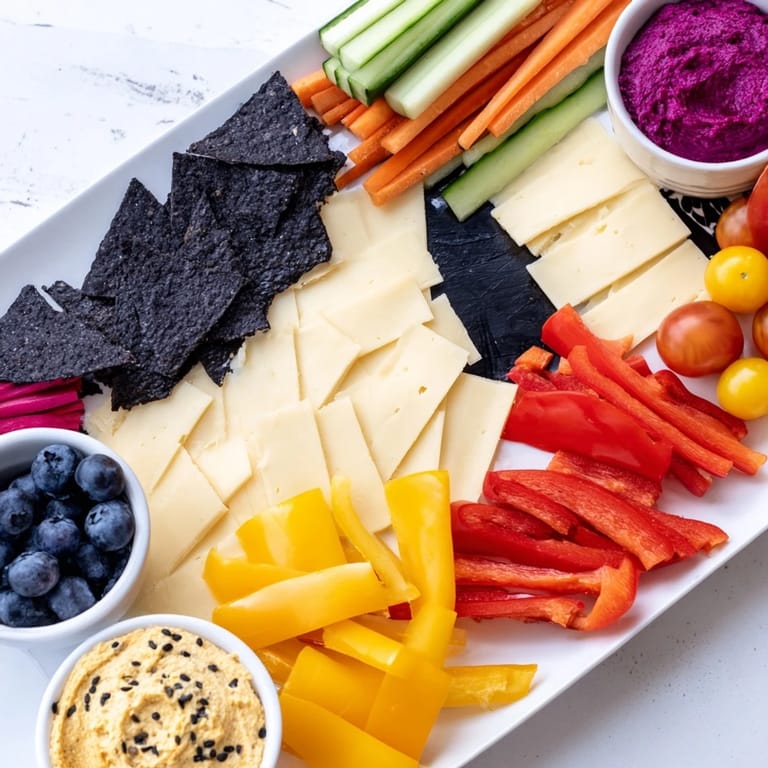
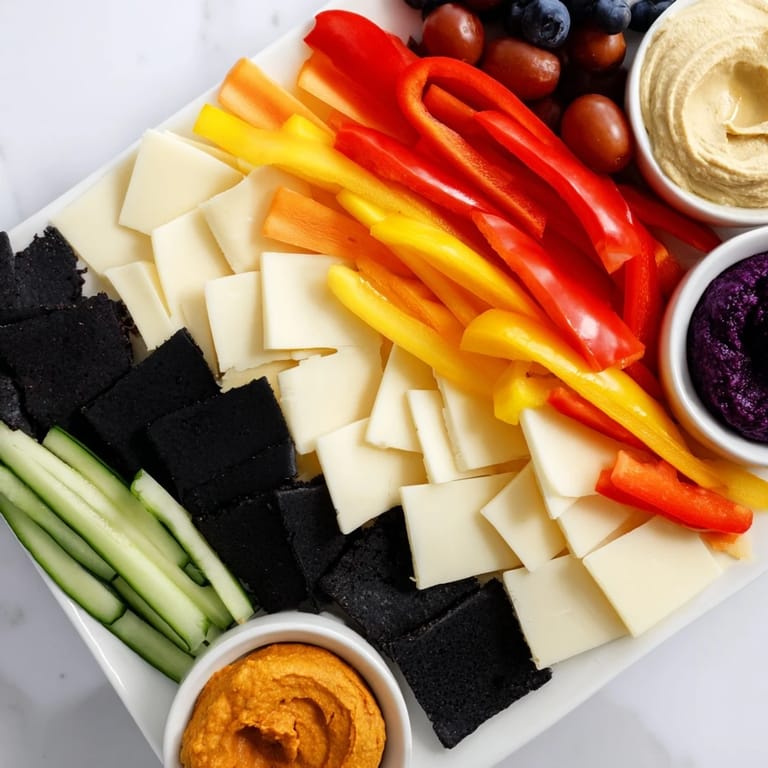
Save I discovered the magic of a zig-zag platter on a late summer evening when I was hosting friends who'd just returned from a gallery opening downtown. I wanted to serve something that matched the artistic energy of the night—something bold and geometric that would make people stop and actually look at the food before eating it. That's when I arranged my first lightning strike board, and watching my guests' faces light up as they walked in was worth every minute of careful cutting and positioning.
I remember my friend Maya asking if I'd hired a professional caterer when she saw the zig-zag pattern stretching across the board. That moment—when homemade feels like restaurant-quality—is exactly why I come back to this arrangement again and again.
Ingredients
- Red bell pepper strips: These are your primary color anchor; the brightness makes every other ingredient pop against it
- Yellow bell pepper strips: The warm contrast to red keeps the eye moving along the zig-zag without getting bored
- Cucumber sticks: These add a cooling, refreshing element and their pale green is perfect for separating bolder colors
- Purple carrots, cut into sticks: An unexpected choice that makes people ask what they are—they're your secret complexity
- Sharp white cheddar, sliced into thin angular pieces: Use a vegetable peeler on the block for thin, dramatic slices that catch the light
- Black wax gouda, sliced: The dark color is crucial for contrast; don't skip it even if white cheddar is easier to find
- Blueberries: These sit in the negative space of the pattern and add jewel-like texture
- Golden cherry tomatoes, halved: They bridge the gap between vegetable and fruit, adding sweetness and visual warmth
- Beet hummus: The deep red-purple is essential for completing your color story
- Classic hummus: The creamy neutral tone gives eyes a rest between bright elements
- Blue corn tortilla chips: These are not just for texture—their deep indigo is part of your color plan
- Black sesame rice crackers: The black brings depth and prevents the board from feeling too light or sweet
Tired of Takeout? 🥡
Get 10 meals you can make faster than delivery arrives. Seriously.
One email. No spam. Unsubscribe anytime.
Instructions
- Prep with precision:
- Wash and peel everything, then cut with intention. Long angular strips are non-negotiable—this isn't about neat vegetable batons, it's about emphasizing the lightning strike geometry. Use your sharpest knife and let it do the work; dull knives will crush delicate peppers.
- Envision your line:
- Before touching your board, imagine a diagonal bolt running from one corner to the opposite. This is your anchor. Everything else follows this invisible line.
- Start with contrast:
- Place your first element—perhaps a red pepper strip—along the diagonal. Next to it, place something opposite: white cheddar or pale cucumber. This alternating pattern is what makes the lightning effect work. If two light elements are adjacent, the zig-zag disappears visually.
- Build your rhythm:
- Continue alternating, working from one corner toward the opposite. Red, white, yellow, black, purple—let the board tell you what comes next. You'll feel when the pattern is working because your eye naturally follows the path.
- Place your dips:
- The two small bowls of hummus should sit where the zig-zag would naturally pause—usually where the line changes direction most dramatically. This creates rhythm and gives people a reason to dip along the entire path rather than all in one spot.
- Frame with crunch:
- Arrange your tortilla chips and rice crackers along the outer edges, reinforcing the sharp angular feeling. Tuck them in at angles rather than laying flat—they're architectural elements, not fillers.
- Scatter your gems:
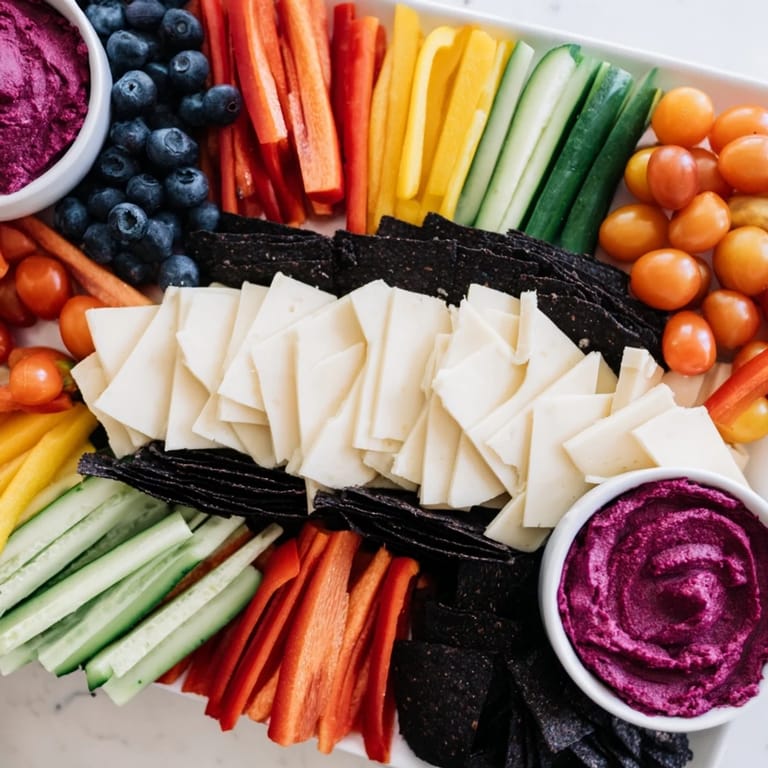
- The blueberries and halved cherry tomatoes fill the spaces between your main elements, adding surprise pops of color. Arrange them as if you're placing jewels, not just distributing them evenly.
- Serve immediately:
- The moment you finish is the moment to place it on the table. Everything is fresh, nothing has started to weep or wilt, and the entire effect is at its peak.
 Save
Save What surprised me most about creating these boards is how they've become the moment people slow down and truly enjoy what they're eating. The visual beauty somehow makes even simple vegetables taste more deliberate, more special. It's taught me that presentation isn't vanity—it's an act of care.
Color Theory on Your Platter
The zig-zag works because of deliberate color opposition. Red and green naturally oppose each other (red pepper and cucumber), as do blue and yellow, and warm and cool tones. When I first started arranging these boards, I realized I was essentially using the color wheel that artist friends had explained to me years ago. The vegetables became my palette. Understanding this simple principle transformed every board I made from random arrangement to intentional composition.
Timing and Freshness Matters
I learned the hard way that a zig-zag board at its peak is a narrow window—probably two hours maximum if your kitchen is warm. The vegetables will begin to soften, the cut edges will oxidize, and that crisp, clean feeling that makes people stop and stare will fade. This is why I prepare everything in advance but assemble only when guests are minutes away from arriving. It's the one recipe where the journey to the table is almost as important as the eating.
Making It Your Own
The beauty of the zig-zag is that it's a structure, not a rulebook. The specific vegetables and cheeses matter far less than the principle of bold contrast and angular arrangement. I've made versions with roasted vegetables, with fresh herbs tucked between elements, with edible flowers scattered through. The most memorable version used deep purple beets, golden beets, and roasted baby carrots arranged in their own mini zig-zag within the larger pattern. Let what's in your market and what appeals to you guide your choices.
- For a vegan version, swap the cheeses for sliced avocado or marinated tofu cut at angles
- Add roasted beet slices or roasted golden beets for extra color depth and a cooked element
- Consider your crowd—if there are gluten-free guests, curate which crackers you include from the start
 Save
Save This board taught me that sometimes the most impressive entertaining is also the least stressful—no heat, no timing, just intention and care. Serve it with confidence.
Recipe FAQs
- → What is the best way to cut the vegetables?
Cut the vegetables into long, angular strips or sticks to emphasize the sharp lines and create the bold zig-zag pattern.
- → How can I make this platter vegan?
Substitute the cheeses with plant-based alternatives to maintain the creamy texture without dairy.
- → Are there gluten-free options included?
Yes, using gluten-free crackers ensures the platter suits gluten-sensitive diets without compromising crunch.
- → What dips complement the ingredients best?
Beet hummus and classic hummus add contrasting colors and earthy flavors that pair excellently with fresh veggies and cheeses.
- → How should the platter be arranged for best impact?
Arrange ingredients diagonally in a zig-zag pattern on a large board, alternating colors and textures to maximize visual contrast and appeal.