 Save
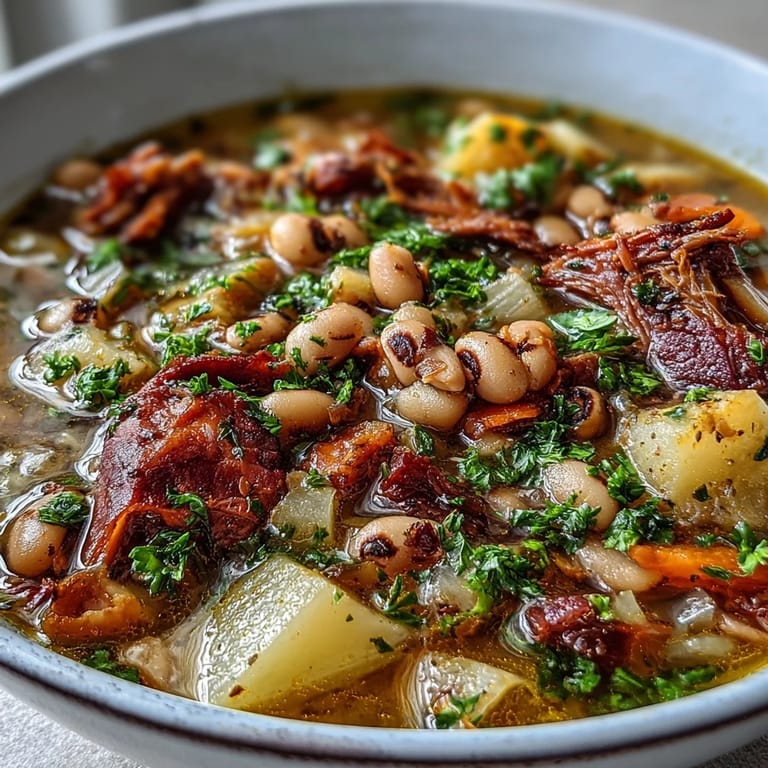
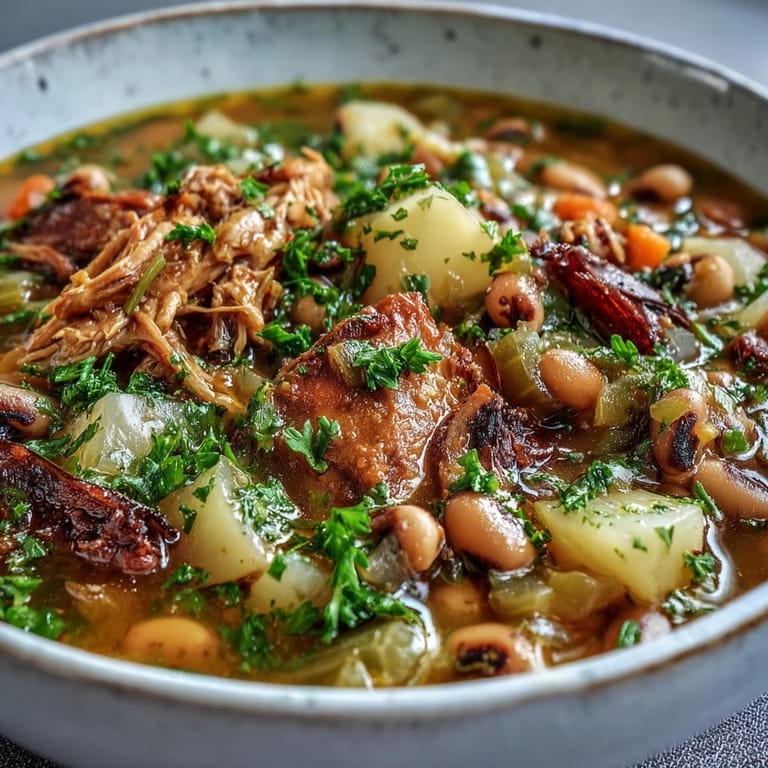
Save My grandmother used to say that a proper stew tells you a story about the people who made it, and this black-eyed pea stew with smoked ham hocks is definitely one of those dishes. Years ago, I watched her fold ham hocks into a bubbling pot on New Year's Day, explaining that the peas meant coins and prosperity, though honestly, I think she just loved how the smoky meat transformed simple ingredients into something that made the whole kitchen smell like home. The first time I made it myself, I forgot to soak the peas overnight and nearly panicked until I realized I could use canned ones without shame. Now this stew has become my go-to when I need comfort food that also happens to feed a crowd.
I made this for my book club once, tripling the recipe because I miscalculated how hungry everyone would be, and it turned out to be the best accident of my cooking life. One guest asked for the recipe before she even finished her bowl, and another came back asking if I could make it for her Sunday dinner the following week. That's when I realized this stew has a kind of magic to it—it brings people together in a way that fancy food sometimes can't.
Ingredients
- Smoked ham hocks (2, about 1.5 lbs / 680 g): These are where all your flavor lives, so don't skip them or substitute with something mild—the smoke is the whole point.
- Dried black-eyed peas (2 cups, soaked overnight, or 4 cups canned): If you have time, soak dried peas because they'll have a better texture, but canned ones won't disappoint you in a pinch.
- Onion, carrots, and celery (the holy trinity): Dice them roughly the same size so they cook evenly and create that foundational vegetable flavor.
- Potatoes (2 medium, cut into 1-inch cubes): They add heartiness and help thicken the broth naturally as they break down slightly.
- Diced tomatoes (1 can, 14.5 oz / 400 g, with juice): The acidity brightens everything and cuts through the richness of the ham, keeping the stew from feeling heavy.
- Garlic (3 cloves, minced): Don't skip this step—fresh garlic adds a layer of depth that you'll miss if you use powder.
- Chicken or vegetable broth (6 cups / 1.5 L, low-sodium): Low-sodium broth lets you control the salt level and prevents the stew from tasting overwhelming by the end.
- Bay leaves, thyme, smoked paprika, and black pepper: These seasonings build on the smoky, savory character without overpowering the natural flavors.
- Cayenne pepper (1/4 teaspoon, optional): Add this only if you want a gentle heat that sneaks up on you rather than announces itself.
Tired of Takeout? 🥡
Get 10 meals you can make faster than delivery arrives. Seriously.
One email. No spam. Unsubscribe anytime.
Instructions
- Prepare your peas the night before (or use a shortcut):
- If you're using dried peas, soak them in plenty of cold water overnight—they'll cook faster and more evenly. If you forgot (and honestly, who hasn't), canned peas work just fine; just rinse them well to remove the extra sodium.
- Build your flavor base:
- Heat a splash of oil in your Dutch oven over medium heat and sauté the onion, carrots, and celery for about 5 minutes until they start to soften and smell incredibly aromatic. Add the garlic and let it cook for just 1 minute—any longer and it can turn bitter, which you don't want.
- Combine everything and let time do the work:
- Add the ham hocks, peas, potatoes, tomatoes with their juice, broth, and all your seasonings to the pot. Bring everything to a boil, then lower the heat and cover the pot, letting it simmer gently for about 2 hours until the peas are truly tender and the ham is practically falling apart.
- Shred and finish:
- Remove the ham hocks and let them cool just enough to handle, then shred the meat and return it to the pot, discarding the skin and bones. Taste carefully and adjust the salt—you might not need much since the broth and ham already add quite a bit.
- Decide how thick you want it:
- If your stew seems too thin, simmer it uncovered for another 10 to 15 minutes to let some liquid evaporate. If it's already perfect, don't overthink it—just remove the bay leaves and serve.
 Save
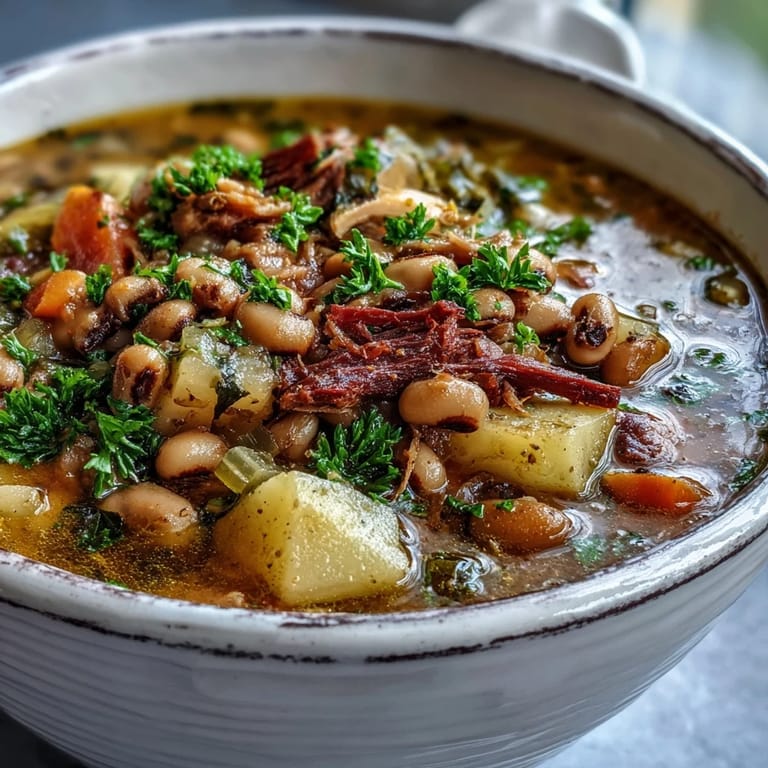
Save There's a moment near the end of cooking when you lift the lid and the steam hits your face, and you realize you've created something genuinely nourishing just by showing up and following through. That's the moment I understood why my grandmother made this stew so often—it's not fancy, but it's honest, and people remember honest food.
The Magic of Smoked Meat in Stew
Smoked ham hocks transform a simple vegetable stew into something deeply savory and complex without requiring you to do much work. The slow simmer pulls all that smoky, salty flavor into the broth, so by the time the stew is done, every spoonful tastes like it's been perfected over hours of careful attention. I learned this by accident the first time I made this recipe and was astonished at how flavorful everything became with just one ingredient doing most of the heavy lifting.
Making It Your Own
This stew is forgiving enough that you can adapt it to what's in your kitchen or what sounds good to you on any given day. Some people add a splash of vinegar at the end for brightness, others throw in kale or spinach in the last few minutes, and I've made versions with extra potatoes when I wanted something more filling. The skeleton of the recipe stays the same, but the variations are endless if you trust yourself to experiment a little.
Serving and Storage
Serve this stew in deep bowls with a chunk of cornbread or over rice, and don't forget to put hot sauce on the table for people who want extra heat. The leftovers actually improve as the flavors meld overnight, so this is one of those recipes that's almost better the next day, and it keeps well in the refrigerator for up to 3 days.
- For a vegetarian version, skip the ham hocks and add a teaspoon of liquid smoke or extra smoked paprika to keep that essential depth of flavor.
- If you're feeding a vegetarian and a meat-eater, make the base without meat and let people customize their own bowls with shredded ham on the side.
- Freeze leftovers in portions for busy weeks when you need something warm and comforting that's already half done.
 Save
Save This stew is the kind of dish that proves cooking doesn't have to be complicated to be deeply satisfying. Make it once, and you'll understand why people come back for seconds.
Recipe FAQs
- → Do I need to soak the black-eyed peas?
Yes, if using dried black-eyed peas, soak them overnight in plenty of water. This ensures even cooking and tender results. Alternatively, use canned peas to skip the soaking step entirely.
- → Can I make this vegetarian?
Absolutely. Simply omit the ham hocks and use vegetable broth instead of chicken broth. Add extra smoked paprika or a few drops of liquid smoke to maintain that signature smoky depth.
- → How do I know when the ham hocks are done?
The ham hocks are ready when the meat easily falls off the bone. This typically takes about 2 hours of simmering. You should be able to shred the meat with just a fork.
- → Can I reduce the cooking time?
The long simmer develops the best flavor and texture. However, you can use a pressure cooker to reduce time to about 45 minutes. Alternatively, canned peas will cook faster than dried, though the depth of flavor may differ slightly.
- → What should I serve with this?
Cornbread is the traditional choice, perfect for soaking up the rich broth. Steamed rice also works beautifully. A side of hot sauce lets everyone adjust the heat to their preference.
- → How long do leftovers keep?
This stew actually improves with time. Store leftovers in the refrigerator for up to 3 days. The flavors continue to meld, making each bowl even more delicious than the last.