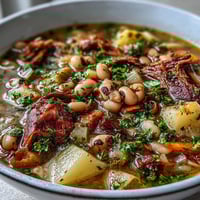
 Save
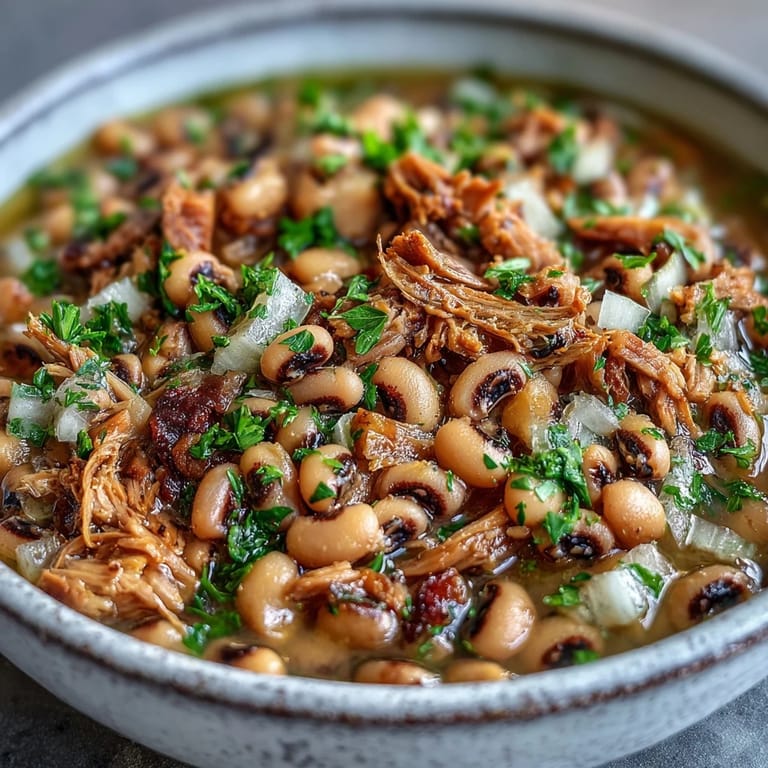
Save My grandmother used to say that black-eyed peas on New Years Day weren't just dinner—they were insurance, a delicious way of asking the universe for a generous year ahead. She'd start cooking them the night before, filling the kitchen with this deep, savory steam that seemed to settle into the walls themselves. The first time I made them alone, I burned the aromatics and nearly cried, but she laughed and said even mistakes taste good when they're made with hope. Now, whenever January first rolls around, I find myself standing at the stove doing exactly what she did, watching these humble legumes transform into something that tastes like tradition and possibility.
I served this to friends who'd never had real black-eyed peas before, and watching their faces light up when they tasted that first spoonful—that smoky, savory, slightly spiced warmth—reminded me why my grandmother guarded this recipe like a secret. One friend actually asked if I'd added butter, amazed that something so rich came from just time and a good ham hock. It became the dish that made them come back year after year, not for luck necessarily, but because it felt like being part of something older and more meaningful than just dinner.
Ingredients
- Dried black-eyed peas (1 pound): These humble legumes are the soul of the dish, and soaking them overnight isn't just tradition—it actually makes them cook faster and more evenly, which I learned the hard way when I tried to skip this step.
- Smoked pork neck bones or ham hocks (1½ pounds): This is where all the flavor lives, creating a broth that tastes like slow-cooked comfort and makes the peas sing with smoky richness.
- Onion, celery, and bell pepper (1 large onion, 1 celery stalk, 1 green bell pepper): These aromatics are the holy trinity of Southern cooking, and together they build a savory foundation that everything else rests on.
- Garlic (4 cloves, minced): Just a minute of cooking time allows this to release its perfume without overpowering the delicate earthiness of the peas.
- Water or low-sodium chicken broth (7 cups): I prefer broth because it adds another layer of depth, but water works beautifully too and lets the pork and spices be the main event.
- Creole seasoning (1½ teaspoons): This is your shortcut to complex flavor, blending warm spices that echo generations of Louisiana cooking traditions.
- Bay leaf, thyme, smoked paprika, and black pepper: Each one does its own quiet work—the bay leaf anchors everything, the thyme adds a subtle herbaceousness, the paprika deepens the smoke, and black pepper keeps things from tasting flat.
- Fresh parsley and hot sauce (optional): Parsley adds a bright, fresh finish that cuts through the richness, while hot sauce lets everyone customize their own heat level.
Tired of Takeout? 🥡
Get 10 meals you can make faster than delivery arrives. Seriously.
One email. No spam. Unsubscribe anytime.
Instructions
- Prepare your peas with patience:
- Rinse and sort your peas to catch any stones or broken ones, then cover them generously with water and let them soak overnight. If you're short on time, the quick soak (boiling water for an hour) works, but overnight really does produce a creamier texture and more tender peas.
- Build your flavor base:
- Heat a splash of oil in your Dutch oven over medium heat and add your chopped onion, celery, and bell pepper. Let these soften and start to turn golden, about 5 minutes—this is when your kitchen will start smelling like something important is happening. Stir in the garlic and let it get fragrant for just about a minute, being careful not to let it brown.
- Combine everything and commit to time:
- Add your drained peas, smoked pork, broth, and all your seasonings to the pot, then bring everything to a boil. Once it's bubbling, lower the heat way down, cover with a lid, and let it simmer low and slow for about an hour and a half, stirring occasionally.
- Finish with shredded meat:
- When the peas are completely tender and the pork is falling apart at the touch of a spoon, remove the bones carefully. Shred any meat clinging to them and return it to the pot, discarding the bones and any waxy fat on the surface.
- Taste and adjust:
- Remove the bay leaf, taste for salt, and adjust to your preference. This is your moment to make it exactly what you want.
- Serve with warmth:
- Ladle the peas into bowls, garnish with fresh parsley if you have it, offer hot sauce on the side, and serve over rice or alongside cornbread.
 Save
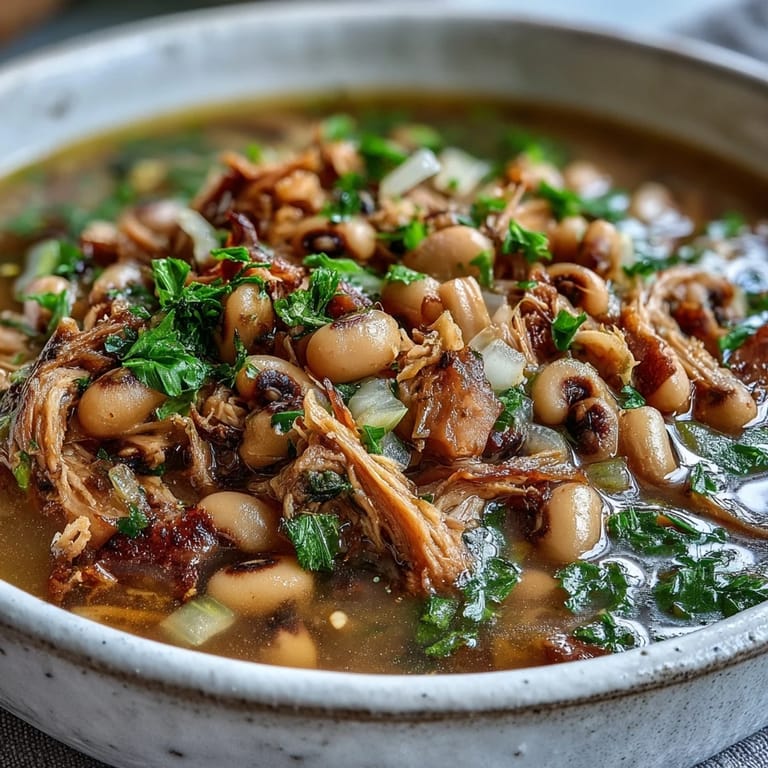
Save There's a moment about halfway through cooking when your whole house smells like slow-cooked pork and earth and warm spices, and suddenly you understand why this dish has survived centuries, why it shows up on tables in January with such certainty. My daughter came home from school one afternoon while a pot was simmering, and instead of heading to her room, she sat at the kitchen counter asking questions about why we make this, who taught me, what makes it special. Food that carries stories like this—that stops people mid-sentence and holds them for a moment—that's the real luck.
The Art of Soaking
Soaking black-eyed peas overnight isn't just a cooking technique—it's a kindness you do for yourself the next day. The peas absorb water, soften slightly, and cook faster, which means your timing becomes more predictable and your finished dish has a better texture. Some cooks swear by overnight soaking for taste alone, saying it mellows the earthiness in a subtle but real way.
Why Smoked Pork Matters
The difference between black-eyed peas made with and without smoked pork is the difference between a meal and a memory. That smoky, rendered fat creates a broth that's silky and rich, and the meat itself becomes so tender it practically dissolves on your tongue. I've experimented with turkey legs and other cuts, but there's a reason tradition called for pork—it just belongs here.
Variations and Keep-Alongs
This recipe is flexible enough to welcome changes without losing its soul. Some families add diced tomatoes toward the end for brightness, others include a splash of apple cider vinegar to wake up the palate, and I've seen versions where a pinch of cayenne pepper replaces the standard Creole seasoning for extra heat. The constant is always the peas, the pork, and the time you give them to know each other.
- Vegetarian versions work beautifully if you double the smoked paprika and add a teaspoon of liquid smoke to mimic the pork's depth.
- Leftover peas can be mashed and formed into patties, pan-fried until crispy, and served as a side dish or even tucked into a biscuit.
- If you're cooking for a crowd, this recipe doubles easily and actually tastes better when made in larger batches because the flavors have more room to develop.
 Save
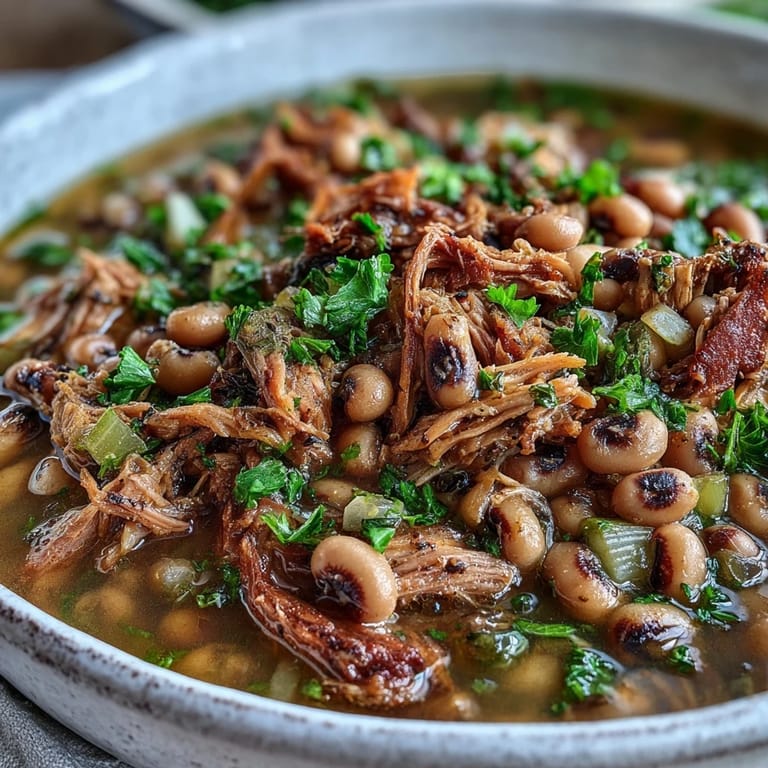
Save Make this dish with the knowledge that you're participating in something that stretches back generations, a small ritual that says you believe in luck and tradition and the power of good food to hold people together. There's no way that's wasted time.
Recipe FAQs
- → Why do people eat black-eyed peas on New Year's Day?
Black-eyed peas are a Southern tradition believed to bring good luck and prosperity in the coming year. The peas represent coins, and when eaten with collard greens (representing paper money) and cornbread (representing gold), they symbolize wealth and fortune for the new year.
- → Do I need to soak the black-eyed peas overnight?
Overnight soaking is recommended for the best texture and even cooking, but you can use the quick soak method. Cover the peas with boiling water, let them sit for one hour, then drain and proceed with the recipe. This method works well when you're short on time.
- → What can I substitute for smoked pork neck bones?
Smoked ham hocks, smoked turkey wings, or smoked turkey legs work beautifully as alternatives. For a vegetarian version, use extra smoked paprika, a splash of liquid smoke, and vegetable broth to maintain that deep smoky flavor profile.
- → How long do leftovers last in the refrigerator?
Leftovers will keep well in an airtight container in the refrigerator for up to 4-5 days. The flavors often deepen and improve after a day or two. You can also freeze portions for up to 3 months for easy future meals.
- → What should I serve with black-eyed peas?
Traditional Southern accompaniments include fluffy white rice, buttery cornbread, and collard greens. The peas are also delicious with fried okra, macaroni and cheese, or a simple green salad. Don't forget the hot sauce for those who enjoy a bit of heat.
- → How do I know when the peas are fully cooked?
The peas are done when they're tender and creamy inside, not mushy. They should hold their shape but yield easily when pressed between your fingers. Taste testing is the best method—when they're no longer mealy or hard, they're ready. This typically takes about 1½ hours of simmering.