 Save
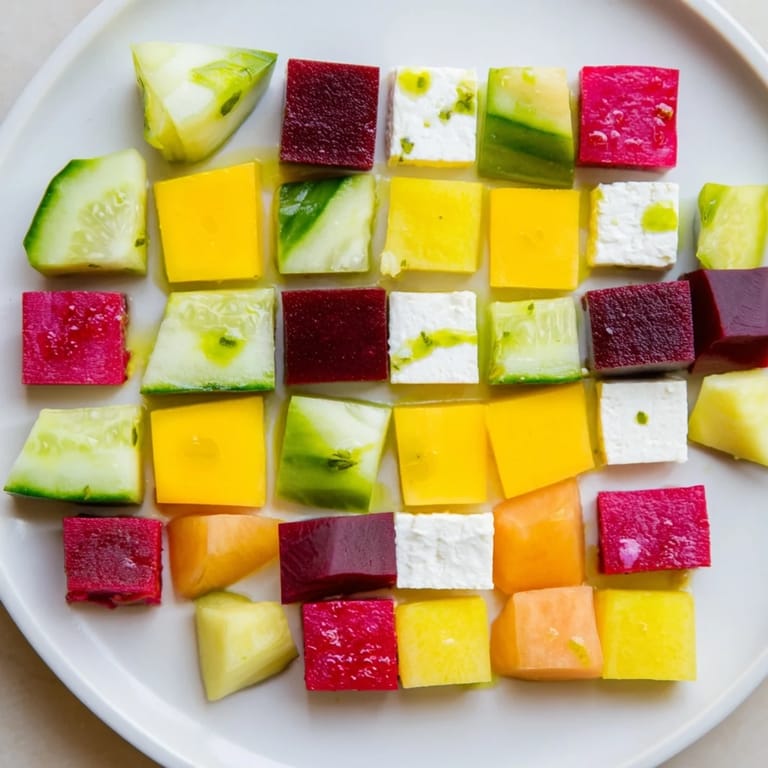
Save I remember the first time I discovered that a salad could be art. It was during a particularly uninspired Tuesday evening in my kitchen when I decided that if I had to make another ordinary salad, I might as well make it beautiful. I pulled out a ruler, sharpened my favorite knife, and started cutting everything into perfect little cubes. What began as a small experiment in precision became an obsession—a meditation on how the right presentation could transform the simplest ingredients into something that made people pause, smile, and actually want to eat their vegetables.
I'll never forget the dinner party where I first served this to friends who claimed they weren't salad people. The moment that geometric grid appeared on the table, something shifted. They couldn't resist picking at it, rearranging the colors, and suddenly everyone was exclaiming over flavor combinations they never expected to work together. That night taught me that presentation isn't vanity—it's an invitation to slow down and actually taste.
Ingredients
- 1 small cucumber, peeled and cut into 1 cm cubes: The crisp, cool foundation of this salad. Choose a firm cucumber with thin skin, and peel it completely so every cube maintains that satisfying crunch without any bitter undertones
- 1 ripe mango, peeled and cut into 1 cm cubes: This brings the sweetness and silky texture. A truly ripe mango yields slightly to gentle pressure—that's when the flavor is most concentrated and the cubes hold their shape beautifully
- 1 ripe avocado, peeled and cut into 1 cm cubes: The moment of truth ingredient. Cut this last, right before assembly, and handle gently. A perfectly ripe avocado (dark green, soft when squeezed) adds richness and creaminess that anchors the entire salad
- 1 small red beet, cooked, peeled, and cut into 1 cm cubes: The earthy drama that makes people's eyes widen. Cook the beet until a knife slides through easily, then let it cool completely before handling. It stains everything, but that deep crimson cube is worth every precaution
- 1 small yellow bell pepper, seeded and cut into 1 cm cubes: Sweet and slightly crisp, this adds brightness and a gentle pepper flavor without overpowering. Choose a firm pepper that feels heavy for its size
- 1 small watermelon wedge, rind removed, cut into 1 cm cubes: The unexpected element that adds playful sweetness and incredible moisture. Select a ripe watermelon with deep red flesh—tap it and listen for that hollow sound that signals peak ripeness
- 120 g feta cheese, cut into 1 cm cubes: The tangy counterpoint to all that fruit and vegetable sweetness. Let the feta come to room temperature slightly for the best flavor, and cut it last so it doesn't dry out
- 2 tbsp extra-virgin olive oil: Use the good stuff here—something with real character. This is your base for flavor, so choose an oil you'd happily drink straight
- 1 tbsp lemon juice: Fresh, please. The acid brightens everything and prevents the avocado from darkening too quickly
- 1/2 tsp sea salt: Better than table salt. It dissolves differently and tastes cleaner
- 1/4 tsp freshly ground black pepper: Freshly ground is non-negotiable here. Pre-ground pepper has lost its spirit by the time it reaches you
- 1/2 tsp honey (optional): Just a whisper to balance the acidity. It's optional, but it transforms the dressing from good to transcendent
Tired of Takeout? 🥡
Get 10 meals you can make faster than delivery arrives. Seriously.
One email. No spam. Unsubscribe anytime.
Instructions
- Prep your mise en place:
- Lay out your cutting board and gather every ingredient. This isn't a time to improvise or rush. Sharpen your knife—a dull blade will bruise your vegetables instead of slicing them cleanly. If you're feeling committed to precision, place a ruler on your cutting board. Cut each ingredient into uniform 1 cm cubes with care and attention. Each cucumber piece should be exactly the same size as each mango cube. Yes, it sounds obsessive, but this uniformity is what makes the visual and eating experience work. Set each ingredient in a separate bowl as you finish it
- Make the dressing into liquid gold:
- In a small bowl, whisk together the olive oil and lemon juice first—they'll emulsify slightly and become silky. Add the salt, pepper, and honey if you're using it. Taste it. Really taste it. The dressing should make your mouth water slightly and feel balanced—not too acidic, not too oily. This is the seasoning layer that connects all your ingredients
- Arrange your edible grid:
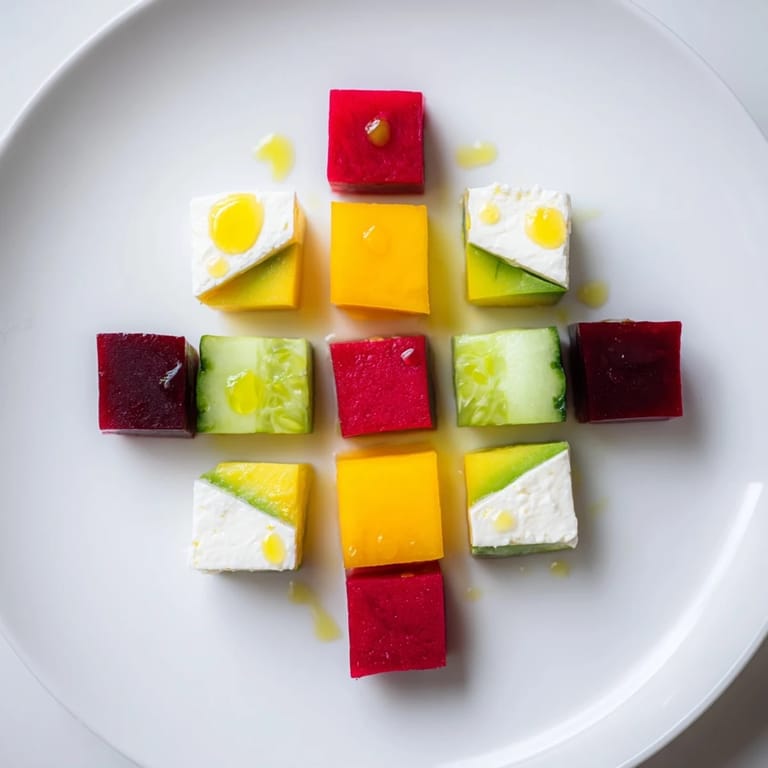
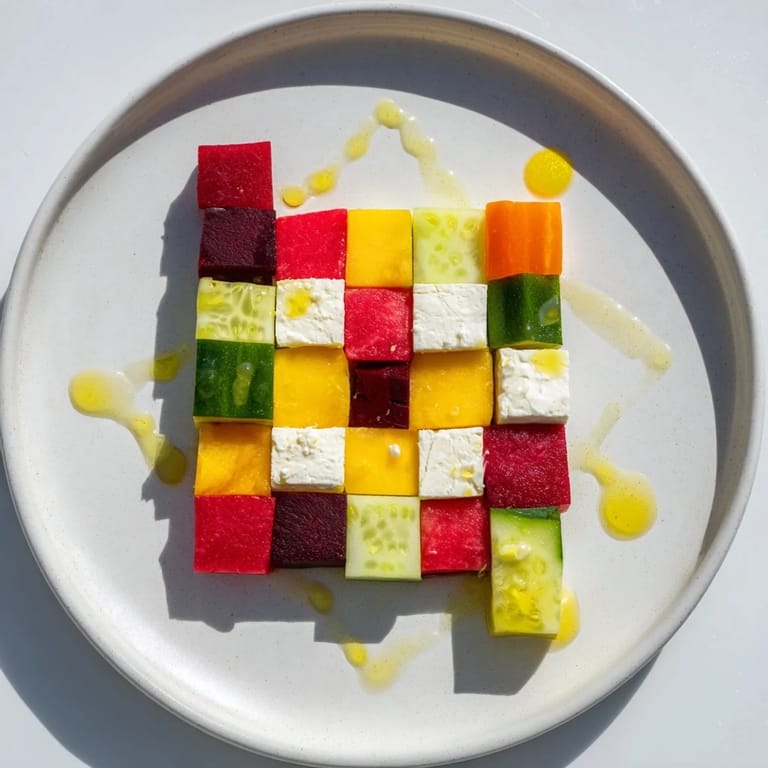
- This is the moment where your salad becomes art. Use a large, flat platter or wooden board. Start arranging your cubes in a neat grid pattern, alternating colors intentionally. Think of it like a painting—you want warm colors next to cool ones, soft textures near crisp ones. The contrast is what makes each bite interesting. Step back and look at your work. Does the color balance feel right? Would you want to photograph this?
- Add the dressing with restraint:
- Drizzle the dressing lightly across the arranged cubes—don't drown them. The vegetables should taste like themselves first, with the dressing as a supporting player. If you wait, the cubes will start to soften and lose their geometric perfection
- Serve with ceremony:
- Bring this straight to the table immediately. The crispness, the geometry, the colors—all of it is at its peak right now. This is not a salad that waits
 Save
Save What moved me most was watching a child who 'didn't like salad' sit quietly for five minutes just studying this plate before eating. They eventually tried a mango cube, then a piece of feta, then made their own little flavor combinations. That's when I realized this salad isn't about perfection—it's about creating enough visual and sensory interest that people want to engage with it as if it's a puzzle or a game.
The Geometry of Flavor
There's something deeply satisfying about cutting everything the same size and arranging it with intention. It forces you to taste each ingredient separately and in combination, rather than just pushing around a pile of lettuce. When you bite into a cube that's surrounded by other cubes at precise distances, you're tasting structure. The arrangement isn't just visual—it's actually part of how the flavors land on your palate.
Timing and Ripeness Matters
This salad taught me to trust my senses over guidelines. A mango is ripe when it yields ever so slightly to thumb pressure and smells sweet at the stem end. An avocado is perfect when you can peel it easily but the flesh still holds its shape. A watermelon is at its peak when the flesh is so deeply red it's almost fuchsia. This isn't a salad you make with mediocre ingredients—every single component needs to be at its moment of ripeness, or the whole experience falls flat.
Customization and Personal Touches
Once you master the grid, this recipe becomes your canvas for seasonal play. In autumn, swap the mango for pear and the watermelon for pomegranate seeds. In winter, try paper-thin fennel cubes alongside blood orange. The structure stays the same, but suddenly you're cooking with the seasons. For vegan guests, firm tofu cubes pressed gently to remove excess moisture work beautifully in place of feta—they take on the dressing like a sponge and add a pleasant contrast. Some evenings I scatter microgreens or edible flowers across the top at the last second for an extra flourish that makes it feel like a dish from a restaurant you'd wait weeks to get into.
- Always remember that the beauty of this salad is its flexibility—if you don't have watermelon, use crisp apple cubes or even fresh pineapple
- Make sure your knife is sharp enough to make clean cuts through delicate avocado and firm beet without crushing them
- Serve this immediately, as the longer it sits, the more the vegetables begin to soften and lose their distinct geometric appeal
 Save
Save This salad reminds me why I fell in love with cooking in the first place: it's about creating small moments of beauty and attention in everyday life. Every time you make it, you're saying to the people you're feeding, 'You're worth the precision, the care, the time.'
Recipe FAQs
- → How do I achieve uniform cube cuts?
Use a sharp chef’s knife and a ruler to measure and trim ingredients into consistent 1 cm cubes for a neat presentation.
- → What dressing best complements this salad?
A simple blend of extra-virgin olive oil, lemon juice, sea salt, black pepper, and optional honey enhances the fresh flavors.
- → Can this salad be adapted for vegan diets?
Yes, substitute the feta cheese with firm tofu cubes to maintain texture and balance.
- → What are good ingredient substitutions?
Swap mango with papaya or pineapple for a different sweet note while preserving the colorful arrangement.
- → How should I serve the salad for best texture?
Arrange the cubes just before serving and drizzle dressing lightly to keep the crispness and geometric shape intact.