 Save
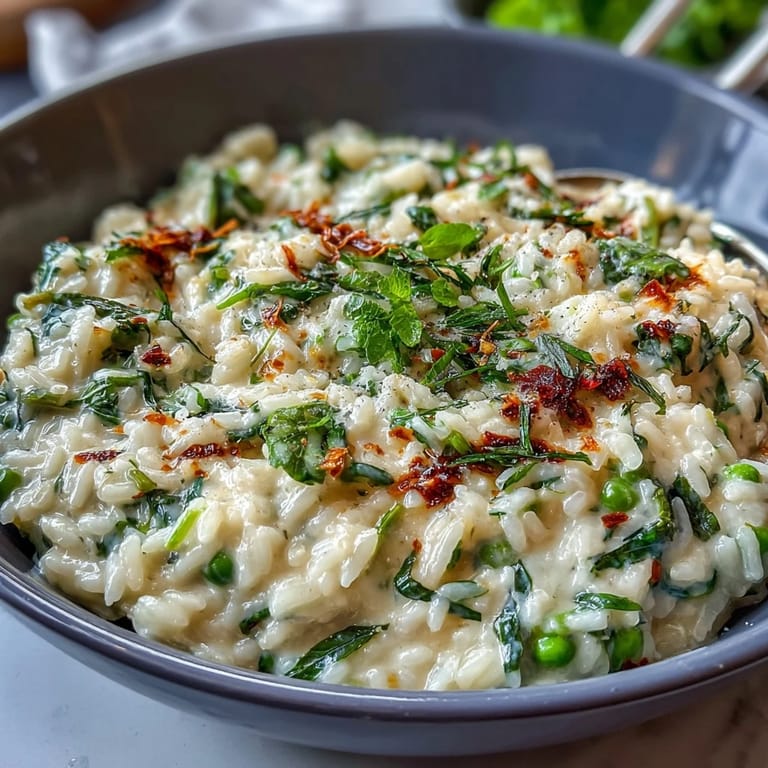
Save There's something about the first warm evening of spring that makes you want to cook something that tastes like the season itself. I was standing at the farmer's market, holding a paper bag of the most fragrant mint I'd ever smelled, when it hit me—risotto. Not just any risotto, but one that captured that precise moment when winter finally lets go. The peas were so bright they seemed to glow, and I knew right then this dish would be the centerpiece of my dinner party that weekend.
I made this for my neighbor Maria and her partner last April, right when their garden was starting to wake up. They sat at my kitchen counter while I stirred, and we talked about how risotto forces you to slow down in a way that feels revolutionary. By the time I plated it with that final flourish of mint and lemon zest, even they could smell the spring in the room. That dinner became one of those rare evenings where the food felt like it was part of the conversation, not separate from it.
Ingredients
- Fresh or frozen green peas (1 cup/150 g): If you can get them fresh, use them—they're sweeter and brighter—but frozen peas work beautifully and honestly save you from the tiny, tedious task of shelling.
- Small onion, finely chopped (1): The onion is your quiet foundation; don't skip the chopping step because size matters here—you want it to melt into the rice, not crunch through the dish.
- Garlic cloves, minced (2): Fresh garlic makes a noticeable difference, so don't reach for the jar unless you're truly in a pinch.
- Arborio rice (1 1/2 cups/300 g): This is the one ingredient you can't substitute away from; the starch content is what makes risotto creamy without cream.
- Vegetable stock, kept warm (4 cups/1 L): Keeping it warm is the secret nobody talks about—cold stock shocks the rice and disrupts the cooking process.
- Dry white wine (1/2 cup/120 ml): The wine adds a subtle brightness that lifts the whole dish; a Sauvignon Blanc or something you'd actually drink is perfect.
- Unsalted butter, divided (3 tbsp): Butter, not olive oil, is what makes risotto luxurious—use good butter, the kind that tastes like butter.
- Freshly grated Parmesan cheese (1/2 cup/40 g), plus extra for serving: Grate it yourself the moment before you need it; pre-grated cheese has cellulose that prevents it from melting smoothly.
- Fresh mint leaves, finely chopped (1/4 cup/10 g): Mint is the heart of this dish, so use the fresh kind and chop it just before you add it so it stays vibrant.
- Fresh flat-leaf parsley, chopped (2 tbsp, optional): Parsley adds a gentle herbal note if you want it, but honestly, the mint is doing the real work here.
- Salt and freshly ground black pepper, to taste: Taste as you go; risotto is forgiving once you understand it needs seasoning at the end, not the beginning.
- Lemon zest (1): This small citrus spark is what makes people ask what your secret ingredient is.
Tired of Takeout? 🥡
Get 10 meals you can make faster than delivery arrives. Seriously.
One email. No spam. Unsubscribe anytime.
Instructions
- Melt the butter and soften the aromatics:
- In your large saucepan, let the butter get foamy over medium heat, then add your chopped onion—you want to hear that gentle sizzle. Stir occasionally and wait for it to turn translucent and soft, about 4 minutes, which is the moment it's ready for the garlic.
- Toast the rice:
- Add your garlic first and let it perfume the butter for just a minute, then add the Arborio rice. Stir it constantly for about 2 minutes so each grain gets coated and begins to turn translucent at the edges—this toasting step is what gives risotto its slight nuttiness.
- Deglaze with wine:
- Pour in the white wine and watch it sizzle as you stir; keep stirring until the wine is mostly absorbed into the rice, about 2 minutes. This is when your kitchen smells absolutely incredible.
- Begin the gradual stock addition:
- Add your warm stock one ladle at a time, stirring frequently but not constantly—you're not making soup, but you're not ignoring it either. Wait until most of each addition is absorbed before adding the next, which should take about 18–20 minutes total. The rice will gradually go from separate grains to creamy, and you'll feel the moment shift.
- Add the peas near the end:
- With about 5 minutes of cooking left, stir in your peas so they stay tender and keep that bright green color. If you add them too early, they'll turn gray and soft, so timing matters here.
- Finish with butter, cheese, and herbs:
- Once the rice is creamy and the peas are tender, remove the pan from heat and stir in the remaining butter, freshly grated Parmesan, chopped mint, parsley if you're using it, and lemon zest. The residual heat will melt everything together into something silky.
- Taste and serve:
- Always taste before serving and adjust salt and pepper—risotto is forgiving enough to be seasoned at the end. Divide into bowls, top with extra Parmesan shavings and a few whole mint leaves, and serve immediately.
 Save
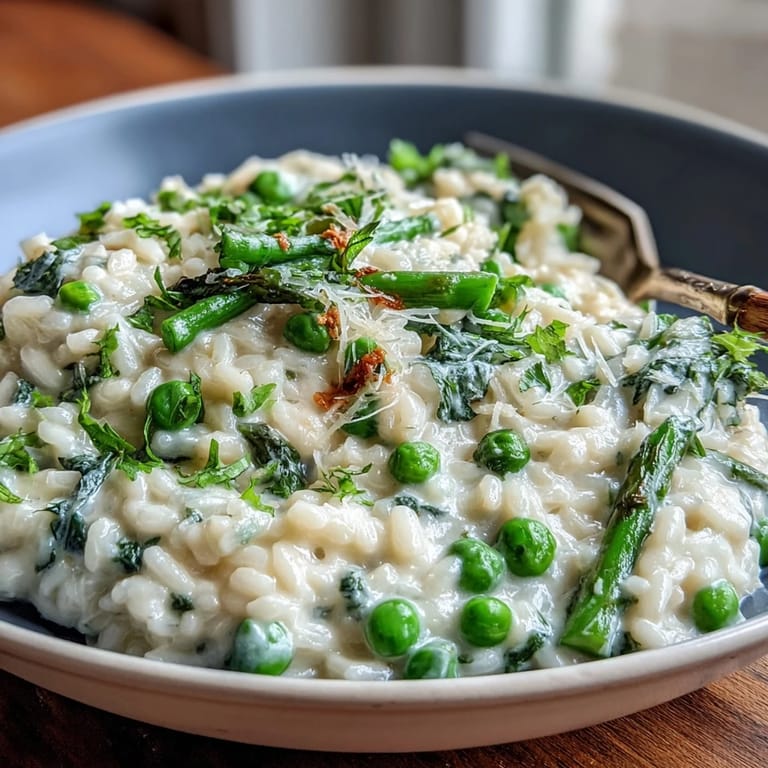
Save The first time someone reached for seconds and said it tasted like spring, I understood why this dish matters. Risotto isn't just about technique; it's about creating a moment where people slow down and actually taste what's on their plate. When you nail the creamy texture and that mint hits fresh and bright, it's the kind of thing that makes someone ask for the recipe the next day.
The Secret of Constant Stirring
I used to think constant stirring was a myth, until I made risotto while barely paying attention and ended up with a gluey mess. The stirring serves a real purpose—it keeps the rice from sticking to the bottom of the pan and it gradually releases the rice's starch, creating that signature creamy texture without any cream. Once I understood that, stirring became less of a chore and more of a meditation. Your arm might get a little tired, but your patience will be rewarded with risotto that's actually worth eating.
Why Fresh Mint Makes All the Difference
Dried mint tastes like dust compared to fresh, and this is one of those dishes where the herbs are as important as the rice itself. When you chop fresh mint just before adding it, you're releasing those oils that make the whole dish smell alive. I learned this the hard way by making a batch with dried mint from my pantry, and while it was still good, it tasted like someone else's recipe. The moment I switched to fresh mint added at the very end, it became my own.
Timing and Temperature Tricks
Medium heat is your friend here—if you crank it too high, the rice cooks too fast on the outside and stays raw in the middle. I've also learned that letting everything rest for just one minute after you finish adding stock, before you stir in the final ingredients, helps the risotto relax into its creamiest self. These small moments compound into something that tastes like you've been cooking all afternoon instead of just 30 minutes.
- Keep your stock in a separate pot with a ladle so you're not fishing around while you should be stirring.
- If you run out of stock before the rice is tender, you can use hot water as a backup—it won't ruin the dish.
- Serve immediately after finishing; risotto waits for no one and starts to tighten up if it sits.
 Save
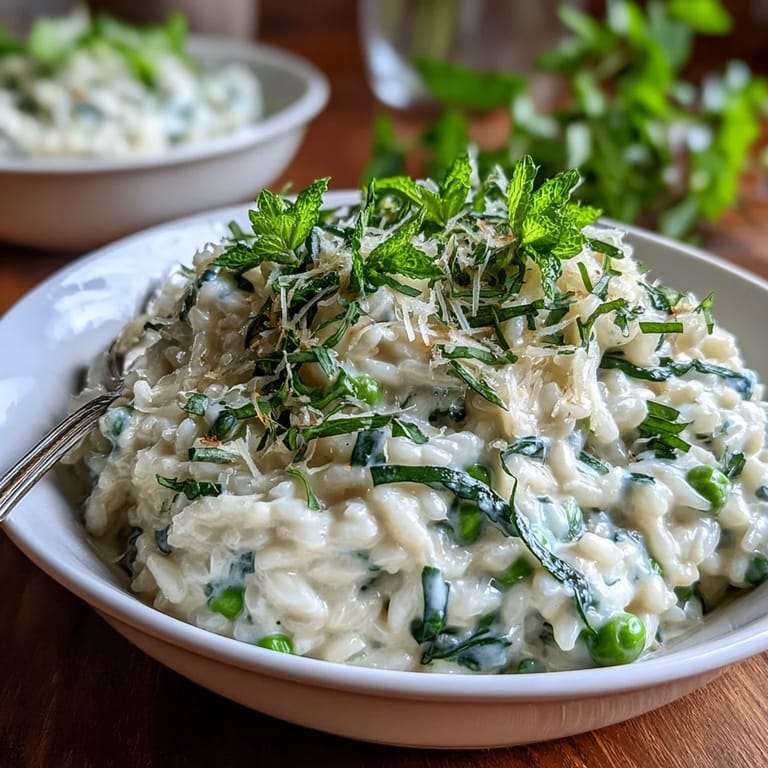
Save This risotto is the kind of dish that makes you want to linger at the table a little longer, to let the conversation keep flowing. Spring deserves food like this—bright, fresh, and made with enough care that people know they matter.
Recipe FAQs
- → What type of rice is best for this dish?
Arborio rice is ideal for its creamy texture and ability to absorb liquids without losing firmness.
- → Can frozen peas be used instead of fresh peas?
Yes, frozen peas work well and can be added during the last few minutes of cooking to retain their color and tenderness.
- → How do I achieve a creamy texture?
Slowly adding warm vegetable stock and constant stirring help release the rice's starch, creating a rich, creamy consistency.
- → What is the purpose of cooking with white wine?
White wine adds subtle acidity and depth, balancing the richness of the butter and cheese.
- → Can I substitute Parmesan with another cheese?
Grana Padano or Pecorino Romano can be used as flavorful alternatives that melt smoothly.