 Save
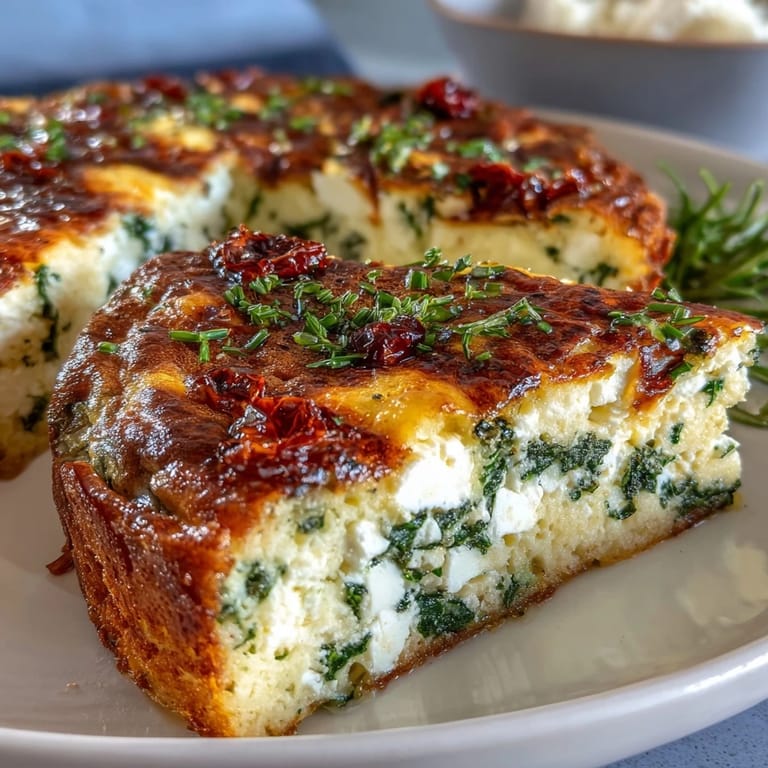
Save There's something magical about the moment when a cast-iron skillet comes out of the oven with a golden, puffed frittata inside—it never gets old. My neighbor Marco taught me this trick years ago when he casually mentioned that the key to a restaurant-quality frittata wasn't fancy technique but respecting the eggs themselves. That sunny morning, watching his version emerge from the oven while we sipped espresso, I understood what he meant: simplicity done right always wins. Now whenever I make this spinach and feta version, I think of his kitchen and how he'd nod knowingly at the way the center just barely jiggles before it sets.
I made this for my sister's unexpected visit on a Tuesday afternoon when she called saying she had only an hour before heading back to the city. Standing in my kitchen with hardly anything planned, I grabbed eggs from the fridge and those sun-dried tomatoes I'd been meaning to use, and somehow—without any fuss—we ended up eating together in silence for a few minutes, which felt like the real win. She asked for the recipe before she left, and honestly, the fact that she actually makes it now matters more to me than any review ever could.
Ingredients
- Fresh baby spinach (2 cups): Its delicate texture collapses into silky ribbons when it wilts, so roughly chop it beforehand to save yourself a step once the cooking starts.
- Sun-dried tomatoes (1/2 cup): The oil-packed variety saves time and keeps them plump; if you use the dry kind, rehydrate them in warm water first so they don't compete with the eggs for moisture.
- Yellow onion (1 small): The sweetness of onion mellows everything and acts as a gentle flavor anchor—finely chop it so it disappears into the frittata rather than announcing itself.
- Garlic (1 clove): One clove is enough; garlic can overpower a delicate egg dish if you're heavy-handed, so resist the urge to double it.
- Large eggs (6): Room-temperature eggs whisk more smoothly and create a more cohesive custard, so pull them from the counter rather than the cold fridge.
- Whole milk (1/4 cup): This lightens the eggs and keeps them from becoming dense or rubbery, creating that cloud-like texture everyone loves.
- Feta cheese (1/2 cup): Crumble it with your fingers just before adding so the pieces stay distinct and don't get lost; pre-crumbled cheese can be more dense.
- Parmesan cheese (1/4 cup): The sharpness of Parm cuts through the richness of the eggs and feta, adding a savory depth that feels more sophisticated than either cheese alone.
- Dried oregano (1/2 tsp): Toast it briefly in your palm before sprinkling to wake up its Mediterranean energy, though don't skip this step lightly.
- Black pepper and salt: Taste as you go; feta and Parm are both salty, so you might need less than you think.
- Olive oil (2 tbsp): Use a good quality oil here—it's only two tablespoons, so let it be the best one in your cabinet.
Tired of Takeout? 🥡
Get 10 meals you can make faster than delivery arrives. Seriously.
One email. No spam. Unsubscribe anytime.
Instructions
- Heat your oven and prepare the skillet:
- Set the oven to 375°F (190°C) so it has time to reach temperature while you prep. Grab your ovenproof skillet and place it on medium heat with the olive oil—you want it shimmering and just slightly smoking at the edges.
- Build flavor with aromatics:
- Add the chopped onion and let it soften for about 3 to 4 minutes, stirring occasionally until it becomes translucent and starts to smell sweet. Then add the minced garlic and cook for another minute, breathing in that pungent, toasted aroma—this is when the foundation of the dish really begins to sing.
- Wilt the greens and tomatoes:
- Dump in all the spinach at once; it looks like a mountain but trust that it will collapse into tender ribbons within a couple of minutes. Scatter in the sun-dried tomatoes, stir gently, and let everything mingle for about a minute—you're not looking for browning, just for the flavors to become friends.
- Whisk the egg custard:
- In a separate bowl, crack the eggs and add the milk, oregano, salt, and pepper, then whisk until the mixture is pale and uniform, about 30 seconds of steady whisking. Fold in the crumbled feta and grated Parmesan, handling the cheese gently so the pieces hold their shape.
- Combine and set on the stovetop:
- Pour the egg mixture over the vegetables in the skillet and give everything one gentle stir to distribute the cheese and fillings evenly. Let it cook on the stovetop for 2 to 3 minutes until you see the edges starting to set and pull away slightly from the sides—this gives the frittata a head start.
- Finish in the oven:
- Transfer the entire skillet to your preheated oven and bake for 10 to 12 minutes until the center barely jiggles when you shake the pan and the top is kissed with golden color. The carry-over heat will continue cooking it for a minute or two after you remove it, so don't wait until it looks completely firm or you'll end up with rubber.
- Rest and serve:
- Let the frittata cool for a few minutes—this gives the eggs time to set completely and makes slicing easier. Slice it like a pie, serve it warm or at room temperature, and watch everyone's face when they taste how elegant something this simple can be.
 Save
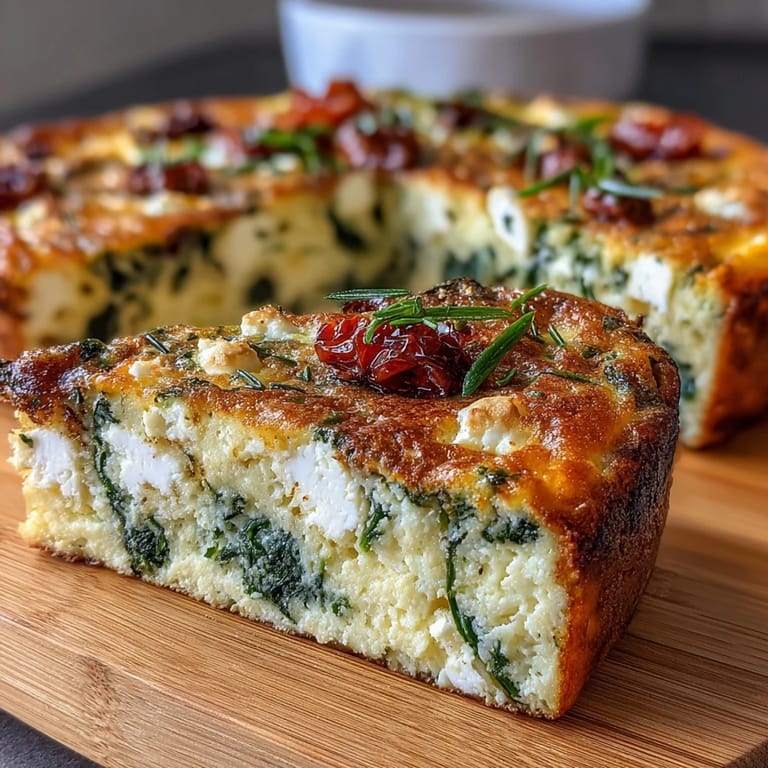
Save Years ago, a friend who'd lived in Greece for a summer made a frittata similar to this one for a dinner party, and the way everyone unconsciously slowed down while eating it—no hurrying, no reaching for seconds immediately—told me something important about what good food does to people. It creates permission to pause, to notice flavors, to sit with each other without needing to fill the silence. That's what this frittata has become in my kitchen: an excuse to gather, nothing more and nothing less.
Choosing Your Spinach
Fresh baby spinach is my preference because it wilts down so quickly and doesn't introduce extra water into the custard, but I've made this successfully with thawed frozen spinach on nights when the farmer's market wasn't an option. The secret is to squeeze the frozen spinach almost aggressively in a clean kitchen towel until no moisture drips out—this step is what separates a frittata from a watery disappointment. If you skip this step, you'll end up with excess liquid that won't set properly, no matter how long you bake it.
The Sun-Dried Tomato Game-Changer
I used to buy dried sun-dried tomatoes and rehydrate them, thinking I was being thrifty, until I realized that the oil-packed version was worth the extra cost because the olive oil they're packed in is essentially liquid gold for flavor. Those tomatoes add a concentrated sweetness and umami that fresh tomatoes could never deliver, especially since we're cooking at high heat for such a short time. They also add visual drama—those ruby threads running through the golden eggs look restaurant-worthy without any extra effort.
Why Temperature and Timing Matter More Than Ingredients
I've learned that the real magic of a frittata lives in understanding the threshold between set and overcooked, which is razor-thin and changes based on your oven's personality. My old apartment had an oven that ran hot, so I'd pull the frittata out at 10 minutes; my current place needs the full 12. The only way to know is to watch and jiggle the pan—you're looking for a center that still wobbles gently, like the tiniest earthquake, not something completely still and firm.
- Start checking at 10 minutes; every oven is different, and trust what you see over what a recipe says.
- If the top is browning too quickly before the center sets, tent it loosely with foil for the last few minutes.
- Room-temperature eggs whisk more smoothly and cook more evenly than cold ones straight from the fridge.
 Save
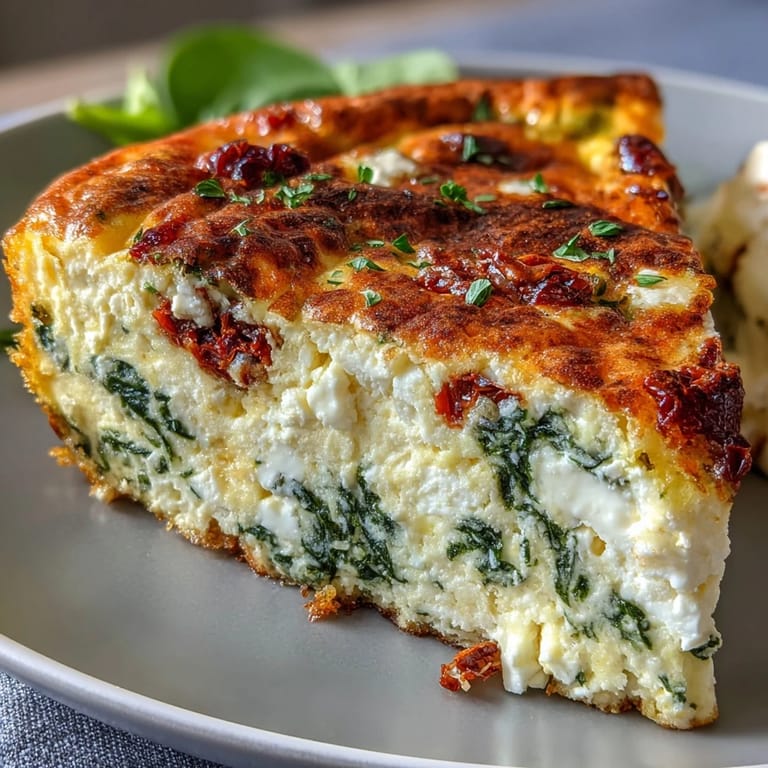
Save This frittata lives in that beautiful space between breakfast and dinner, fussy enough to feel special but forgiving enough that you can make it on a Tuesday without a second thought. Once you've made it once, you'll find yourself reaching for it again and again, each time tweaking it slightly with whatever vegetables or cheeses are calling to you.
Recipe FAQs
- → Can I use frozen spinach instead of fresh?
Yes, thaw and drain the frozen spinach thoroughly before adding to prevent excess moisture.
- → What oil is best for sautéing the vegetables?
Olive oil complements the Mediterranean flavors best and provides a rich, smooth texture.
- → How do I know when the frittata is fully cooked?
The edges should be set and the center slightly golden but still tender to the touch.
- → Can I substitute the feta cheese?
Plant-based feta works well for dairy-free alternatives, though it will alter the flavor slightly.
- → Is this dish suitable for gluten-free diets?
Yes, as written, it contains no gluten. Verify cheese and sun-dried tomato ingredients if needed.