 Save
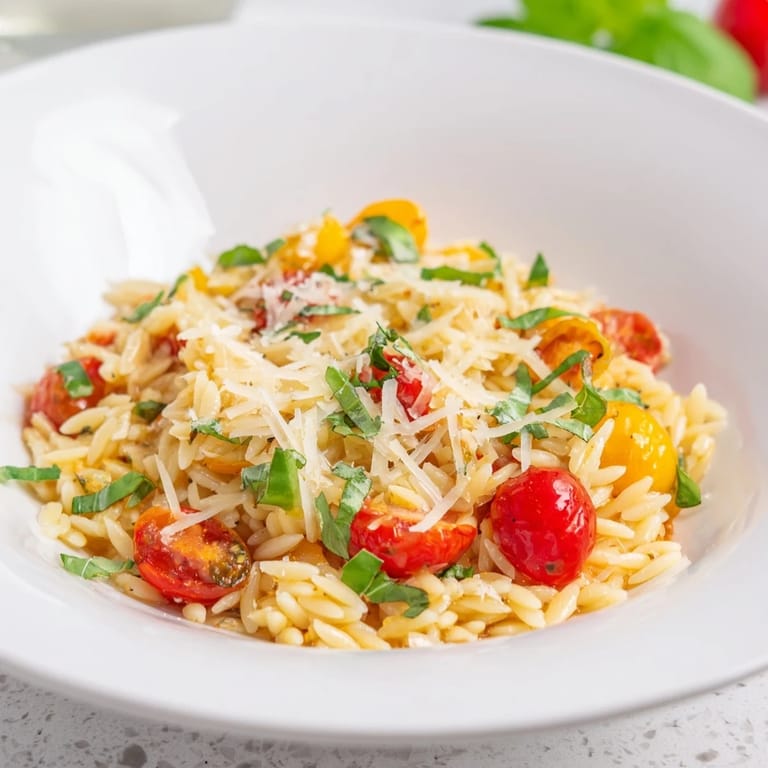
Save There's something about the way cherry tomatoes burst in a hot pan that makes you feel like you've stumbled onto a kitchen secret. I discovered this orzo dish on a weeknight when I had exactly three things in my fridge and absolutely no energy for complicated cooking. The magic wasn't in technique or fancy ingredients, but in how the pasta drinks up all that sweet tomato juice, turning something simple into something that tastes like you spent hours on it. It became my go-to proof that the best meals don't need a long list of directions.
I made this for a friend who had just moved into a tiny apartment with a kitchenette barely bigger than a closet. I wanted to prove that beautiful food didn't require professional equipment or tons of counter space, and watching her face light up when she tasted it was worth more than any fancy dinner I could have attempted. That's when I realized this dish wasn't really about orzo and tomatoes at all, but about how the simplest things, made with attention and care, become something worth remembering.
Ingredients
- Orzo pasta (250 g): This tiny rice-shaped pasta is the hero here, cradling the tomato sauce in a way longer noodles never could. I've learned to cook it right to the edge of al dente because it continues cooking slightly when you toss it with the warm tomatoes.
- Cherry tomatoes (300 g, halved): Don't skip the halving step, even though it feels tedious. Breaking them open releases their juice and creates those jammy bits that make every forkful interesting.
- Fresh garlic (2 cloves, minced): The moment it hits hot oil is when you know things are about to taste good. Don't walk away during those 30 seconds or you'll burn it and have to start over.
- Fresh basil (2 tbsp chopped, plus garnish): I learned the hard way that fresh basil goes in at the very end, just before serving. Heat destroys its delicate flavor faster than you'd think.
- Parmesan cheese (60 g, freshly grated): Pre-shredded cheese has anti-caking agents that prevent it from melting smoothly. Grab a block and your box grater, your palate will thank you for the 30 seconds of extra effort.
- Extra-virgin olive oil (3 tbsp): This is where quality matters because it's one of only a handful of ingredients. Use something you'd actually taste on bread, not the industrial stuff hiding in the back of your cabinet.
- Black pepper and salt: Freshly ground pepper tastes incomparably better than pre-ground, and taste as you go because you can always add more salt but you can't take it back.
Tired of Takeout? 🥡
Get 10 meals you can make faster than delivery arrives. Seriously.
One email. No spam. Unsubscribe anytime.
Instructions
- Boil the water and cook the orzo:
- Fill a large pot with enough water to generously cover the pasta, add a teaspoon of salt, and bring it to a rolling boil. Add the orzo and stir occasionally to prevent sticking, cooking until it's tender but still has a slight bite to it, usually about 9 minutes or whatever the package says minus one minute. Before you drain it, scoop out about a quarter cup of that starchy water and set it aside, because that liquid is what transforms this from dry pasta to something glossy and cohesive.
- Start the tomato sauce:
- While the pasta cooks, warm 2 tablespoons of olive oil in a large skillet over medium heat until it shimmers slightly. Add your minced garlic and let it sizzle for about 30 seconds until the smell fills your kitchen, then immediately add the halved cherry tomatoes.
- Let the tomatoes soften and break down:
- Stir occasionally as the tomatoes cook for 3 to 4 minutes, and you'll see them begin to collapse and release all their sweet juice into the pan. This is the moment when your kitchen smells like someone who knows what they're doing.
- Bring it all together:
- Tip the drained orzo into the skillet with the tomatoes, pour in about half of that reserved pasta water, and toss everything gently for a minute or two until the pasta is heated through and starts to absorb all those wonderful tomato juices. The pasta will continue drinking up the liquid and becoming creamier as it sits, so don't panic if it looks a little loose right now.
- Finish with cheese and herbs:
- Remove the skillet from heat, then stir in the last tablespoon of olive oil, most of the Parmesan, the chopped basil, and a pinch of black pepper. Taste it, add more salt if it needs it, and remember that the cheese is already salty so go easy at first.
- Serve immediately:
- Divide between bowls or plates while it's still warm and creamy, and scatter extra Parmesan and a few fresh basil leaves on top of each portion. This dish is best eaten right away while the pasta is still tender and the flavors are bright.
 Save
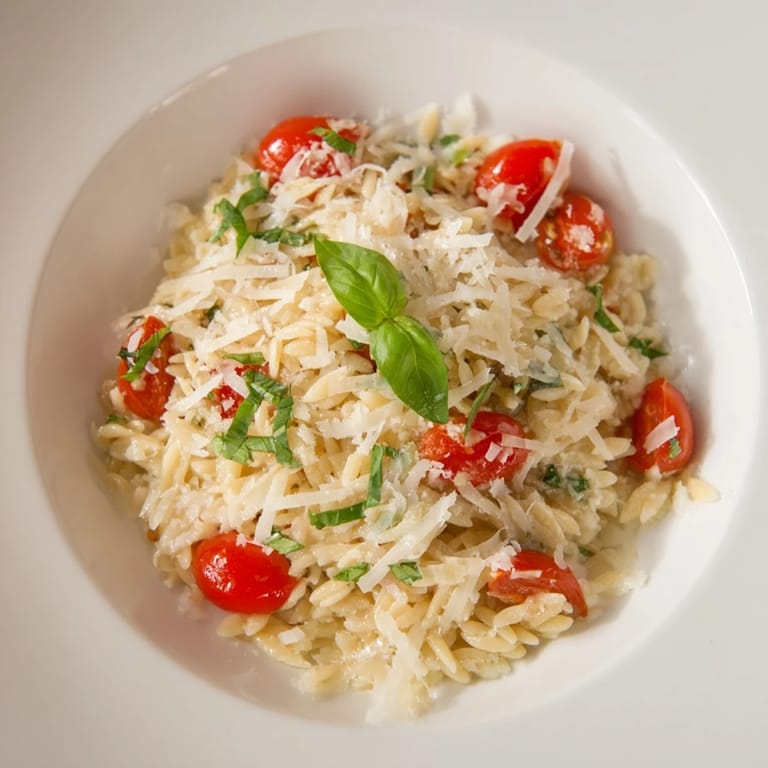
Save The first time someone asked me for the recipe, I realized I'd never written it down, because I'd made it so many times it lived entirely in my hands and my muscle memory. That moment taught me that the best recipes are the ones you stop thinking about and just make, the ones that become as natural as breathing.
Why This Works as Both Main and Side
Orzo exists in this delightful gray area where it's substantial enough to be a main course on its own, but humble enough to play nicely alongside roasted chicken or fish without trying to steal the show. The beauty is that you can make a single batch and serve half as dinner with a salad, then reheat the rest tomorrow alongside some grilled vegetables and nobody will feel like they're eating leftovers. I've taken this to potlucks, served it at casual weeknight dinners, and packed it cold into containers for office lunches, and it's never disappointed.
Customizing Your Tomato Orzo
The skeleton of this dish is so simple that it invites tinkering without falling apart. On nights when I crave heat, I add red pepper flakes to the garlic, and on nights when I want something richer, I sometimes finish it with a handful of fresh spinach stirred in at the very end so it wilts into the warm pasta. The version that made my friend ask for seconds had a splash of balsamic vinegar drizzled over top, and another time I threw in fresh mozzarella and served it at room temperature like a salad, which was its own kind of perfect.
The Art of Simplicity
This dish taught me that simplicity isn't laziness, it's clarity. When you have only a few ingredients, each one has to pull its weight, which means you can't hide behind technique or fancy tricks. You're forced to care about the quality of your oil, the ripeness of your tomatoes, and the way you handle each step, because there's nowhere for mistakes to hide.
- Keep your tomatoes at room temperature before cooking them, because cold tomatoes from the fridge take longer to release their flavor.
- Grate your Parmesan fresh just before you need it, because exposed cheese oxidizes and loses its delicate nutty quality surprisingly quickly.
- Remember that this dish continues to absorb liquid even after you serve it, so if you're making it ahead, hold back a little pasta water to loosen it up before eating.
 Save
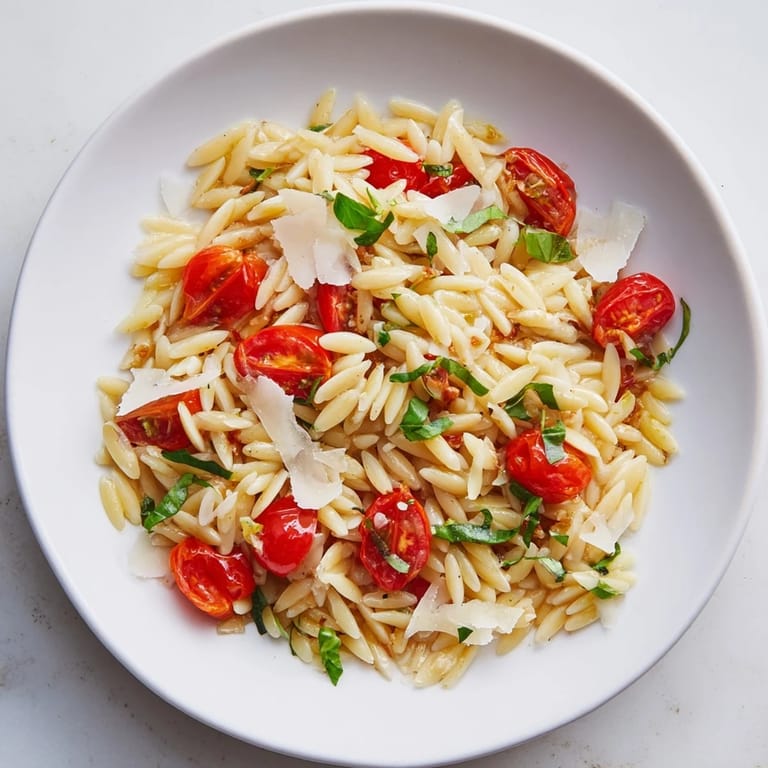
Save This recipe proved to me that you don't need complicated techniques or a long ingredient list to make food that tastes like you care. It's become my reminder that sometimes the best dishes are the ones that get out of their own way.
Recipe FAQs
- → What is the best way to cook the orzo?
Boil the orzo in salted water until al dente, usually about 8-10 minutes, then drain and reserve some pasta water to keep it moist.
- → Can I substitute Parmesan cheese with another cheese?
Yes, Pecorino Romano works well as a sharper alternative, adding a slightly different flavor profile.
- → How do I enhance the tomato flavor?
Lightly sauté the cherry tomatoes until they soften and release their juices, intensifying their sweetness and aroma.
- → Is it possible to add greens to this dish?
Absolutely, sautéed spinach or arugula can be folded in for added nutrients and a fresh bite.
- → What oil is recommended for cooking this dish?
Extra-virgin olive oil is ideal for both sautéing and finishing, as it imparts a rich and fruity flavor.