 Save
Save My neighbor Yusuf taught me how to make manti one afternoon when I stopped by his kitchen smelling garlic and butter. He showed me these tiny dumplings folded with such precision that I thought there was no way I'd ever get them right. But watching his hands move through the motions—flour dusting everywhere, that satisfied smile when the filling stayed put—I realized manti wasn't about perfection, it was about the rhythm of folding something small and good. Now whenever I make them, I feel like he's standing next to me, not criticizing, just quietly approving.
I remember bringing a batch to a potluck and watching my coworker Sarah try her first one—she closed her eyes, and I thought maybe something was wrong until she asked for the recipe. That's when I knew manti had moved from a dish I made to something that actually meant something, at least to people who understood how much care goes into folding each little parcel.
Ingredients
- All-purpose flour (2 cups): This is your dough foundation, and the amount matters because humidity changes everything—have a bit of extra water nearby just in case your kitchen is dry that day.
- Egg (1 large): The binding agent that makes your dough silky and gives it structure when boiled; don't skip it thinking yogurt sauce will save you.
- Water (1/2 cup, plus more as needed): Add it gradually while kneading because you might not need it all, and overhydrated dough becomes impossible to work with.
- Salt (1/2 teaspoon for dough, 1/4 teaspoon for sauce): A small amount in the dough helps it hold together, while the sauce salt needs to balance the tanginess of the yogurt.
- Turkish white cheese or feta (1 cup crumbled): Turkish white cheese is saltier and creamier than feta, but feta works in a pinch if that's what you have at home.
- Ricotta cheese (1/2 cup): This adds a gentle sweetness and smoothness that keeps the filling from being too sharp or crumbly.
- Fresh parsley (2 tablespoons finely chopped): The green flecks matter not just for flavor but for making the filling look intentional and alive.
- Black pepper (1/4 teaspoon): A whisper of heat that reminds you the filling has depth.
- Greek yogurt (1 1/2 cups plain): The tanginess is essential, so don't use vanilla or honey yogurt; plain Greek yogurt is thick enough to coat without being wallpaper paste.
- Garlic clove (1 minced): One is gentle and lets the yogurt shine; more than one and you've crossed into a different dish entirely.
- Unsalted butter (3 tablespoons): The vehicle for your spices, and unsalted lets you control the salt level.
- Paprika (1 teaspoon): Turkish paprika is milder than Hungarian, so it gives color and warmth without harsh smoke.
- Aleppo pepper or chili flakes (1/2 teaspoon): Aleppo pepper is fruity and moderate; chili flakes are sharper, so use less if that's your choice.
Tired of Takeout? 🥡
Get 10 meals you can make faster than delivery arrives. Seriously.
One email. No spam. Unsubscribe anytime.
Instructions
- Make the dough with patience:
- Combine flour and salt in a bowl, make a well, crack in your egg, and pour water around it slowly while stirring with a fork until shaggy crumbs form. Knead for about 8 minutes until the dough becomes smooth and elastic; if it's sticky, dust with a tiny bit more flour. Cover it and let it rest—this is not optional because resting time lets the gluten relax and makes rolling easier.
- Prepare the cheese filling:
- While dough rests, crumble your cheeses into a bowl, add the finely chopped parsley and black pepper, and mix gently until combined but still with some texture visible. Taste it and remember this moment because once it's folded inside the dumplings, you can't adjust it.
- Mix the yogurt sauce:
- Stir minced garlic into plain yogurt with salt until smooth and creamy; the garlic should be so finely minced it almost dissolves into the yogurt rather than staying as visible specks. Set it aside and forget about it until serving time.
- Roll and cut the dough:
- On a floured surface, roll your rested dough very thin—about the thickness of a coin—working in sections if needed because it's easier than wrestling one giant sheet. Cut into 1.5-inch squares using a knife or pastry cutter; don't worry if they're not perfectly geometric because handmade is the whole point.
- Fill and fold each manti:
- Place roughly 1/2 teaspoon of cheese filling in the center of each square, then fold the corners together toward the center and pinch them closed to seal so nothing escapes during boiling. This is meditative work; don't rush it or you'll end up with filled squares looking at you accusingly.
- Boil the manti:
- Bring a large pot of salted water to a vigorous boil, add manti in batches (don't crowd the pot or they'll stick together), and cook for 5 to 7 minutes until they float and feel tender when you test one with a fork. Drain them well in a colander and set aside.
- Make the spiced butter:
- Melt butter over medium heat, then stir in paprika and Aleppo pepper and let it toast for about 30 seconds until the kitchen smells incredible and the spices bloom. Pour it into a small bowl while still warm.
- Assemble and serve:
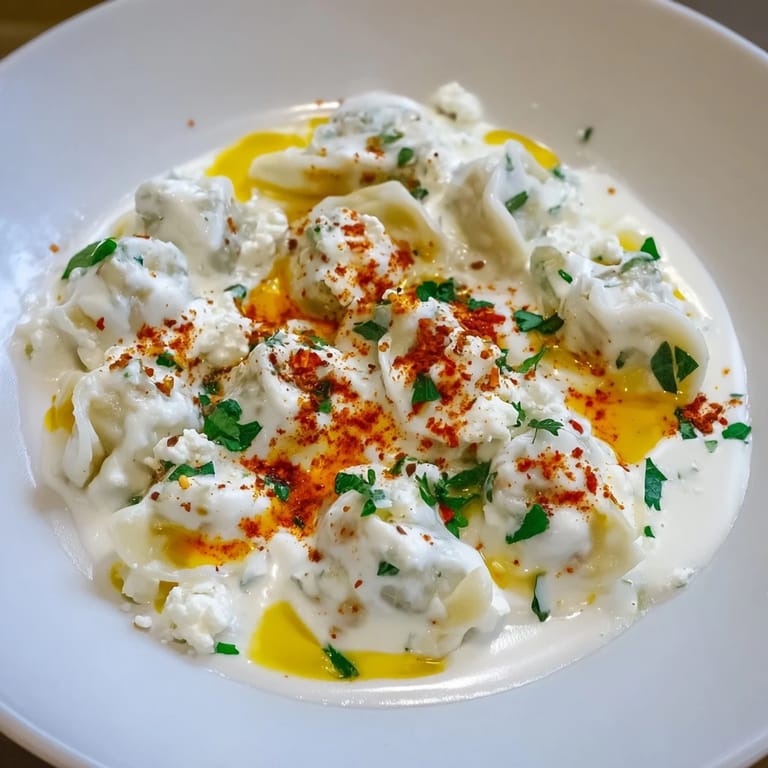
- Divide the warm manti among plates, spoon a generous amount of yogurt sauce over the top, then drizzle with the spiced butter so it pools slightly and catches the light. Garnish with more fresh parsley if you have it, and serve immediately while everything is warm and the textures still matter.
 Save
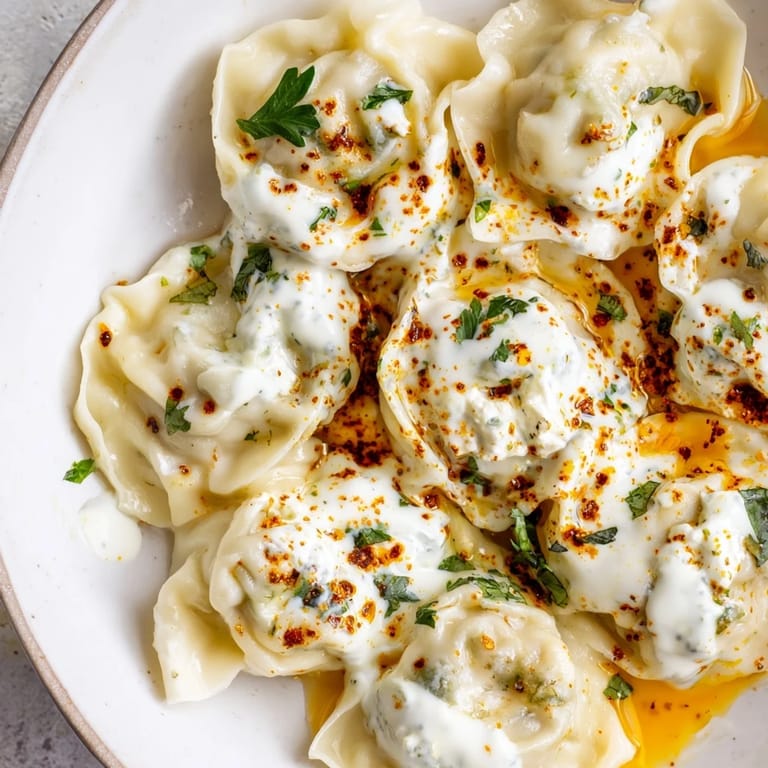
Save There's a moment when everything comes together—the warm manti on the plate, the cool yogurt pooling around them, that first drizzle of butter turning golden in the light—and you understand why people make this dish again and again. It stops being about technique and becomes about care.
The Art of Thinness
Rolling manti dough thin is the part that intimidates everyone, but it's actually the part that matters most because thin dough cooks gently and doesn't turn gummy. The dough should be so thin you can almost see your hand through it; if it tears, you've actually rolled it perfectly. Use a light hand with flour when rolling because too much flour baked into the dough changes the final texture from silky to slightly chalky.
Why the Ratio of Cheeses Matters
Turkish white cheese is salty and a little sharp, while ricotta is mild and smooth, so combining them creates a filling that tastes complex without being overwhelming. If you use only feta, the filling tastes one-note and salty; if you use only ricotta, it tastes bland and needs more help. The parsley and black pepper fill in the gaps and give the filling brightness, so each little dumpling tastes intentional rather than accidental.
Serving and Variations
Manti is best eaten immediately while the dumplings are still warm and the sauces are making friends on the plate, but I've found that leftovers reheat beautifully in a covered pan with a splash of water over medium heat. For extra depth, scatter a pinch of sumac or dried mint over the top just before eating because these small additions remind people that you thought about flavor from every angle.
- Make manti ahead and freeze them on a tray before transferring to a freezer bag; cook directly from frozen, just add a minute or two to the boiling time.
- If you can't find Aleppo pepper, red pepper flakes work, but use less because they're spicier and more aggressive.
- Leftover spiced butter can be drizzled over roasted vegetables or bread, so don't waste a drop of it.
 Save
Save Make manti when you want to give people something that tastes like patience and care folded into tiny, warm parcels. This is food that feels like home.
Recipe FAQs
- → What cheese can I use for the filling?
Turkish white cheese or feta combined with ricotta provides a creamy and balanced filling.
- → How thin should the dough be rolled?
Roll the dough very thinly, about 2 millimeters, for tender dumplings that cook evenly.
- → How long do dumplings take to cook?
Boil the dumplings for 5 to 7 minutes until they float and become tender.
- → What spices are used in the butter drizzle?
The butter is infused with paprika and Aleppo pepper or chili flakes for a fragrant finish.
- → Can I prepare the filling in advance?
Yes, the cheese filling can be prepared ahead and chilled before assembly.